Meeple Mountain – Board Game Reviews, Videos, Humor, and more Board Game Reviews, Videos, Humor, and more
-
 GM Screen Time: The ABCs of Scheduling Successby Abram Towle on October 11, 2026
Welcome to GM Screen Time, the series where we dive deep into my bag of Gamemastering tricks to find different strategies and tips I've used at my tables to promote a fun environment. In this installment, we discuss the dreaded topic that stops an unverified 90% of people from ever getting their games to the table at all: scheduling. Everybody wants to play games together. The problem is that between school, work, extracurricular activities, soup nights, vacations, and everything else, people are busy. It's not only finding the time to game, but finding an amiable time where everyone can game. The ABC Framework for Scheduling My group recently wrapped up a playthrough of Paizo's Sky King's Tomb Adventure Path for Pathfinder Second Edition, a campaign that encompassed two and a half years IRL. We play two hours per week every Wednesday, and over the past eight years of consistently playing together we are averaging only a handful of missed weeks each year. Since we mostly play remotely, this offers a significant level of flexibility, but we've managed to get together across states spanning Seattle all the way to Maryland, and even worked around a player's work trip to the Eastern Hemisphere. Playing with the same group for that long is different from queuing up a multi-year campaign with strangers. It's… The post GM Screen Time: The ABCs of Scheduling Success appeared first on Meeple Mountain.
-
Courtroom: The Noir Trilogy Game Reviewby Justin Bell on October 10, 2026
Czech Games Edition rolled the dice back in 2022 with the release of Deal with the Devil. It was the most shocking thing I played from a major publisher that year by a country mile. A strictly four-player-only, hidden role, app-driven board game from the people who gave us Codenames? It wasn’t just a departure…it was the biggest creative swing CGE has ever taken with a major release. Deal with the Devil (and its fantastically twisted box cover art) was a big swing…but also, a big miss. You can find copies of the game online for less than $20 all the time now. The critical reception was a decidedly mixed bag. But I still stand behind CGE for that release, because I am so happy that CGE took the risk. CGE could make a safe bet every year with their releases, but Deal with the Devil (and releases like their upcoming video game-to-board-game adaptation, Kingdom Come: Deliverance—The Board Game) prove that CGE are willing to take real chances with their biggest productions. Courtroom: The Noir Trilogy is the newest release under the Mindclash Games’ “Play” line, the publisher’s lighter line of games that pushes a release directly to retail every fall. The previous Mindclash Play games include last fall’s Emberheart and their first release in… The post Courtroom: The Noir Trilogy Game Review appeared first on Meeple Mountain.
-
 Le Chocolat Game Reviewby Andrew Lynch on October 9, 2026
I adore this little game. Absolutely adore it. Le Chocolat, from designer Mashiu, is a quick two-player I Split-You Choose game that comes in a box smaller than most chocolate bars on the market. It has lived in my bag for months now. It’s perfect for when you need a quick gaming snack, a little shock to your blood sugar levels. From setup to teardown, it takes less than ten minutes, and most of those ten minutes feel like a high-wire act. All you can do is fall. This tiny box is full of squares of chocolate, most of which have one kind of filling or another. Pistachios, cashews, oranges, raspberries, all the hits are here. During setup, you toss and turn the pieces about to randomize what’s face-up and what’s face-down, then form them into a 5 x 7 chocolate bar. You take turns splitting that bar along any line. If a break results in one or more sections with three or fewer pieces, you must take one of those sections and add it to your scoring pile. The different mixin’s score in different ways, as determined by a randomly chosen scoring card at… The post Le Chocolat Game Review appeared first on Meeple Mountain.
-
 Quick Peaks – Wool Street, The Druids of Edora, Pondscape, Into the Machine, Gloomhaven: Buttons & Bugsby Justin Bell on October 9, 2026
Wool Street - Justin Bell This is hard to believe, but sometimes a game ends up being…well, too short. Enter Wool Street, a “Mini Card Game” from the folks at Hachette. Players buy and sell wool products in five different colors while trying to influence a market by trying to throw players off the scent of a single piece of hidden intel each player gets before the game begins. Which of the five colors will end the game being worth zero, or possibly even negative, points? “I’m not sure there’s much game here,” one player in my review commented after we finished our roughly 10-minute play. And, look: the game’s rules are actually provided, in full, on the game’s BGG page, so this game is both mini (as promised on the side of the small box) and short. But I had the same complaint as my friend did: it never feels like anyone gets to make a meaningful choice in Wool Street and everyone knows at least one color worth avoiding as play moves along, so in our game, players constantly moved to sell some of their goods in a single color all game long, and when it became clear that yellow (in our game) was going to end play as the… The post Quick Peaks – Wool Street, The Druids of Edora, Pondscape, Into the Machine, Gloomhaven: Buttons & Bugs appeared first on Meeple Mountain.
-
Dogfight 1917 Game Reviewby Justin Bell on October 8, 2026
Dogfight 1917 (2025, Arcane Wonders) has a lot going for it…as long as you play it as a free-for-all variant with a full complement of four players. There are cool biplane (and in the case of the Red Baron, a triplane!) miniatures, play time is speedy and mechanics are simple: fly at the other fighters to maneuver into the best positions to damage enemies just enough to make them run out of action cards, a deck which also serves as a player’s health meter. 20 action cards is all a player gets for the entire game to fly, maneuver in and out of harm’s way, and put bullets into the rear of a bad guy. Two of those 20 cards are single-use, meaning they are removed completely from the game after being played. (Those two cards are the same for each player’s deck, but other cards come with slight nuances that make each fighter’s deck unique.) With limited options to add cards back into each deck, a game of Dogfight 1917 might only last for 20-30 minutes. Tactical tokens can be acquired through those single-use cards, via die roll bonuses on other action cards, or by finishing turns on certain spaces of the very small map representing the skies of World War I. You’ve got real-life pilots, ways to… The post Dogfight 1917 Game Review appeared first on Meeple Mountain.
-
 Mind the Lines Game Reviewby Justin Bell on October 8, 2026
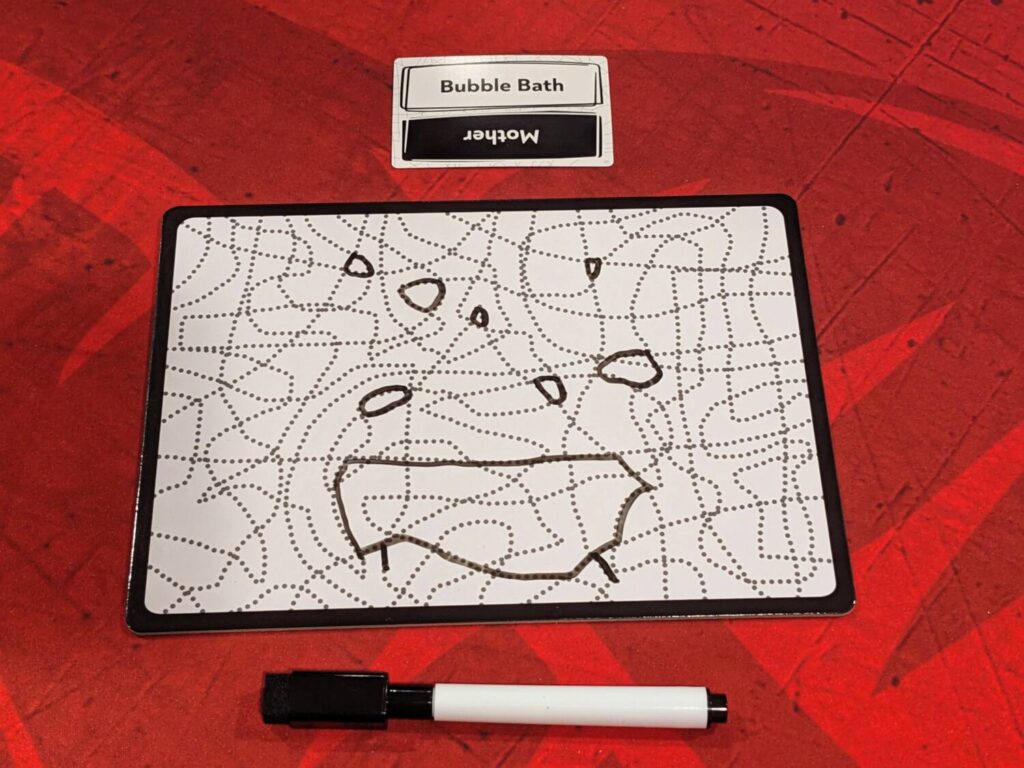
You know you are on to something when your nine-year-old walks up to you, staring other activities he loves dead in the face, and says the following: “Daddy, can we play Mind the Lines again?” Didn’t want to grab the tablet. Had a chance to dive back into his room to do some afternoon reading. We had just finished building part of our LEGO Technic set—the orange Bugatti was almost done—and he considered doing some other LEGO building. But the boy turned all of those down to revisit Mind the Lines instead. Apparently, the play we did the night before resonated. That, in essence, is the review here. Across five plays, including three with my family, and across four different player counts (2, 3, 4, and 5 players), Mind the Lines was a winner across every play session. Difficulty is the only question mark. Non-Artists, Welcome Mind the Lines is a four-round party game for 2-6 players that plays in about 20 minutes. Using a deck of cards with easy and hard challenge words, players are working together to get through the four rounds without hitting a word penalty threshold tied to the number of players, doubled when using more challenging words. That means in a four-player game, players… The post Mind the Lines Game Review appeared first on Meeple Mountain.
-
 Garden Club Game Reviewby Justin Bell on October 8, 2026
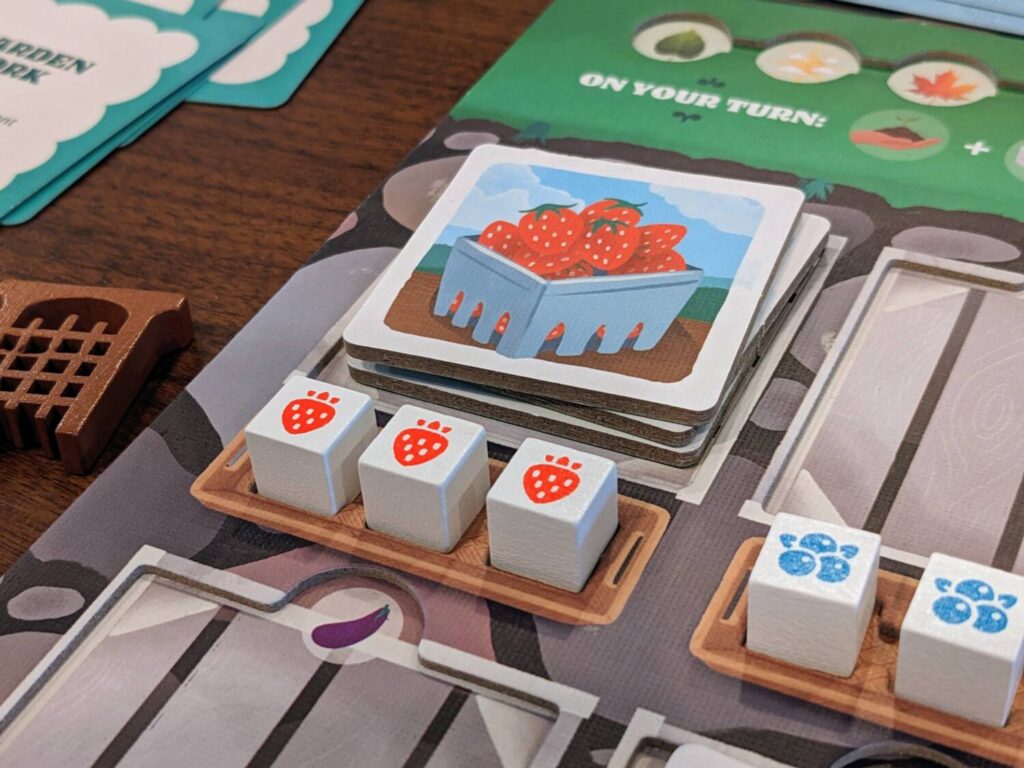
As activities go, I love the direction Chris Couch Games is taking with its initial batch of releases. The production looks exceptional and the bright, vivid colors of nearly every game I picked up from this publisher at Gen Con has the shelf appeal a game needs to stand out. Garden Club (2026, designed by Kristen Mott and Andrew Stiles) is much better as a production than a game. Solid player boards that serve as a handsome storage area and turn tracker for each round. A rulebook that feels luxurious in the hands, from the linen finish to the easy read and the helpful game summary on the back cover. Carve-outs in the box for certain tokens and cards, and a decent amount of mini expansion content for players who want to dive deep. As a game, Garden Club came back to Earth for my solo plays and my two-player game with my nine-year-old. Players plant and harvest on their turns, placing flower tiles on one of the 16 spaces of a shared centralized board, while making patterns that can be scored on project cards or manipulated using tool cards. All of it feels very “Sunday afternoon.” By that, I mean that you should play Garden Club with a… The post Garden Club Game Review appeared first on Meeple Mountain.
-
 Warp 99 Game Reviewby Justin Bell on October 8, 2026
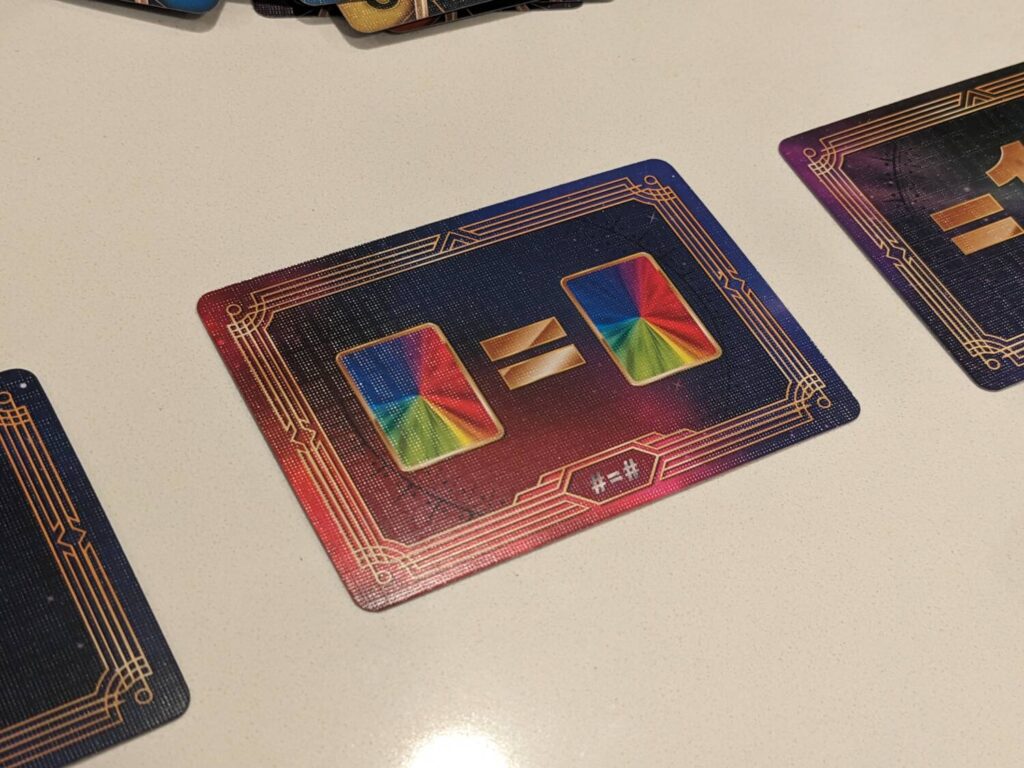
Man, I love doing demo plays of games at shows. I love them because I get to play with random strangers to take in differing opinions on games I’m about to review. Warp 99 is a new card game from Bezier, a publisher quickly becoming a major distributor of card games in the US. Over the last three years, Bezier has brought so many titles to the market that I had to go to their website to remember them all: Xylotar, Cat in the Box, Seers Catalog, Sandbag, and the best of the bunch, Rebel Princess Deluxe Edition. A couple of those are now at the top of my all-time favorite trick-taking games, so now I will table anything from Bezier to see if they’ve struck gold. Warp 99 has its moments, and when the player count stays low, there’s something here. In the wrong hands, Warp 99’s biggest issue is its playtime; 30 minutes is too long for a game that is a simple race to get to 99 points before other players. Warp Speed? Warp 99 is a hand management game for 2-4 players. While it is not a traditional shedding game, Warp 99 is a game about emptying your hand, then… The post Warp 99 Game Review appeared first on Meeple Mountain.
-
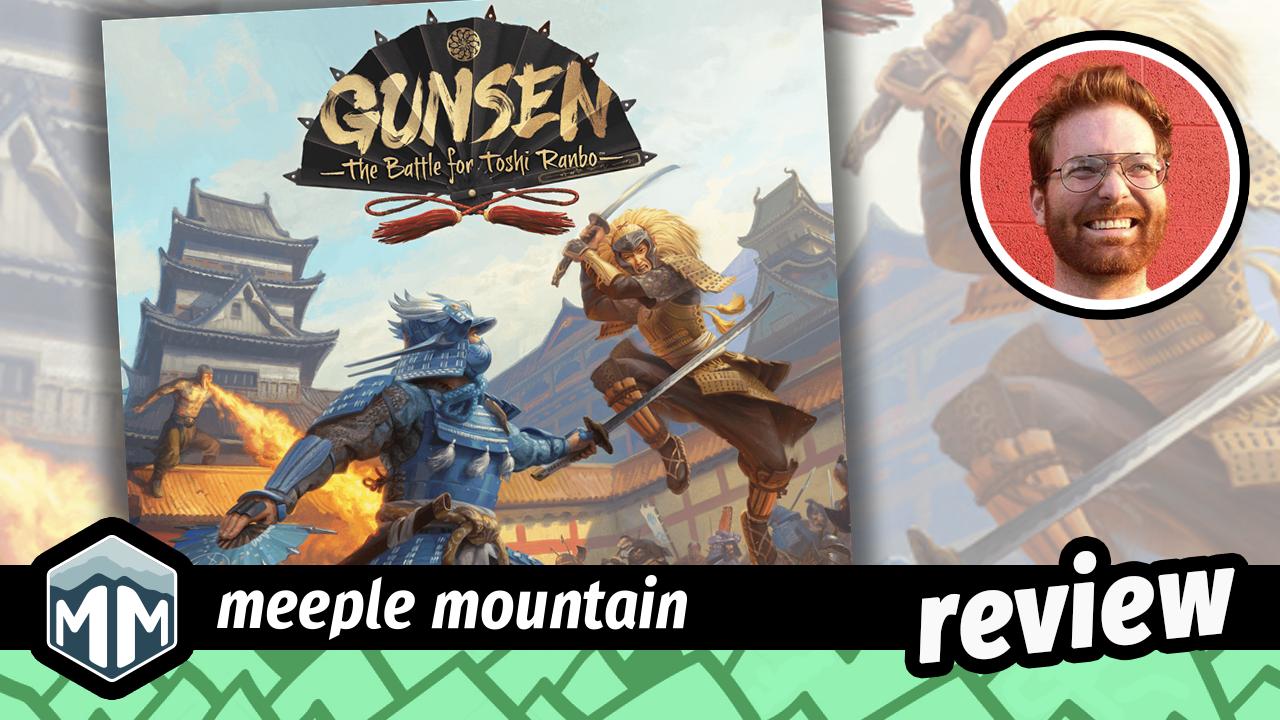 Gunsen: The Battle for Toshi Ranbo Game Reviewby Thomas Wells on October 7, 2026
As someone who finds the wanton violence, corruption, and who-cares-i-ttude that’s baked into American life truly repugnant, the sheer unadulterated fantasy of a fair contest or battle is intoxicating. An oasis in a desert. Game designers and publishers seem to agree—there are so many darn area control beat-em-ups. I’ve played so many, because, when they’re done well (the razor-sharp edge of Inis or the skull bludgeon-y Shogun) you get to have a rare experience—a test of will, bravery, and risk. Gunsen: The Battle for Toshi Ranbo’s main problem is that it is sleight. It comes in a big box, it supports up to six players, it has faction asymmetry, tons of card powers, cool pieces, and a compelling premise. But each of these things, while initially compelling, reveal themselves to be paper-thin, and nothing becomes greater than the sum of its parts. King o’ the mill The way you win Gunsen is by being the first to accomplish 7 objectives. There are more than 7 available, and all of them, with one exception (holding the center) are permanent once you accomplish them. Most of the objectives are resource management things: build two buildings, play 3 tactics cards, occupy 2 shrines, use your 3 special action slots, etc. If… The post Gunsen: The Battle for Toshi Ranbo Game Review appeared first on Meeple Mountain.
-
 The 21 Most Anticipated Games of Essen Spiel 2026by Andy Matthews on October 6, 2026
Essen SPIEL 2026 will be here in just over two weeks; the largest board game convention in the world, and a mecca for board gamers of all stripes. Nearly 1,300 games will make their debut into the European market; an overwhelming number. The Meeple Mountain team has spent their time sifting through the list to come up with our most anticipated games of Essen SPIEL. K. David Ladage Cascadia: Alpine Lakes I have the entire Cascadia collection, including the roll-and-writes (one of the dangers of being a completist). I love the structure of the game, the way scoring works… everything. It plays well at two players and at higher counts. So yea, even if this is just a “more stuff” release, I am all in for more Cascadia pleasure! Publisher: Flatout Games Designer: Randy Flynn Read our review of Cascadia: Alpine Lakes Foundation: Isaac Asimov Anyone who knows me knows that my absolute favorite book series of all time is Foundation. I have read them all, including the extended universe he managed to create… The post The 21 Most Anticipated Games of Essen Spiel 2026 appeared first on Meeple Mountain.
-
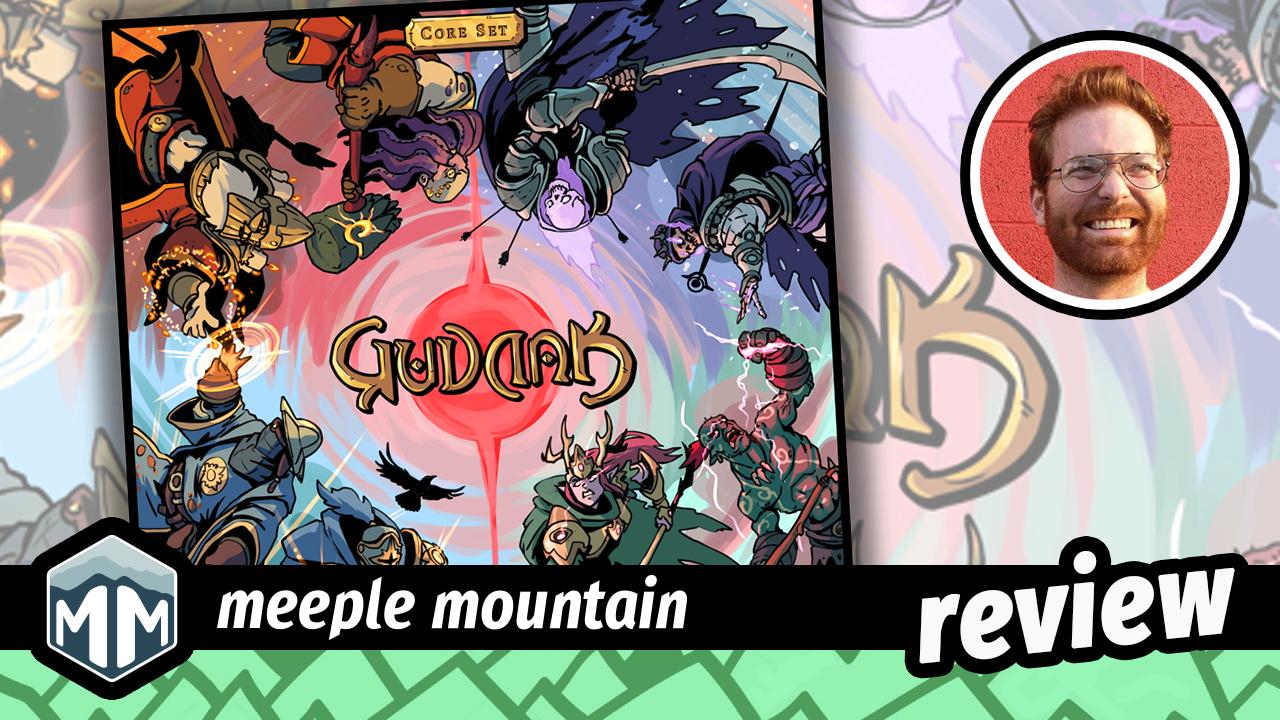 Gudnak Game Reviewby Thomas Wells on October 6, 2026
Gudnak has a great name, and maybe that’ll be enough to overcome the gigantic obstacle that the genre of games that are trying to become lifestyles struggle with. That obstacle: gluttony. Customizable competitive card games are the definition of an oversaturated market. Step into any local game store, and you’ll see the locus of competition for space and time on full display. Gudnak has a lot of things going for it, but it also struggles with a few usability issues. I also imagine it will have a market visibility problem going forward, but that’s not for me to decide. What’s a Gudnak? Gudnak is an ambigram, which the back of the box helpfully tells you, meaning a symbol that can be flipped and retains its shape. The game is played on a grid of different sizes depending on player count, with square cards functioning as units and spells. You have a 20-card deck that serves as your game timer/health bar (reminiscent of my beloved Ortus Regni). If the other player occupies your gates (the square in front of your stronghold/deck) at the start of your turn, you discard a card. No cards? You lose. Gameplay is reminiscent of The post Gudnak Game Review appeared first on Meeple Mountain.
-
 Kevin Goes to PAX WEST 2026by Kevin Brantley on October 6, 2026
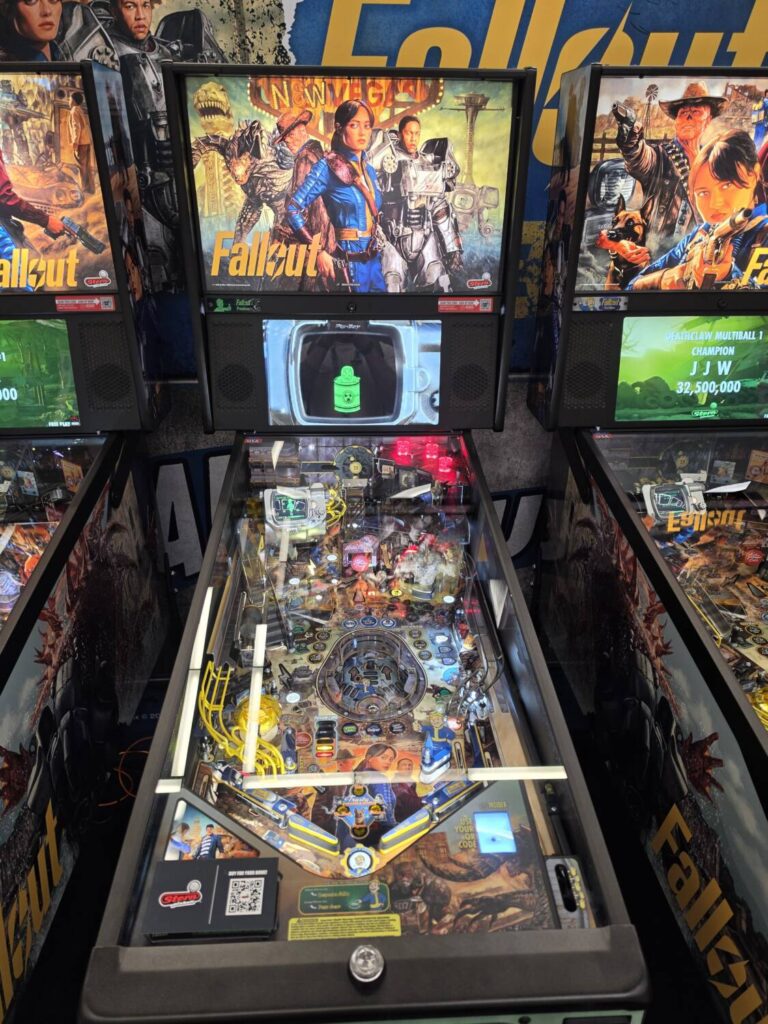
Two Worlds Collide PAX West is a bit of a deviation from the traditional board game conventions we typically cover here at Meeple Mountain. Nestled in the tree-rich city of Seattle, PAX West offers a convergence of both the video game and tabletop hemispheres. I had the wonderful opportunity to experience the show as an exhibitor, showcasing For All Mankind from Bad Cat Media. Though I’m fairly well traveled, I had never visited Seattle or attended PAX West, so the promise of new surroundings was absolutely tantalizing. I’ve been a video gamer all my life, from my very first console, a red Game Boy Pocket, to now, where I recently beat Capcom’s Pragmata (fantastic) and Bethesda’s Ghostwire: Tokyo (very good). Tabletop gaming, on the other hand, is something I stumbled into only within the last six years. Given that I now write almost exclusively about board games, it’s actually a little puzzling considering I’ve had another gaming love for far longer. So my coverage of PAX West was always going to focus on both worlds. Both have an equal place in my heart, and to say I was ecstatic to… The post Kevin Goes to PAX WEST 2026 appeared first on Meeple Mountain.
Tell us how can we improve this post?