
by JiajiaSong
/pic9390309.jpg)
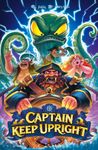
Hey everyone! I’m Jiajia, the designer of Captain Keep Upright. I’m excited to share the story behind how this game came to life.
Interestingly enough, bringing this game from an idea to reality has been its own kind of “voyage of discovery.” It started with a simple joke, went through countless prototypes and playtests, and eventually became the game you see today.
Where It All Started: A Drunken Night at the Bar
The idea for Captain Keep Upright was born in a very fitting place—a bar called Nigu.
/pic9719089.png)
It was late 2024, and I was having a few drinks with my bandmates. We were talking about nautical-themed movies and games like Pirates of the Caribbean and Sea of Thieves, and how much we loved that feeling of freedom and adventure on the open sea.
Then someone joked:
“What if you’re a broke captain who just managed to buy a terrible old ship, and your only plan to get rich is to get your crew drunk and sail straight into a storm?”
Everyone laughed, but that image stuck in my head.
A reckless captain, a leaking ship, a crew of misfits, and a dangerous journey where every decision could either make you rich or send you to the bottom of the sea.
That was the spark.
The feeling reminded me of games like Dead Man’s Draw and Incan Gold—games where every turn makes you ask yourself: “Should I keep going, or should I quit while I’m ahead?”
I wanted to capture that same excitement in a pirate adventure.
The Core Idea: A Push-Your-Luck Pirate Adventure
From the beginning, I wanted Captain Keep Upright to be a push-your-luck game about making risky decisions.
The premise was simple:
You are a captain with more ambition than common sense. Your crew gives you the ability to survive the dangers ahead, but the sea is unpredictable. Every voyage is a gamble.
/pic9719097.jpg)
The challenge was finding the right balance between luck and strategy.
I wanted players to feel nervous whenever they revealed a new Voyage card, while still feeling that their decisions and crew-building choices truly mattered.
The First Prototype: Risk, But With a Twist
My first prototype was rough. Very rough.
/pic9719098.jpg)
/pic9719099.jpg)
I knew I wanted players to build their crews strategically while facing different types of risks. I spent months testing different ideas, trying to find the sweet spot between randomness and meaningful choices.
From the very beginning, two things stayed constant: the Crew Cards and the Voyage Deck.
/pic9719107.png)
I loved the idea that your crew wasn’t just a collection of characters, but your defense against the dangers of the sea.
One mechanic I especially liked was High Risk, where the crew type that appears most frequently among the cards players did not choose becomes the danger for that round.
/pic9719106.png)
This creates a constantly changing threat. Players can’t simply follow the same strategy every game—they need to adapt.
Finding the Right Balance: Too Many Choices, Too Little Time
One of the biggest challenges I often face as a designer is having too many possible design options.
Especially for mechanics that aren’t the core focus of the game, there are often several approaches that all seem equally viable. My instinct has always been to test everything until only the best solution remains.
I talked with experienced designers from different countries and realized this is actually a challenge many designers share.
Some designers believe in testing every possibility until you find the answer that feels perfect.
Others believe that if a mechanic fits the game’s logic and creates a good player experience, it doesn’t need endless optimization.
Through this process, I learned that design isn’t always about finding the one “correct” answer—it’s about finding the answer that best serves the game.
Simplifying the Crew Abilities
One of the biggest early challenges was balancing the Crew Abilities.
I wanted players to feel powerful when they successfully collected a complete set of five crew members of the same type. At the same time, I wanted the game to remain easy to learn because Captain Keep Upright is designed to be a party-weight game.
In early versions, the abilities were too complicated.
Players would often say: “Oh right, I have this ability… but I keep forgetting to use it.”
That was a clear sign that something needed to change.
After many iterations, I connected the abilities directly to the Shipwreck mechanic.
If you have three crew members of the same type, you can ignore one disaster of that type.
If you have five, you can ignore that disaster permanently.
/pic9719118.png)
The result was much cleaner. Players immediately understood why collecting crew mattered, and those moments when someone survives a shipwreck because of their crew create really satisfying “aha!” moments.
The Treasure Map Evolution
Another major change was the Treasure Map.
Originally, Treasure Maps were simply an end-game scoring bonus. Players could earn one by collecting a complete set of five different crew types.
The bonus was valuable, but scoring it only at the end made it feel less exciting.
I realized the Treasure Map could be more than a reward—it could influence players’ decisions throughout the entire voyage.
Instead of being something you simply counted at the end, it became something players actively thought about while playing.
/pic9719119.png)
From that moment on, the Treasure Map became an important part of the game.
A Smooth Sailing Rhythm
One thing I especially love about the game is how freely players can decide their own level of risk.
During a voyage, whenever a Voyage card is revealed, each player independently asks themselves, “Do I continue sailing for more treasure? Or do I return to port before disaster strikes?”
There are no group votes and no need for everyone to agree.
Every captain has a different crew, a different strategy, and a different appetite for danger.
This means players naturally leave the voyage at their own pace, and the game keeps moving without constant interruptions.
/pic9719124.png)
Adding More Competition: Honor Cards
The Honor Cards were a late addition to the game. We noticed that some players would occasionally end a round with zero Treasure cards, which felt a bit punishing.
They also gave me a chance to bring back some ideas I had removed earlier. In the first prototypes, each crew type had its own unique ability. As I simplified the Crew Ability system, some of those abilities had to be cut—but instead of disappearing completely, they found a new home on the Honor Cards.
The Honor Cards added another layer of competition. Players aren’t just collecting crew types for their abilities—they’re also competing for the Honor Cards associated with each crew type. The player with the most of a specific crew type claims that Honor Card and its unique bonus.
/pic9719130.png)
This added strategic depth and player interaction without making the game more complicated.
Art Direction: Finding the Right Vibe
As a studio, we’re proud of our hand-drawn, AI-free artwork.
For Captain Keep Upright, I wanted the art to capture the same feeling as the gameplay: chaotic, funny, and full of adventure.
We worked with our incredibly talented artist, Hairy Tofu.
My request was simple to say, but difficult to achieve: “Make it feel humorous and playful, but also tense and exciting.”
At first, it wasn’t an easy direction to capture, but Hairy Tofu quickly understood the spirit of the game.
/pic9719077.png)
/pic9719082.png)
From the quirky crew members to the ghosts, pirates, and sea monsters on the Voyage cards, every illustration is filled with exaggerated expressions and vibrant colors.
/pic9388583.jpg)
/pic9719091.jpg)
The Journey Beyond the Game
Captain Keep Upright has been a labor of love for more than two years.
It started as a messy prototype and slowly became a finished game with hand-drawn artwork, refined mechanics, and countless playtests.
We tested the game extensively in China, and we also had opportunities to share it with both Chinese and international designers. Their feedback helped shape the game in countless ways.
Compared with some more mature board game markets, China’s tabletop industry is still developing. For designers, opportunities to connect, exchange ideas, and find guidance can sometimes be limited.
To learn more and seek advice, I traveled more than 4,000 kilometers across China, meeting designers, players, and publishers along the way.
/pic9719088.jpg)
/pic9719087.jpg)
Much like the adventures in the game itself, the people I met became the greatest treasure I found during this journey.
Captain Keep Upright wouldn’t be what it is today without all of their support. Thank you!
I believe Captain Keep Upright captures a special balance between luck and strategy—the kind of game where every decision creates a story, and where players always think:
“Just one more voyage.”
/pic9719085.jpg)
/pic9719086.jpg)
Thank you for reading my design journey.
I’d love to hear your thoughts:
What does the sea mean to you?
Is it discovering unknown islands? Hunting for legendary treasure? Building the ultimate pirate crew? Or facing a giant Kraken in the middle of a storm?
Who knows? Some of your ideas might even inspire future expansions.
I’d love to hear your answers in the comments!
Fair winds and following seas,
Jiajia
Designer at Qiyu New Things
Tell us how can we improve this post?