
/pic9225193.png)
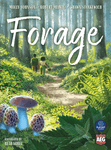
I wanted to share with you all the story of the evolution of Forage – a puzzly roll-and-write game about foraging in the Pacific Northwest! Molly, Robb, and I have been designing and publishing games together for almost ten years and we wanted to share some of our process in working through the design and also the development that happens with the Flatout Games CoLab team that we founded!
Why design a game like Forage? What inspired us?
Our core design team (Molly Johnson, Robert Melvin, and Shawn Stankewich) really enjoy roll and write games. From playing a lot of Yahtzee as kids and getting pretty Ganz Schön Clever(Wolfgang Warsch) obsessed a few years ago, we typically play most roll and write games that come out. One game that really made an impression a few years ago was Silver and Gold (designed by Phil Walker-Harding). The game uses dry erase cards, which felt like a novel inclusion in the roll and write design space. So many roll and write games have sheets of paper which generally feel quite static. One of the fun things about card games is the combinatorial variety you get. Our team has always gravitated towards tableau-building games for this reason. One of our first designs, Point Salad, boiled tableau-building and drafting down to their essences, creating a super simple game that still feels new and different every time you play it. When we started working on a ‘writing-on-cards’ roll and write game, we had just finished making the two Cascadia: Rolling games (designed by Randy Flynn and developed by the Flatout Games CoLab team). Molly and I did a lot of development on that title and I designed aspects of the solo mode and one of the main maps for Cascadia: Rolling Hills. From that work, we had some leftover ideas that we thought might be fun to do in another game in the roll and write genre.
We are primarily based in the Pacific Northwest and are often thinking about games we can theme around this geographic area. The idea of using dice in a foraging game made sense based on the act of going out into the wilderness and trying to see what you can find. We had found the combination of mechanics and theme that we wanted to explore!
What is Forage?
Forage is a roll and write game with dry erase cards used to collect items and score prestige points on an ever-changing tableau. It is played over 13 rounds. At the start of each round you roll and sort the dice. All eight dice are rolled and arranged into groups: multiples on one side, all the singles on the other, and the Special Foraging Die in the basket in the centre. This die can be added to any of the actions. In addition, each round a Journey Tile is flipped over. Journey Tiles are ways to use your time (the currency in the game) to collect bonuses, pull off combos, or gain more points.
/pic9823554.jpg)
Forage – final game – a lot of evolution from initial concept!
Once the dice are rolled and sorted and the Journey Tile is revealed, players simultaneously choose which dice they will use that round to complete actions – earning them points and leading to sometimes very powerful combos. There is no limit to the number of players who can take each combination, so the game scales really well from 1-6 players and the simultaneous play helps keep the game moving at a good pace. Certain die combinations offer players certain actions with certain resources. Although sometimes an action may allow you to use more dice, those dice might not be quite what you need, so you have to balance getting more stuff with getting the stuff that will help you reach your goals. This leads to tense moments, especially since the game is only 13 rounds!
One unique aspect of the game is that the type of group of dice you choose dictates which actions you are able to perform.
/pic9823558.jpg)
Dice sorted and ready to be selected
In Forage, there are a lot of modular systems and moving parts. It certainly made it more of a challenge to balance and design because of the different permutations and combinations of different cards and bonuses that players can collect.
Many design challenges were hashed out through iteration and the killing of darlings.
Since the core system has so many moving parts, a lot of iteration happened throughout the design process.
/pic9823559.jpg)
The very first playtest of Forage – using standard D6 dice and some basic sheets for tracking
/pic9823560.jpg)
The earliest versions of the game used sheets instead of cards for many forms of tracking/progress in the game
The first prototype was one large map card, a larger version of what is now found only on the Exploration Cards, and a large inventory card which included what is now found on the Pantry Cards. There were still other goal cards, but there wasn’t a three-part system in place.
/pic9823562.jpg)
As the game evolved, the sheets got broken up into cards so that the tracking/progress space was more modular and dynamic
/pic9823563.jpg)
The design continued to evolve from larger cards and sheets to smaller cards in larger quantities
It took playtesting and development to create a balanced experience with multiple paths to victory. As mentioned before, the single sheet felt static and as we started to explore the different ‘mini-games’ we wanted players to be able to play with the dice, we realized that separating these onto their own cards and giving players a choice of which systems to engage with as the game evolved would be more interesting.
One happy accident from playtesting was that one night we accidentally played a few rounds with one more die than we had been previously. This ended up making resources a bit more abundant and it meant that you could complete cards more easily. The error ended up making a positive change, so we stuck with it.
We had a lot of debate about the core dice system and the different actions using different types of combinations of dice. This system as it stands, admittedly, takes some getting used to. After trying a version where any combination of dice could be used on any card type, it was clear that it didn’t quite have the same tension. In development we figured out how to use the game setup (largely the central basket card) to help reinforce the rules of the game. The way dice are allocated on the basket card acts a central player aid to remind players the types of actions that can be carried out on each type of card.
/pic9823564.jpg)
Early prototype of the dice allocation and ‘journeys’ systems being tested
One of the biggest challenges in a game with simultaneous play is deciding when the game will ‘gate’ play so that all players need to ‘catch up’ to be at the same place in terms of completing each phase or round. The number of different phases in Forage fluctuated a bit before settling on a simple round structure where dice are rolled and tiles are flipped and there is a short resolution phase if an immediate Journey Tile action comes up, then players have the full round to make their decisions and pull off combos, etc. Then, to signify completion, everyone takes a card and plays it facedown in front of them. This helped to create a cue for when everyone at the table was ready to move on to the next phase.
/pic9823568.jpg)
Playtesting and refining the elements of the game
There was also a lot of balancing of numbers between all of the different scoring and bonus systems in the game. Because we had three distinctly different card types, a Journey system, and shared race goals that encourage players to complete certain things the fastest, there was a lot of work to find the right balance so that no one part of the system presented a dominant strategy or exploitable pattern of play. It was more challenging than some of our other games because despite being pretty simple, this game has a lot of moving parts, so getting them all to work together didn’t come immediately. Thankfully, the Flatout Games CoLab development team loves this kind of work and we were able to get things really balanced within a few months of weekly playtests.
/pic9823569.jpg)
Testing out the nearly final prototype copy with a quick solo game
What makes Forage unique?
We think Forage feels unique because of its weight class. Although pretty easy to teach, the game has a lot of thinkiness that you don’t always find in the lighter games of this genre. We also wanted to bring our own brand of design to the genre and we think this is a roll and write game that feels very ‘Flatout Games’ with many different scoring systems to entice you in different directions each time you play. The game serves up some big turns that allow you to use your resources to pull off very satisfying combos! Beth Sobel’s artwork also helps enhance the experience, making each card you collect feel like a thematic addition to your unique tableau. Forage is heavier than Qwixx or Ganz Schön Clever, but lighter than Three Sisters or Hadrian’s Wall, so we think it fits a really nice niche as a gateway to gateway plus game. As with all of our games, we tried to make a game that we love playing and is challenging for us, but has a really simple core so that new players can get up and playing in no time!
/pic9823556.png)
Thanks for reading and hope you get a chance to play Forage and see what you think of all of the interwoven systems, combos, and dynamic tableaus!
Shawn
Forage Game Credits:
Publisher: Flatout Games
Designers: Molly Johnson, Robert Melvin, Shawn Stankewich
Illustration: Beth Sobel
Graphic Design: Dylan Mangini
Development: Joseph Z. Chen, Randy Flynn, Molly Johnson, Ashwin Kamath, Robert Melvin, Shawn Stankewich
Tell us how can we improve this post?