
by Jay Bendixen
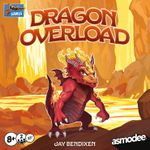
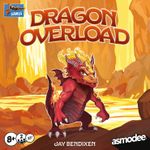
Hi, I’m Jay and I’m the designer of Dragon Overload – a two-player lane battler published by Lookout Games, that plays in 15-mins and is quick to learn with a few interesting twists.
How to Train Your Design
Dragon Overload is now my third published game and it’s a result of the learnings of the many designs that came before it.
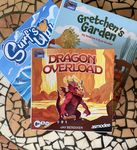
Dragon Overload with my first published games Surf’s Up! and Gretchen’s Garden.
A little background about myself. I work in advertising creating video and campaign content for many types of businesses, so I typically work within a brief and clear parameters. As with most creatives, if you have no guidelines you can make anything – so how do you decide what you are making?
When I was designing my first few games I didn’t really have a clear direction on what I was trying to achieve, I would mostly get inspired by a spark of an idea, reading a book to my kids or a fun theme that I wanted to learn more about. Now, I love all my previous published designs but they had a long road to finding their way into the world. My earlier designs pivoted many times due to many reasons, sometimes it was wanting to address all playtester feedback or try new mechanics or building co-designer relationships and finding that common ground. What I gained from these games was learning the craft of design and learning the type of designer I wanted to become.
Well… Dragon Overload was going to reflect this new design philosophy – make a plan.
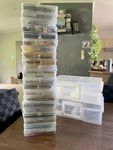
A pile of prototypes that paved the way for Dragon Overload.
What Sparked It All?
I came back from PAX AUS in 2024 with so much energy to design. It was the first major event I attended with a game I had designed that was in retail with a publisher (Surf’s Up!). I got to sign copies of my game and spend time with so many other designers. During all the excitement I managed to pick up a few new releases on the last day of the con – Compile: Main 1 and Knarr.
Knarr’s fantastic artwork and the hype it was getting at the time, meant it was the first game I got to the table. I instantly fell in love with the design and was immediately inspired by its rule ‘take the card from the zone that matches the card you just played’ – it was such a simple set of mechanics paired together. It felt like a space I had not explored in my own designs and I wrote a note to myself – ‘design a simple card game that makes you draw a new card based on the colour you play’.

Me at PAX AUS excited for my first major convention with a published game
Feeding the Little Dragons
For the next few months I was riding the wave (pun intended) of my first game release and watched it tick many bucket lists – game reviews, a mention on the SUSD podcast, a feature in a local news story and many more game signings. I was making more and more designs and my daughter was getting more and more curious about the process too. She wanted to be more involved in playtesting, so I was focusing my attention on lighter designs (which I already enjoyed making) and trying to make sure we could enjoy the process together. There were three other games that set me on my journey…
Compile: Main 1 was the other game I picked up at PAX AUS and I struggled to get it to the table with my family. The complexity was just too high for my young family and my wife just didn’t really want to learn a deeper game at the time – there were too many effects and text on cards for it to hit my table. This is not a criticism of the game, this was just my personal circumstances at the time.
During my trip to PAX AUS, I had also played Lost Cities with Ryan Boucher (my co-designer on Gretchen’s Garden) and although I really enjoyed the game, I instantly knew the math in this game was going to be frustrating for my daughter. Finally, one of my favourite card games is Hanamikoji and despite it being a fantastic design, it’s a little tricky for a younger audience to play and the theme isn’t exactly the best to introduce to an eight-year-old girl. So, I set myself a goal: ‘make a two-player card game that has the tension of Hanamikoji that I can play with my daughter’.

Ryan Boucher and myself at PlayCon in Sydney
The Brief
I had the beginning of my design brief. Now I wanted to set myself some parameters and do some market research. I wanted this design to have:
• Limited text on cards
• Minimal math requirements
• The tension of Hanamikoji
• A family friendly theme and complexity
• Language independent (for an easier teach)
• Some classic 2-player hallmarks with multiple win-conditions (7 wonders duel)
• I really wanted to explore the mechanic Knarr had inspired me with
• Break new design ground (???)
Finally, with all the trade tariffs that were in place at the time, it seemed clear publishers would be looking for smaller box games.
The Heart of the Beast
I had a clear brief and I started exploring this ‘play a colour, draft from that colour zone’ mechanic. Thankfully I already had some prototype cards ready for testing from another design I was working on. Spoiler: Now this might shock you, but that deck from that prototype ended up becoming the exact card distribution for the final game… I just didn’t know that yet.
With the disappointment of not being able to get Compile: Main 1 to the table, I started working on a lane battler concept first as it was also similar to something I was already working on and it lended itself to this colour zone concept (as I already had five suits in that deck).
I wanted to explore how a player can manipulate their own hand of cards with this colour placement rule. Unfortunately, it didn’t feel like I was breaking new ground with this current design, so I turned the concept on its head and changed the rule to ‘you force your opponent to draw from that colour zone’ – now that felt fresh and interesting to me, being able to control your opponents hand was a little strange and it was something worth exploring.
I really love games like 7 Wonders Duel that have alternative win conditions as it drives a strong tension during the entire game and it allows players to influence some of their opponents choices, so for this design, winning all 5 lanes felt like a natural auto win condition, so that went in.
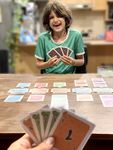
My daughter winning the game by having all 5 lanes – clever girl!
Following the Flight Path
Would a pure numbers game be different enough in today’s market of games? Does this design need player powers or bonus actions or special cards… stop. Now, normally I would spiral into many creative solutions here and probably add new exciting things to the game, but I went back to my personal brief – ‘make a simple two-player card game for my family with no reading required.’ So, without adding new components and text to cards, how can I make this design feel fresh?
I am a huge fan of mitigating a bad hand of cards and I wanted to break new design ground, so I did the most logical thing I could think of, I said ‘WWKD? (what would Knizia do?)’, so the next rule added was ‘you lose a lane if you double your opponents total at the end of the game’ – that was it! That simple rule change added so much depth to the game, as low value cards suddenly became just as important as high value and that became the core of the tension.
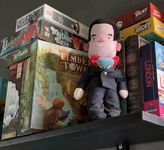
The Doctor looking over me while I design – thanks Bitewing for the fantastic merch!
The Face Off
I wanted players to have a bit more utility with their cards and I also enjoy games with some hidden information. I really enjoyed how Air, Land & Sea allows players to make any card in their hand useful with being able to play face down into any lane and I love making cards multi-use, so I made face-down cards become a value of 0, which increased the ‘double your opponents value’ tension even more. But, I needed to make sure this was a limited resource, otherwise players could abuse this mechanic. I set a maximum limit of three uses of this mechanic and added the final alternative win condition – ‘if you can’t play a card face-up or face-down you immediately lose the game.’
Crunching the Numbers
This design started with a deck of cards I had created for another prototype I was working on. It was important to make sure the game had a small foot print and there was a clear winner at the end of each playthrough. I typically enjoy working in 3s and 5s, which are great because you can’t split them evenly, so a clear winner can be established in a two-player game (if you are fighting over a majority). I wanted the game length to sit around 10-20mins (which was the sweet spot for the card games we played as a family). I chose to avoid a three lane system as there had been lane battle style games in the market at the time like Compile and Air, Land & Sea also occupied this space – so I decided to go with five lanes and I already have a five suit deck of cards, so that worked great for quick testing.
To make sure the game didn’t overstay its welcome, I wanted to keep the deck contained to under 60 cards, as that would also mean it wouldn’t take up too much tablespace. I also didn’t want the math to get too difficult for players when assessing the table, so I went with a max of three cards in each lane. This left me with three cards in each lane per player (30 cards total would be played to the table). The hand size was important to keep low (as my daughter struggled holding more than five or so cards in her hand), so a max hand of five felt intuitive based on the five suits in the game.
There were two more decisions to resolve: ‘should the deck only be numbers 1-8? Would having a 6 and 9 in the deck cause visual confusion when looking at them upside down?’ and ‘how would the hand size change between the active players?’. The first problem was solved quickly when testing didn’t show players had much of an issue with 6/9 visuals and the second problem was solved by making sure the active player always had five cards – which would also become a great way to track whose turn it was.
After exploring the range of numbers I had in the deck, I ended up back where I started, a simple deck of 1-9 cards in five suits doing something special. This worked perfectly because I also wanted some hidden information with at least one unseen card remaining per play. 30 cards played, five left on the table, nine in players hands and one card left unseen = 45 cards total.
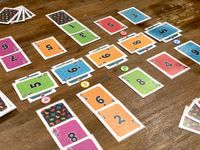
The original theme ‘Over the Pond’ had players hatching animals into habitats on their side of the board
Paying Tribute
As with most designs, they are inspired by what has come before them and it is only fitting that I pay tribute to three fantastic designs that inspired and encouraged me to make sure this design could stand on its own. I have already mentioned Jon Perry’s Air Land & Sea, and I also want to acknowledge Dr. Reiner Knizia’s Schotten Totten & Lost Cities. These are the absolute benchmark of this genre and have stood the test of time. From the very start I wanted to make something that could stand next to these masterclass designs. It was also very important to me that this design felt unique, brought something new to the genre and felt like a game you could come back to again and again. Elegance to me is stripping a design back to its absolute core and making sure each mechanic and component feels necessary to the design.
Taking Flight
The game was pretty good but it was missing some spice. It wasn’t until I spent an afternoon with my friend and extremely talented designer Matthew Dunstan, that the last piece of the puzzle was added to the game. The design already had face-down cards in the game as some hidden information but it wasn’t quite landing how I wanted it, as they were all currently valued at 0. Matt made a simple suggestion ‘what if they add to your total if they match their colour zone when revealed?’ – that was it! The face-down cards became more than just a way to force your opponent to double your score, they became a bluff and added that final bit of tension to the game.
All the pieces were now in place and players were having those ‘aha moments’ regularly (myself included) and the game was being requested for repeat plays immediately. Even as the designer, all I wanted to do was get this game to the table as much as possible and explore all the little nuances this system offered – mainly to do my due diligence to check for mechanical flaws, but honestly, I just enjoyed playing it. So, no special text on cards, a simple teach, a few new twists on the genre and multiple win conditions all packed into a small box with plenty of depth.

Me, Matthew Dunstan and my wife Renee hanging out at PAX AUS
Design Overload
This game was started in March 2025, and I pitched it to Lookout Games in July 2025 and thankfully they also had those ‘aha moments’ when they saw the pitch video and it was signed in December 2025. Lookout got moving very quickly on the theme of the game and they landed on dragons. The ‘doubling your opponent’ mechanic became synonymous with the ‘Overload’ part of new title, which made teaching the game even easier.
My kids were thrilled with this theme too and the artwork by Nele Diel was super cute and very approachable for families – so this all aligned well with my personal design brief.

Original concept art by Nele Diel for the dragons and landscapes
The game is now released worldwide – an 18-month timeline! I am well aware this kind of timeline is very uncommon in this industry, but if I was to take away one piece of advice from this project it’s ‘design yourself a design brief’ and try to stick with it (within reason)… and if all else fails, ask yourself WWKD?
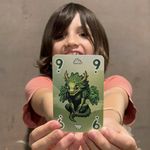
My daughter with her favourite dragon from the game
I am extremely proud of this design and it’s going to be difficult to make something I would consider more elegant than it… maybe that should be my next design brief?
Dragon Overload is now available worldwide (in multiple languages) and on Board Game Arena.
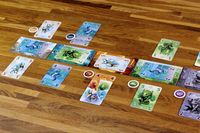
A game of Dragon Overload in action
Tell us how can we improve this post?