
/pic8929263.png)
The Origin of the Idea
For a long time, I wanted to design a game in which instead of assembling the game, it would gradually disappear. I had several notes, but the spark came when Ricardo, a friend, shared his inner world with me: seven colored dragons in the mountains surrounding a legendary dragon in a valley, and seven tribes protecting it.
He asked me to design a game without luck. My analytical side reduced that world to numbers: a valley composed of seven rows and seven columns of colored demon tiles, with polyominoes around the edges to remove demons from the valley — and in the center lies the legendary dragon’s egg.
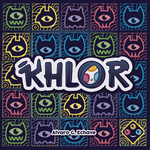
Each player aims to dominate as many colors as possible, collecting demon tiles matching the polyominoes with the demon tokens while enhancing those colors with dragon eggs. Sounds like a tongue twister? It’s the rebirth of the dragon empire!
Early Playtests
The first games at home and with friends quickly revealed what worked and what didn’t. Seven colors was too many, and player interaction was minimal. Additionally, assigning colors to the polyominoes felt forced.
After several deep adjustments, the mechanisms were consolidated, and randomness was reduced to a minimum. Colors were reduced to five, and the final scoring system was set. Initially, I designed this as a two-player game, but after these adjustments, it worked perfectly with three players. The only weak point — that I saw at that moment — was the final turn, but even so, I felt the game was ready to be shown at board game fairs.
/pic9133533.jpg)
Jugamos Tod@s in Córdoba, Spain — October 2023
During this festival, I spent four days at a table, teaching people to play and playing over forty games of Khlor myself. This allowed me to test additional scoring methods and adjust the number of turns per player.
The major breakthrough was reducing the number of demons drawn per turn from four to three and aiming to expand the game to four players. More importantly, this added an interaction component: polyominoes could now include a symbol to remove eggs of colors that didn’t interest you.
At the product level, a recurring problem emerged: the set-up without a board was messy and became the weakest aspect of the prototype. I began working on a solution.
It was a real gaming marathon, but I left motivated by how the design was evolving.
/pic9133534.jpg)
Interocio in Madrid, Spain — March 2024
For this fair in March, I already had a base board and the table presence improved a lot. During Interocio, I didn’t play any game; I just watched how everything flowed. Feedback remained positive in the games, but I felt the games mechanisms still didn’t work as smoothly as they should, so one of the moves after the fair was to add a sixth color so that four-player games would have more colors to fight for.
/pic8161392.jpg)
/pic9133536.jpg)
SPIEL in Essen, Germany — October 2024
In Essen, I realized the sixth color wasn’t necessary; allowing the second player in each color to score as well solved the previous issue and doubled the scoring opportunities. The additional challenge was adjusting the resolution of ties in each color to ensure fairness.
Essen also brought the definitive revelation regarding the final product. A player told me, “The game works, but if you can make the pieces stay in place, it will greatly improve the players’ experience.”
He was right. Nobody wants to be frustrated because a tile falls and disrupts the board, forcing the game to pause. The solution was clear — stackable tiles — but I didn’t know of an existing way for how to stack them, so finally I created my own design:
/pic9133537.jpg)
This feature increased the production cost but was necessary — and since the game was already taking on a deluxe edition feel, I took the opportunity to improve the other components: 3D wooden eggs and a wooden board joined the game. When I received the prototype, I realized this would be the final version of Khlor.
Dados Colgados in Cuenca, Spain — November 2024
With a pre-production copy ready and the Kickstarter campaign about to launch, I attended this fair, taking advantage of being nearby to record videos for the campaign. There, I realized I could simplify the game even further.
/pic8713044.jpg)
I removed a rule that had been in place since the beginning: the obligation to always place a polyomino next to an egg. Once I removed this rule, something magical happened: Players started playing on their own after the initial explanation, with no need for corrections from me.
The central egg was no longer necessary, but I decided to keep it in the game, more for romance and personality than function, and it still adds a small placement challenge.
That same event revealed another issue: I noticed some players made mistakes when flipping polyominoes during the selection phase. Those mistakes carried too much weight in the game. All players should have access to every tile at some point, so the previous mechanism was flawed for several reasons. The solution, inspired by Patchwork, was to simplify: Players would now choose between only two polyominoes each turn. This was more than enough to preserve strategic depth while minimizing mistakes.
With these changes, the games began to run smoothly on their own. I left Cuenca very satisfied because I had solved design issues that had been there since the beginning, issues that I hadn’t been able to see until then.
Final Refinement
In December 2024, I worked on the solo mode. The white demons, which were previously just wild cards, became automatons with a system of arrows and orientations full of potential. I liked it so much that I decided to include an advanced mode in the rules as well.
/pic9134057.jpg)
Conclusion
After this entire journey, Khlor has become a game with many possibilities, but always guided by a clear design principle: simplify as much as possible to leave only the essential.
This philosophy also helped me solve the final turn issue. I tried making the game last a fixed number of rounds, but it was messy; players put more effort into counting than playing, and depending on the number of players, the game ended too early or too late.
The solution was, again, simple: Play until you can’t play anymore, until no turns are possible. If the round didn’t align perfectly with the initial player, I added a simple extra turn to bring the game to its final resolution.
/pic8929266.jpg)
Khlor has undergone many adjustments, always maintaining its original essence. I believe this was the key to designing my most mature game to date, and I am very happy for the support everybody showed during the process and during the crowdfunding campaign.
After three years of development, SPIEL Essen 25 was a celebration of all the work behind Khlor. If you were there, thanks for stopping by! If not — but you’re attending PAX Unplugged — you can take a look at the game in the PAXU First Look Area.
Thanks for reading!
/pic9215296.jpg)
Tell us how can we improve this post?