TGN – Tabletop Gaming News News for Tabletop, Boardgames, Miniatures, RPGs and Card Games!
-
 Games Workshop Accidentally Leaks New Dwarf Faction for Age of Sigmarby TGN News Team on September 14, 2026
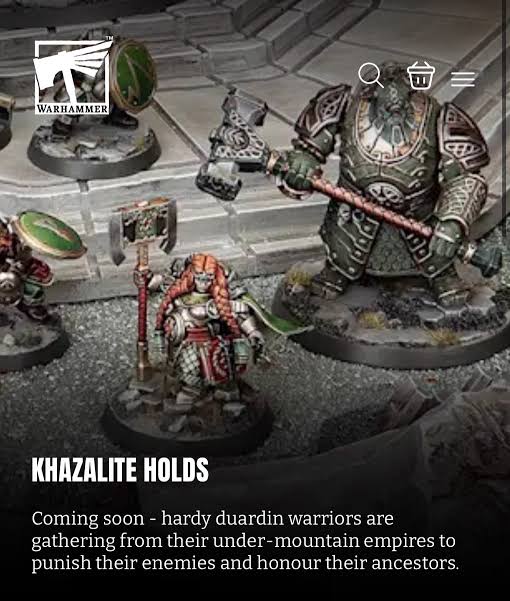
Games Workshop has a new dwarf faction headed to Age of Sigmar — and we know that because the company accidentally showed it off early. The Khazalite Holds briefly appeared on the Irish version of the Warhammer Store website before being hastily taken down. GW hasn’t released high-resolution versions of the images, so for now...
-
 D&D Head Dan Ayoub Opens Up on the OGL: “Trust Takes a Long Time to Build and a Second to Break”by TGN News Team on September 14, 2026
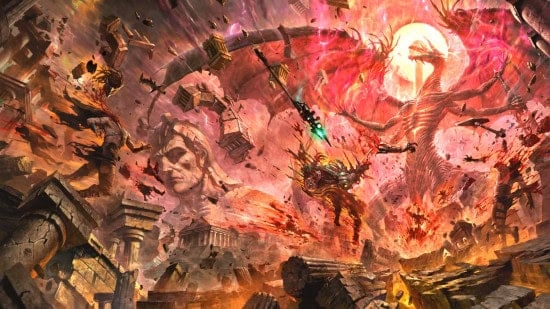
Three years after the OGL crisis, Wizards of the Coast is still working to win back the tabletop community — and the man running D&D says he knows the clock is ticking. Dan Ayoub, who took over as Head of Dungeons & Dragons in 2025, spoke with Wargamer’s Mollie Russell about the fallout from the...
-
 Steve Jackson Steps Down as CEO After 46 Yearsby TGN News Team on September 12, 2026
Steve Jackson is handing over the reins. The founder of Steve Jackson Games is stepping down as CEO after leading the company for 46 years, returning to what he’s always loved most: designing games. Sabrina Gonzalez, a longtime SJG staffer, is taking over as CEO. Allison Page, previously Managing Editor, has been promoted to Chief...
-
 D&D Delves Back Into the Underdark With New Playtest Optionsby TGN News Team on September 10, 2026
Wizards of the Coast has released a second round of Underdark-themed playtest material for Dungeons & Dragons, and it’s packed with new ways to build a character from the deep places of the world. The new Unearthed Arcana: Underdark Options 2 PDF introduces three subclasses and five new species, all drawing on the strange, dangerous...
-
 Discworld Returns to the Tabletop with New Modiphius RPGby TGN News Team on September 10, 2026
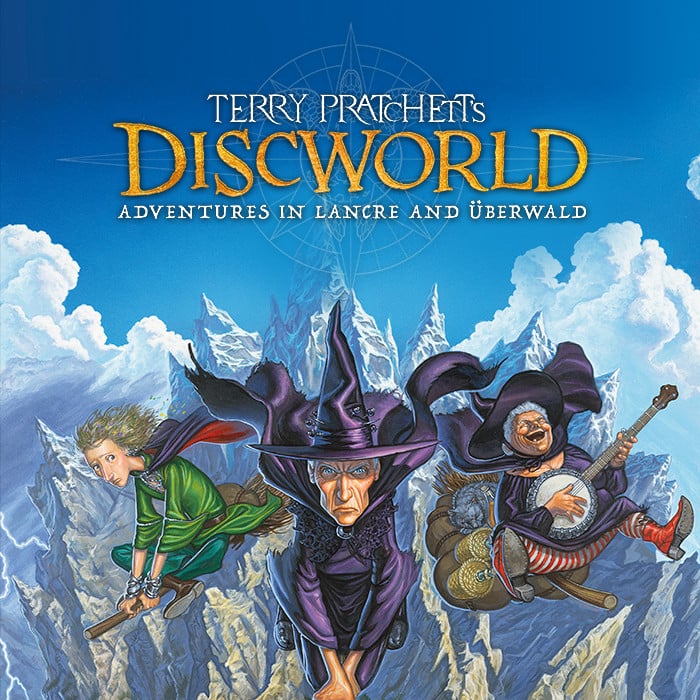
Modiphius Entertainment is heading back to the Disc — and this time it’s trading the cobbled streets of Ankh-Morpork for the hills, forests, and castles of the Ramtops. The publisher has announced Discworld: Adventures in Lancre and Überwald, a brand-new tabletop RPG launching on Gamefound this October. It follows the success of Discworld: Adventures in...
-
 Wizards of the Coast Releases Exodus TTRPG, Tying Into Upcoming Sci-Fi Video Gameby TGN News Team on September 9, 2026
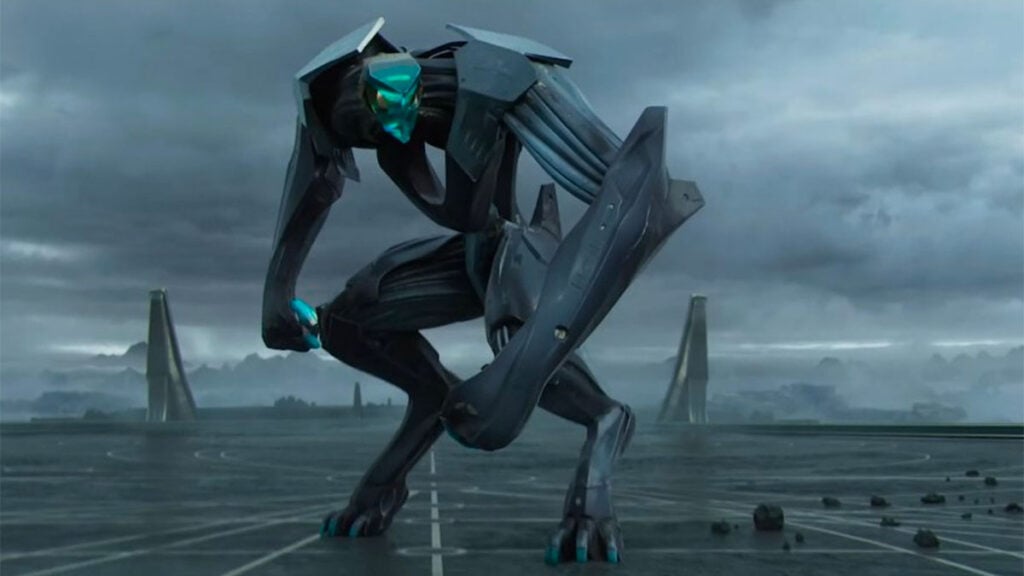
Wizards of the Coast has released Exodus, a new sci-fi tabletop RPG set in the same universe as the upcoming AAA video game from Archetype Entertainment. The Traveler’s Handbook and Exodus Encyclopedia are now available for purchase through the official Exodus webpage. Designed by James Ohlen—the veteran RPG designer behind Baldur’s Gate 2, Dragon Age:...
-
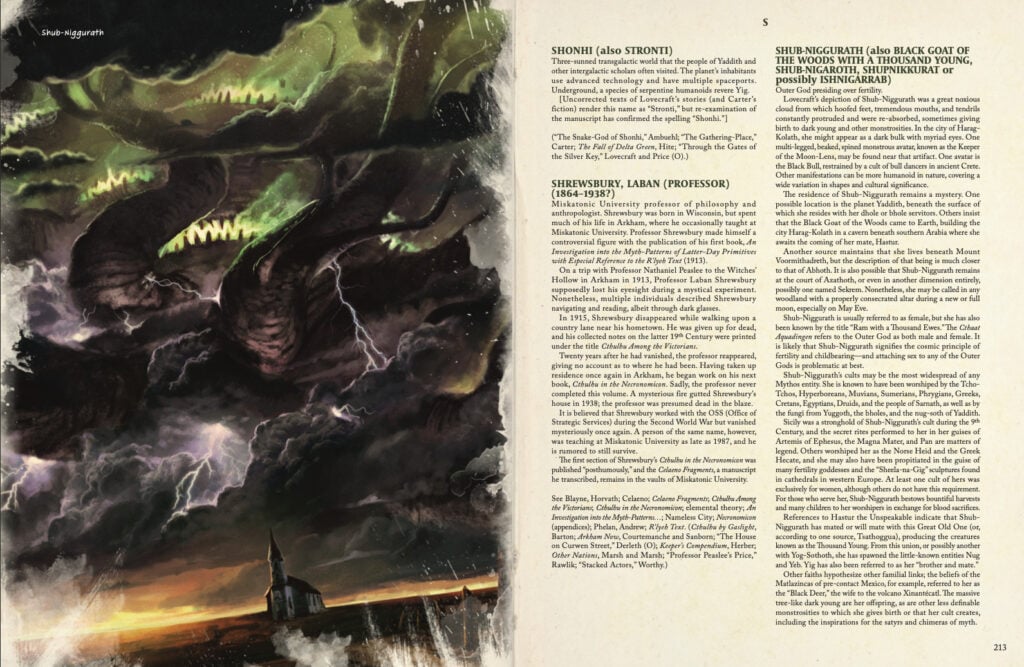 The Encyclopedia Cthulhiana Returns – Chaosium’s Definitive Mythos Guide Hits in Octoberby TGN News Team on September 9, 2026
Chaosium is releasing a new fourth edition of The Encyclopedia Cthulhiana this October, bringing the definitive guide to Lovecraftian horror back to shelves in full-color hardback format. First published in 1994 and updated several times since, the book compiles detailed entries on mythos deities, creatures, tomes, and artifacts—from Azathoth to Zylac—tracing their appearances across fiction...
-
 CMON Faces Make-or-Break Moment as It Warns of “Prolonged Structural Downturn”by TGN News Team on September 9, 2026
CMON has issued a stark warning about its future, telling investors its core business is stuck in a “prolonged structural downturn” and still burning through more cash than it brings in. The tabletop crowdfunding giant is now racing to raise up to $17.5m from outside investors. The warning landed alongside CMON’s H1 financial report, and...
-
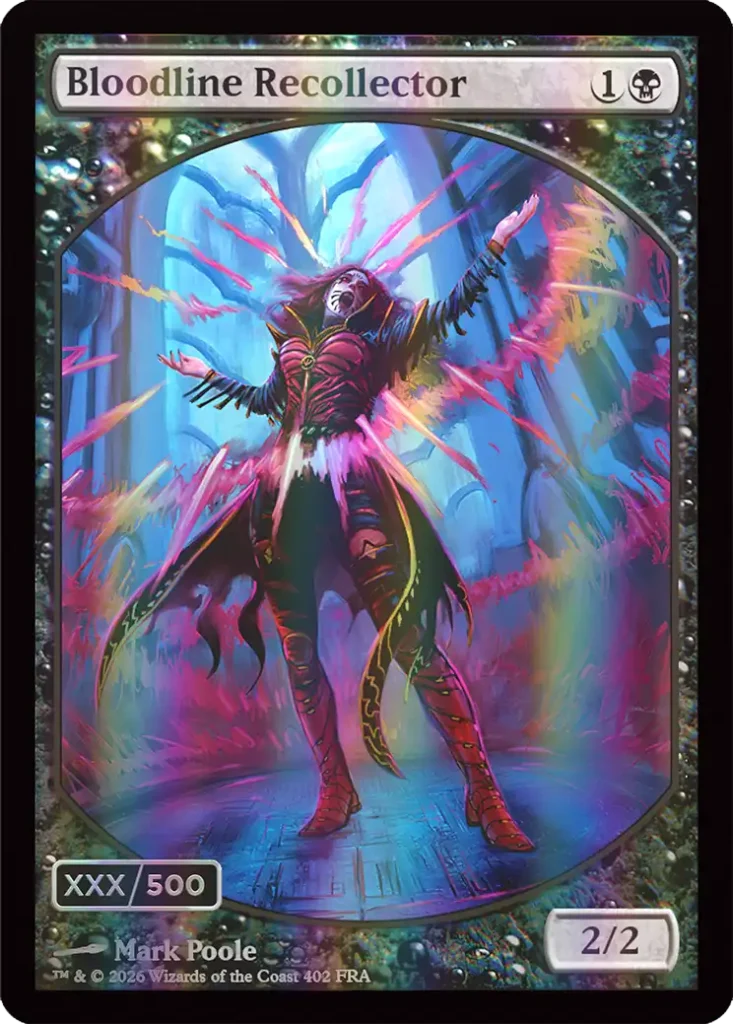 Magic: The Gathering – Reality Fracture Cards Revealedby Daniel Kling Lorentsen on September 8, 2026
Wizards of the Coast has dropped the first card previews for Magic: The Gathering – Reality Fracture, the upcoming set that flips the Multiverse on its head. Arriving October 2, the set continues Jace Beleren’s storyline as his creation of an alternate Echoverse threatens to overwrite reality itself, birthing the school of Hexhaven and giving...
-
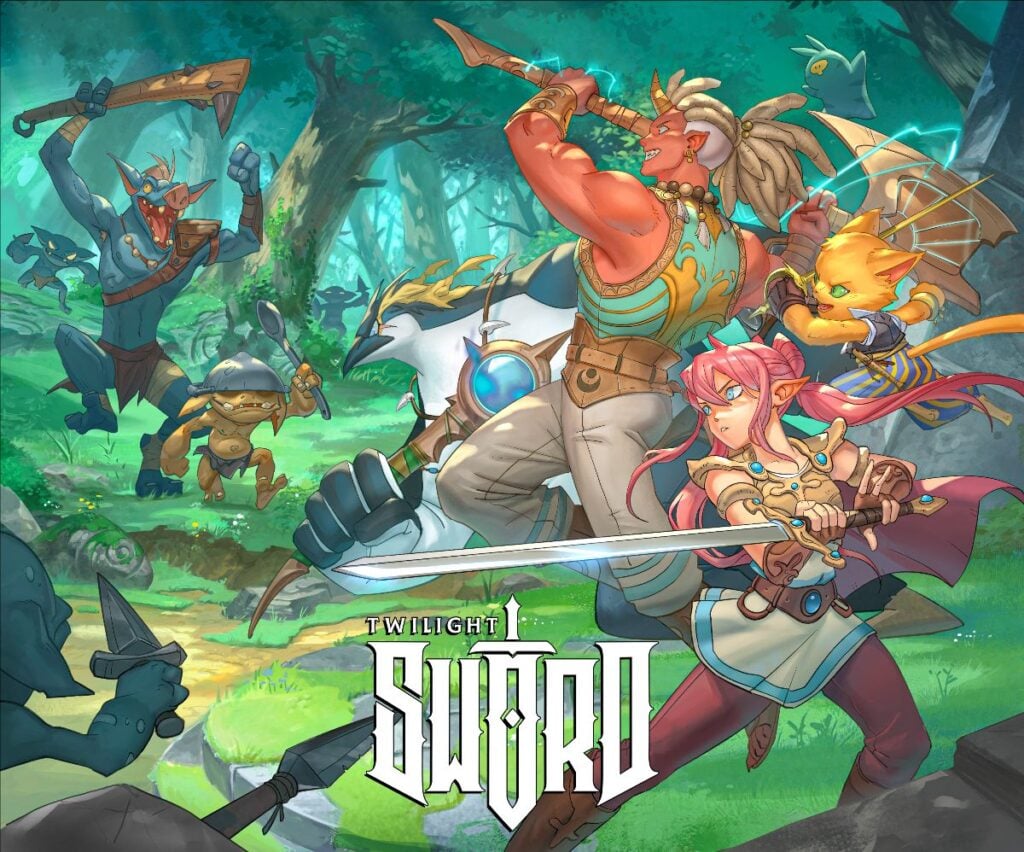 Free League Opens Pre-Orders for Twilight Sword & Outgunned Superheroes – PDFs Available Nowby Daniel Kling Lorentsen on September 8, 2026
Free League Publishing and partner Two Little Mice have opened pre-orders for two new tabletop RPGs launching in physical form later this fall: fantasy adventure Twilight Sword and cinematic superhero RPG Outgunned Superheroes. Both are available for pre-order now through the Free League store, with immediate PDF access included. Inspired by classics like The Legend...
BoardGameGeek Blog | BoardGameGeek BoardGameGeek features information related to the board gaming hobby
-
/pic9581054.jpg "Designer Diary - Oil Rock") Designer Diary - Oil Rockby BGGCranioCreations on September 26, 2026
Designer Diary - Oil Rockby BGGCranioCreations on September 26, 2026by BGG Cranio Diary written by Marco Piola CaselliIf I had to describe in a few words the process that turned Oil Rock into the game it is today, I’d say it’s a story of oil, ambition, and collaboration. It’s the result of a long journey full of twists and turns;from the initial chaotic sketch through months of conceptual development to the awarding ceremony of the Premio Archimede ceremony and genuine teamwork with Studiogiochi, Simone Luciani of Cranio Creations, Andrea Chiarvesio, and their playtesting groups.What follows is an honest account of that journey, detailing what I designed, how collaboration shaped it, and how every contribution improved the game. I am extremely proud of the result and grateful to everyone who worked with me to achieve it.The Spark: Edwin Drake and the Black Gold RushTitusville, Pennsylvania, 1859. Edwin Drake, a railroad worker with no technical training, drills the first oil well in American history. This sets in motion a revolutionary transformation of the global economy.I discovered his story while searching for an authentic and dramatically intense setting for a new game. Mid-19th-century Pennsylvania: a land of ambition, vision, and unbridled competition where market rules did not yet exist, seemed to me the ideal location for a true black gold, rush fueled by the risks and aspirations of entrepreneurs and pioneers alike. This is where the idea for Oil Rock originated.My Creative ProcessAs a designer, I take a "primarily mental" approach. Much of the design process takes place inside my head rather than on paper or a screen. This is precisely how Oil Rock came to be.My process consists of three phases. First come notes as prompts (~20%), which are scattered and chaotic jottings that trigger my thoughts rather than documenting them. Next is pure mental development (~50%), the heart of the work, in which the game shapes up in my mind until it takes precise form, even before prototyping. Finally, there's digital prototyping (~30%), which is more like transcription than exploration for me. That is how a game moves from my mind to the screen, where the final touches and corrections emerge.Oil Rock fully reflects this process. From the initial idea to the first digital version, it took about three months: not because of haste, but because it is the result of a process that takes place quietly yet continuously, even before the first pixel appears on the screen.Starting from Actions: Building the Game from the Ground UpIn thematic games, I believe the result should be a system in which every action is consistent with the theme and mechanically connected to one another. In Oil Rock, for example, there are no "neutral" actions; every choice ripples through the entire structure of the game. When designing Oil Rock, I therefore began by defining which actions made thematic sense and linking them organically to one another. This led to actions such as drilling wells, extracting oil, building and upgrading refineries, moving across the territory via the railroad network, building offices, and exploiting patents. The Heart of the Game: Reputation and CharactersThe mechanic I’m most proud of ties the Reputation track to the Characters' evolution. I believe it best captures the spirit of the era that the game aims to represent.The Reputation track has seven colored sections. A player’s position on the track determines turn order (the player with the highest reputation plays last) enhances their Character (gradually strengthening its special ability), and contributes to earning Victory Points, with bonuses for reaching the most advanced spaces.This threefold function creates constant tension, as every step forward is both an advantage and a risk. Similarly, during the 19th-century oil rush, a person’s reputation was as valuable as an oil well: being too visible could make you a target.Characters amplify this dynamic. Each one provides a starting-round income and has a special ability that grows as the player advances along the Reputation track. This ability is limited at the start but becomes a formidable weapon in the final stages.Once a character reaches the final section of the track, it stops providing income and instead offers a better conversion of remaining resources at the end of the game. This shifts the strategic focus in the closing stages.Extra Focus: The Six Historical CharactersOne of the greatest joys of designing Oil Rock was conducting historical research on its Characters. I sought out real-life figures who played a decisive role in the first oil rush, not just the most famous names, but also lesser-known figures whose stories struck a chord with me during my research.I had two selection criteria: the characters' stories had to be interesting and authentic, and their historical roles had to translate into game mechanics that were consistent with their real-life identities. I didn’t want decorative characters; I wanted each card to tell a true story through a genuine mechanic.In addition, I conducted historical research to select each character. I also wanted to seek out lesser-known figures whose stories had resonated with me during my research. I didn’t want decorative characters; I wanted each card to tell a true story through authentic mechanics.Characters playable in the game are:Edwin Drake "Colonel Drake" is the central figure in this story. On August 27, 1859, he successfully drilled an oil well for the first time in Titusville, Pennsylvania, using a technique inspired by water well drilling methods. Although he never patented his method and died in poverty, his innovation changed the course of global energy history. In the game, Drake is the drilling expert. His special ability allows him to purchase drills at lower prices, eventually earning him additional Victory Points without having to pay for equipment in the later stages.George Bissell Bissell, considered the father of the modern oil industry, was the first to realize that oil could be extracted from the ground and refined on a large scale to produce kerosene. He financed Drake’s drilling in Titusville in 1859. In the game, Bissell's entrepreneurial vision translates into the ability to build offices in any city. These offices offer increasing discounts that, in later stages, make construction completely free and profitable.Ignacy ŁukasiewiczŁukasiewicz is the most unusual character in the game, in my opinion, and one of the most fascinating. A Polish pharmacist and chemist, he invented the first modern kerosene lamp in 1853 and founded the world’s first oil mine in Bóbrka the following year. He introduced kerosene street lighting and built the first refinery in 1856. In the game, he is the only character with a unique mechanic: the Energy reminder. This allows him to convert oil into energy and upgrade refineries in a way that is unavailable to other players.Cornelius VanderbiltThe great transportation magnate first built his empire with steamboats, then with railroads. This made it possible to transport Pennsylvania oil on a large scale to major industrial centers. In the game, Vanderbilt is the locomotive master. His special ability allows him to make free "jumps" of any distance, earning increasing bonuses from the destination city. These bonuses range from reduced coal costs to additional Victory Points in the later stages.John D. RockfellerThe founder of the Standard Oil Company controlled up to 90% of oil refining and distribution in the United States. In the game, his power centers on refineries. Before the refining phase, he can purchase new refineries and receive an increasing quantity of additional barrels of oil in return: a significant advantage that grows even more substantial in the final stages.Andrew CarnegieCarnegie, a Scottish-born entrepreneur who became a naturalized American citizen, is known for founding the Carnegie Steel Company. His company revolutionized steel production, paving the way for the expansion of America’s railroad and oil infrastructure. He donated nearly 90% of his fortune to educational and cultural causes. In the game, his power is tied to turbines. After the extraction phase, he can purchase turbines in exchange for colored barrels of oil, a combination whose value increases as his reputation grows.The Evolution of the Action Selection SystemOf all the elements, the system for selecting and resolving actions has evolved the most during development. In the original version, the board was already diamond-shaped, but the system was different. Players pre-positioned their pieces in stacks within the four sections. Then, actions were resolved based on their reputation. This system was tactically interesting because everyone could see each other’s “bets”, but the order depended only on reputation, creating tension between positioning and execution.When Studiogiochi analyzed the prototype, it became clear that the system was not compatible with the diamond-shaped board, resulting in excessive complexity. They therefore proposed a simpler circular wheel that would maintain rotation from one round to the next while making it easier to choose actions.The Evolution of Wells, Refineries and TurbinesThanks to the collaboration with Studiogiochi and Cranio Creations, other key elements underwent profound transformations during development.- Oil wells: Originally, they were buildings that could be constructed progressively. Plus, the drills beneath them provided additional bonuses during extraction. This system was thematically faithful to historical reality but proved too complex without adding meaningful decisions. Thus, they became pre-printed zones, and the role of the drills was clarified: each active drill produces one barrel of the well’s color. This may seem like a loss, but it is actually a gain because every remaining decision carries more weight.-Refineries: Originally, they were meant to be drawn from a shared board, a common display. However, this did not create meaningful interactions, only an extra step. Now, each player manages their own refineries, placing them in ascending order on a dedicated board. This made the game more compact and easier to follow.-Turbines: They did not exist in the original version. Instead, there were warehouses with a different function. While working with Simone Luciani of Cranio Creations, these were reimagined as turbines: power-ups that amplify the bonuses of the neighboring refineries, adding an additional layer of strategy for players to consider.The Map: From Fixed Roads to Hexagonal TilesThe other significant evolution in the game's structure concerns the map on which locomotives move, offices are built, and bonuses are earned. Originally, the territory was a pre-printed network with fixed connections between cities. This design was visually clear but lacked variety, as distances, routes, and costs remained identical in every game.Thanks to Studiogiochi, however, the map has evolved into a system of twelve modular hexagonal tiles in three colors, each indicating a different level of cost and revenue. These tiles are arranged randomly in each game according to a pre-printed pattern, thus creating a different geography each time: movement strategies, office placement, and supply routes change accordingly from session to session. To further refine the system, we have also introduced Railway Bonus Tokens, which provide permanent bonuses to players passing through each tile. These bonuses are always available and make every city significant. The territory is never neutral.Premio Archimede and the Meeting with Simone LucianiOil Rock was presented at the Premio Archimede awarding ceremony, Italy’s most important competition for unpublished board games. The event was attended by leading figures in the industry. The game remained on the podium throughout the finals, confirming the effectiveness of its design.However, the award held much greater significance: among the judges was Simone Luciani, one of Italy’s most internationally acclaimed designers of board games, including Tzolk’in, Barrage, Grand Austria Hotel, and Lorenzo il Magnifico. Recognizing the game’s potential, he brought it to Cranio Creations for publication, and from there, my prototype began its journey toward an international release.Teamwork: from development to publishingOil Rock, in its final form, is the result of genuine teamwork, with top-level professionals contributing to successive, complementary stages of the project.- Studiogiochi: The first stage of development was carried out in collaboration with one of the most established game design studios in Italy. They resolved the issue of the diamond-shaped board by proposing a circular wheel, guided the simplification of the oil wells and transfer of the refineries to individual player boards, and refined the individual actions and bonuses together, giving each the right strategic weight.- Simone Luciani & Cranio Creations: Luciani worked on several aspects simultaneously, including the actions on the wheel, the distribution of bonuses over time and the duration of the game, which was set at four rounds to ensure tension without slowing the pace. He also devised the turbines and Milestone tiles, variable round objectives that add variability and shared tension. They are simple in appearance, but require precise calibration.Andrea Chiarvesio and the playtesters then took over. In the final phase, they systematically balanced the game by testing and measuring every path to victory (reputation, refineries, drills, consultants and territory) while relying on the mathematical balancing calculations that I had developed from the outset of the design process.Oil Rock: The Game in its Final FormAs of now, Oil Rock 1864 is a board game for 2–4 players ages 14 and up. It takes 50–80 minutes to play. It is a heavy Euro game, featuring long-term management and planning, interconnected mechanics, and significant decisions every turn. Players assume the roles of ambitious pioneers during Pennsylvania’s first oil rush and lead one of six historical figures from that era. The goal is to build the most powerful oil empire by balancing extraction, refining, territorial expansion, and reputation management.A game consists of four rounds, each of which is divided into nine sequential phases. These phases include spinning the action wheel, earning the Character income, extracting oil, refining, gaining Milestone bonuses, and determining the new turn order. Each round is a complete cycle of planning, execution, and consequences.Oil Rock offers multiple paths to victory. Players can earn points from offices built in cities, the depth of active drills in each well, refineries on Side B with adjacent turbines, their final position on the Reputation track, and black Improvements if certain conditions are met. In the later stages, players can earn points from their Character. This variety ensures that every game can be won with different strategies and that no single tactic dominates.
-
/pic9225193.png "Designer Diary: Creating a unique twist on 'writing on cards' in Forage!") Designer Diary: Creating a unique twist on 'writing on cards' in Forage!by stankewich on September 25, 2026
Designer Diary: Creating a unique twist on 'writing on cards' in Forage!by stankewich on September 25, 2026by Shawn Stankewich I wanted to share with you all the story of the evolution of Forage - a puzzly roll-and-write game about foraging in the Pacific Northwest! Molly, Robb, and I have been designing and publishing games together for almost ten years and we wanted to share some of our process in working through the design and also the development that happens with the Flatout Games CoLab team that we founded!Why design a game like Forage? What inspired us? Our core design team (Molly Johnson, Robert Melvin, and Shawn Stankewich) really enjoy roll and write games. From playing a lot of Yahtzee as kids and getting pretty Ganz Schön Clever(Wolfgang Warsch) obsessed a few years ago, we typically play most roll and write games that come out. One game that really made an impression a few years ago was Silver and Gold (designed by Phil Walker-Harding). The game uses dry erase cards, which felt like a novel inclusion in the roll and write design space. So many roll and write games have sheets of paper which generally feel quite static. One of the fun things about card games is the combinatorial variety you get. Our team has always gravitated towards tableau-building games for this reason. One of our first designs, Point Salad, boiled tableau-building and drafting down to their essences, creating a super simple game that still feels new and different every time you play it. When we started working on a ‘writing-on-cards’ roll and write game, we had just finished making the two Cascadia: Rolling games (designed by Randy Flynn and developed by the Flatout Games CoLab team). Molly and I did a lot of development on that title and I designed aspects of the solo mode and one of the main maps for Cascadia: Rolling Hills. From that work, we had some leftover ideas that we thought might be fun to do in another game in the roll and write genre.We are primarily based in the Pacific Northwest and are often thinking about games we can theme around this geographic area. The idea of using dice in a foraging game made sense based on the act of going out into the wilderness and trying to see what you can find. We had found the combination of mechanics and theme that we wanted to explore!What is Forage?Forage is a roll and write game with dry erase cards used to collect items and score prestige points on an ever-changing tableau. It is played over 13 rounds. At the start of each round you roll and sort the dice. All eight dice are rolled and arranged into groups: multiples on one side, all the singles on the other, and the Special Foraging Die in the basket in the centre. This die can be added to any of the actions. In addition, each round a Journey Tile is flipped over. Journey Tiles are ways to use your time (the currency in the game) to collect bonuses, pull off combos, or gain more points.Forage - final game - a lot of evolution from initial concept!Once the dice are rolled and sorted and the Journey Tile is revealed, players simultaneously choose which dice they will use that round to complete actions - earning them points and leading to sometimes very powerful combos. There is no limit to the number of players who can take each combination, so the game scales really well from 1-6 players and the simultaneous play helps keep the game moving at a good pace. Certain die combinations offer players certain actions with certain resources. Although sometimes an action may allow you to use more dice, those dice might not be quite what you need, so you have to balance getting more stuff with getting the stuff that will help you reach your goals. This leads to tense moments, especially since the game is only 13 rounds!One unique aspect of the game is that the type of group of dice you choose dictates which actions you are able to perform.Dice sorted and ready to be selectedIn Forage, there are a lot of modular systems and moving parts. It certainly made it more of a challenge to balance and design because of the different permutations and combinations of different cards and bonuses that players can collect.Many design challenges were hashed out through iteration and the killing of darlings.Since the core system has so many moving parts, a lot of iteration happened throughout the design process.The very first playtest of Forage - using standard D6 dice and some basic sheets for trackingThe earliest versions of the game used sheets instead of cards for many forms of tracking/progress in the gameThe first prototype was one large map card, a larger version of what is now found only on the Exploration Cards, and a large inventory card which included what is now found on the Pantry Cards. There were still other goal cards, but there wasn’t a three-part system in place.As the game evolved, the sheets got broken up into cards so that the tracking/progress space was more modular and dynamicThe design continued to evolve from larger cards and sheets to smaller cards in larger quantitiesIt took playtesting and development to create a balanced experience with multiple paths to victory. As mentioned before, the single sheet felt static and as we started to explore the different ‘mini-games’ we wanted players to be able to play with the dice, we realized that separating these onto their own cards and giving players a choice of which systems to engage with as the game evolved would be more interesting.One happy accident from playtesting was that one night we accidentally played a few rounds with one more die than we had been previously. This ended up making resources a bit more abundant and it meant that you could complete cards more easily. The error ended up making a positive change, so we stuck with it. We had a lot of debate about the core dice system and the different actions using different types of combinations of dice. This system as it stands, admittedly, takes some getting used to. After trying a version where any combination of dice could be used on any card type, it was clear that it didn’t quite have the same tension. In development we figured out how to use the game setup (largely the central basket card) to help reinforce the rules of the game. The way dice are allocated on the basket card acts a central player aid to remind players the types of actions that can be carried out on each type of card. Early prototype of the dice allocation and 'journeys' systems being testedOne of the biggest challenges in a game with simultaneous play is deciding when the game will ‘gate’ play so that all players need to ‘catch up’ to be at the same place in terms of completing each phase or round. The number of different phases in Forage fluctuated a bit before settling on a simple round structure where dice are rolled and tiles are flipped and there is a short resolution phase if an immediate Journey Tile action comes up, then players have the full round to make their decisions and pull off combos, etc. Then, to signify completion, everyone takes a card and plays it facedown in front of them. This helped to create a cue for when everyone at the table was ready to move on to the next phase. Playtesting and refining the elements of the gameThere was also a lot of balancing of numbers between all of the different scoring and bonus systems in the game. Because we had three distinctly different card types, a Journey system, and shared race goals that encourage players to complete certain things the fastest, there was a lot of work to find the right balance so that no one part of the system presented a dominant strategy or exploitable pattern of play. It was more challenging than some of our other games because despite being pretty simple, this game has a lot of moving parts, so getting them all to work together didn’t come immediately. Thankfully, the Flatout Games CoLab development team loves this kind of work and we were able to get things really balanced within a few months of weekly playtests.Testing out the nearly final prototype copy with a quick solo gameWhat makes Forage unique?We think Forage feels unique because of its weight class. Although pretty easy to teach, the game has a lot of thinkiness that you don’t always find in the lighter games of this genre. We also wanted to bring our own brand of design to the genre and we think this is a roll and write game that feels very ‘Flatout Games’ with many different scoring systems to entice you in different directions each time you play. The game serves up some big turns that allow you to use your resources to pull off very satisfying combos! Beth Sobel’s artwork also helps enhance the experience, making each card you collect feel like a thematic addition to your unique tableau. Forage is heavier than Qwixx or Ganz Schön Clever, but lighter than Three Sisters or Hadrian’s Wall, so we think it fits a really nice niche as a gateway to gateway plus game. As with all of our games, we tried to make a game that we love playing and is challenging for us, but has a really simple core so that new players can get up and playing in no time!Thanks for reading and hope you get a chance to play Forage and see what you think of all of the interwoven systems, combos, and dynamic tableaus! ShawnForage Game Credits:Publisher: Flatout GamesDesigners: Molly Johnson, Robert Melvin, Shawn StankewichIllustration: Beth SobelGraphic Design: Dylan ManginiDevelopment: Joseph Z. Chen, Randy Flynn, Molly Johnson, Ashwin Kamath, Robert Melvin, Shawn Stankewich
-
/pic9360132.png "The Phantom of the Opera saw that Hope and Dispair was his Yin and Yang") The Phantom of the Opera saw that Hope and Dispair was his Yin and Yangby boardgamersteph on September 23, 2026
The Phantom of the Opera saw that Hope and Dispair was his Yin and Yangby boardgamersteph on September 23, 2026by Steph Hodge [imageid=9759680 medium rep]▪️ Capstone Games announced the release of Yin Yang, which was originally released from BGNations (Tang Garden, 12 Rivers). From designer DuGuWei (Jiangnan: Life of Gentry). This is a tight resource game to control the lands. for1-4 players that plays in 45-75 minutes. Also, the Metal Shell is simply awesome!From the newsletter:Yin and Yang is a concept of dualism in ancient Chinese philosophy, representing two opposite principles. Yin is the feminine while Yang is masculine, and this concept is embodied in all things around the world, such as winter and summer, male and female, and light and dark.Yin Yang takes players back to ancient China during the Warring States period before the Common Era. At the time, China was divided into seven kingdoms, fighting each other constantly, and people were living in suffering. To pursue inner peace, every kind of fortune-telling method was then developed.One of those fortune-telling methods involves taking a tortoise shell with copper coins inside, then shaking it to get indications based on which coins emerge and how they fall. This method is exactly what Yin Yang is based on. Players act as Taoist priests, traveling on an ancient Chinese map to retrieve the local specialty of different cities to unlock their own destiny. Additionally, players can also build temples in different cities to earn worship from seven kingdoms.Includes Metal Coins and Metal Tortoise Shell!▪️ Ares Games announced the release of the new expansion War of the Ring: The Card Game – Hope and Despair to arrive this Q4. From designer Ian Brody (Quartermaster General), this expansion can be played with the other expansions or with just the base game alone, but you do need War of the Ring: The Card Game to play. From the newsletter:The new expansion introduces Story cards, a new type of faction card inspired by key moments from The Lord of the Rings trilogy, which add powerful new abilities, deck customization, and deeper tactical choices to the game. Along with the expansion, a new accessory will arrive: six Deluxe Playmats featuring iconic characters and Middle-earth locations, designed to enhance every game with dedicated card layouts and stunning artwork by John Howe. Drawing on Tolkien's rich lore and the emotional depth of Middle-earth, the Story cards introduced by Hope and Despair represent the natural and supernatural forces that shape the fate of its peoples, offering new strategic options, greater replayability, and additional content, making every adventure in Middle-earth even more immersive. Unlike other faction cards, Story cards are played only to Reserve and remain there for the rest of the round, providing unique effects that can influence the course of the game. The expansion also includes additional cards for the Northmen, Easterling, and Ruffian factions introduced in the Fire and Swords expansion, for use in scenarios featuring those factions, dedicated Shadow Bot cards for solo and cooperative play, Story tokens, and rules for integrating the new mechanics.▪️ The Phantom of the Opera from Korea Boardgames and now being released in the US by 25th Century Games at Barnes & Noble. From designer Geonil (Jekyll vs. Hyde, The Yellow House). This is a new 2-player trick-taking game. One player plays as the Phantom and one plays as Christine in just 15 minutes. The Music of the Night will have to be your favorite songs from the musical. From BGG:Classic literature meets modern tabletop gaming in The Phantom of the Opera. Inspired by Gaston Leroux's timeless novel, players take on the roles of the Phantom and Christine in a strategic duel where every card played influences the unfolding performance. The Phantom and Christine compete over twenty tense tricks, with every victory or defeat influencing the progress of the Phantom's haunting composition. Its unique blend of thematic storytelling and strategic trick-taking makes it such a standout 2-player game.Take Center Stage in 3 Easy Steps:1) Set the stage: Exchange a card with your opponent, choose the Number on the Seal, and prepare for a dramatic duel of wits.2) Compose the melody: Play tricks to advance the Phantom's musical masterpiece. Win black notes and lose white notes at just the right moment to keep the score moving forward.3) Win the game: Complete the music sheet before the end of the second round to claim victory as the Phantom or as Christine. Disrupt the performance and prevent the masterpiece from ever being finished.▪️ Golfie from Unigoat Edition is coming out this month and was announced by Hachette Boardgames USA. From designer Jimmy Dorion, this is a reimplementation of Golfie. This is a quick 25-minute card game for 1-8 players.From the newsletter:Golfie has players managing their own golf course to score as few points as possible! Golfie is a card game that's easy to learn and perfect for the entire family, even if they never hit the green in real life! Each player tries to complete the course in as few strokes as possible. The mechanics are simple, fast, and fun: play your cards simultaneously, reveal or move your actions, and manage your game with a touch of strategy… and a lot of good humor. Each player must take action on the 9 cards on his or her course in order to avoid scoring points. For a 9-hole, the game is played in 28 actions. Each action is determined by the 28 shuffled action cards. Take a swing and maneuver your cards to have the best golfing terrain!▪️ While mentioning Hachette Boardgames USA, I wanted to also point you to their huge warehouse sale happening now with tons of games marked way down. Hachette Warehouse Sale
-
/pic8498535.jpg "Designer Diary: Power Vacuum") Designer Diary: Power Vacuumby kalebwf on September 23, 2026
Designer Diary: Power Vacuumby kalebwf on September 23, 2026by Kaleb Wentzel-Fisher The creation of Power Vacuum is a bit of a cliché. "I have not failed. I've just found 10,000 ways that won't work," - Thomas EdisonIt’s a story about how I struggled for years to design a game, ultimately gave up, but then with a stroke of inspiration came up with something in just a few days that worked. Weeks later the game was signed by Keen Bean Studio and just six months later we had a successful crowdfunding campaign. For all the work you put into something, even if the thing fails, the “work” is never lost - and that’s really the lesson I learned during this process. With the retail edition of Power Vacuum coming out this fall from 25th Century Games, I thought it would be a good time to revist the making of my debut game.The Back StoryI had been working on an overly complicated crime game (Crime Spree) for about four years. I saw the light at the end of the tunnel. The game was done, I had advertised, got my email list, spent thousands of euros, and launched a Kickstarter. I was close to funding but pulled the plug last minute, afraid to have only sold a handful of copies while the rest would live on in a storage unit somewhere. I was bummed out but decided to take the advice that all other designers had already told me - start on something small.I decided to use just a deck of playing cards and a handful of pieces giving myself some restrictions. I have a background in filmmaking and was inspired by Dogma 95, a film movement where filmmakers have strict constraints on what they can use to make their film. I was tooling around with a stock market trading game while on a bike trip through Denmark with my brother when I was reminded of something. A few weeks before my buddy Mal (designer of Roll Camera!) had me playtest a game he was working on inspired by the 2017 film The Death of Stalin. He wanted a quick card game of shifting alliances that felt like backroom politics. He loves puns and wanted to call it “Power Vacuum”, making the characters soviet appliances all vying for power after the supreme vacuum had died. As designers do, he was also struggling on getting the game to work and had shelved the idea. After a failed playtest together on June 13th, he mentioned that if I could ever crack the game he would sign it. On August 28th I sent him this.Mal was pretty surprised after a few TTS sessions. He said, “Why don’t you come down to Ravensburg, we can climb a mountain, play some board games, and play Power Vacuum in person." I’m pretty sure that’s when I convinced him to sign the game.The Initial DesignI had been implementing trick-taking as a base for my stock trading game and it hit me… instead of investing in “companies,” why not invest in other players? Secret agenda? Shifting alliances? I had the workings of Power Vacuum. The initial game was nearly identical to Power Vacuum as it is today with a few small tweaks and one big component that went through many iterations. That component is now the power board at the center of the game. It started as a deck of cards (because of my self-imposed restriction of just using a deck of cards). When a player played the lowest card in a trick (regardless of suit) they would take the action on the top card of the deck. The options included things like “move a power from you to another player” or “move a power from another player to another player”. It worked really well because players were familiar with the different cards and they only got recycled when they got used up. You could try to remember what had already been used to plan for future turns. But this also lacked a bit of agency by the players. Even when you had the low card to do something, the deck might not be offering the action you wanted to take. It was time for some experimentation. PlaytestingI was feeling great about Power Vacuum. After years of slogging through my other game, I finally had a game that worked and people had a lot of fun playing. Like I said before, the deck felt a bit stale and it was when we played a game with our friend Kevin Privalle (co-designer of Almighty) that he suggested using dice instead of cards. It was much more unpredictable but I added a catch that a player had the choice of re-rolling the dice - it gave you a bit more agency. Do I keep the power transfer the same way this round or roll the dice and see what happens?The game worked great. We got to make some cool dice and people enjoyed the unpredictable nature of the rolls. We kept this aspect of the design the same for a while we tended to other small tweaks. I came up with the idea of a hidden suit that was a “trump killer”: Spies. This helped both in offsetting a trump-heavy hand but also made the game more thematic. The fact that we had the suits visible on the backs of the cards made it an easy addition. There were “Spies hiding in plain sight!” We ended up with a small distribution of them, and only middle cards (3-6) to not make them overpowered, just one per suit. Mal and I would play a two player version of the game almost every morning online over coffee. It was great exercise to play the game over and over again to find the weak points. He would give me pointers on what was working well and areas to improve. I’d go back, tweak, and redesign a few things and we would play again and again. These were things like hand size, initial power per character, etc. We worked out the system for revealing your agenda early and scoring more points or keeping it hidden and going for a risky reveal instead. It was really important that we always kept the theme in mind. But we also had days where we strayed pretty far out just because we could. There was even an area control idea that got tossed around at one point.The ArtThe artwork came together quite quickly too - this was at the same time as all of our play-testing (as you can see in the images). Things were moving really fast and SPIEL Essen was right around the corner. Mal wanted to preview Power Vacuum but wanted the game to be presentable and on brand. Keen Bean Studio is largely identified through Mal’s artwork. We began sending inspiration images back and forth. Here's what he had to say about it.Mal: I started Keen Bean Studio fully intending to design, illustrate and publish all my own games. But as Kaleb mentioned, although I came up with the concept for Power Vacuum, I couldn't manage to crack the game itself, and shelved it. I was simultaneously in the middle of a protracted, years-long struggle with the design for my forthcoming game Almighty, so I was thrilled when Kaleb approached me with Power Vacuum. Having a smaller game to illustrate and publish while wrestling with Almighty's design was just the thing that could tide me over. Thanks again, Kaleb, you saved Keen Bean Studio!Power Vacuum also arrived at an opportune moment with regard to my company's brand. My two previous published games were Itchy Feet and Roll Camera!, both populated with my trademark "bean-people", one of which adorns the Keen Bean Studio logo itself. Almighty would also utilize bean-people. This was quickly becoming my "thing." But what if, in the future, I didn't want to draw lumpy little bean-people? I needed a project to throw people for a loop, to prove that I wasn't quite so predictable, and buy myself some future wiggle room. Power Vacuum, with its anthropomorphic kitchen appliances draped in totalitarianism, was the perfect chance to escape the pigeonhole. Being a trick-taking card game, my first attempt at Power Vacuum's artwork was quite abstract. I tried to evoke the classic card game aesthetic, using decorative designs and simple imagery to convey big ideas. This was a failure. These images just didn't have any life, and I was bored even making them. I quickly understood why: my background is as a filmmaker and web comic artist. These are two mediums that rely on single-image scenes, storyboards, or panels. One image at a time used to tell a story. That is where I am more equipped to imbue an image with life. Power Vacuum's cards would need to each be a little self-contained scene.This was also a chance to use the medium of board games to say something about the disturbing and unwelcome rise of fascist sympathies and populist strongmen, both abroad and at home. But I didn't want to make a somber, on the nose game - I was inspired by the 2017 film The Death of Stalin to use satire as my weapon instead. This was around when Vladimir Putin was furiously trying to squash the internet meme of him all dolled up, and I realized that the weakest point in a strongman's armor is that they have a terrible sense of humor about themselves. This was the key to Power Vacuum's theme.Still, making fascism funny is a fine line to walk. One wrong piece of art could sour the entire thing as tasteless and insensitive. So I needed a few guidelines for myself. First, I didn't want to draw guns. This is a general rule for which even today I make only the rarest exceptions. I didn't really want to depict direct violence at all; I would much rather imply it. This is anyway a much more powerful visual device than the depiction of actual violence, which tends to have a desensitizing effect. So it meant I had to think outside the box a little bit. What is deadly to a kitchen appliance? Water! This provided almost endless opportunities to mix menace with absurdist humor. My second guideline was that I would try to blur historical and political lines as much as possible. Power Vacuum is not "Soviet Russia with Toasters;" that would have been too reductive. Rather, I pulled inspiration from iron-fisted regimes across time and geography, from the USSR and Nazi Germany to Maoist China, military juntas and guerillas of Central and South America, and of course the rampant political, military and economic overreach of the USA through recent decades. It was important to me that Power Vacuum did not target a specific group or ideology, but instead the general tendency of those with power to think they're better than everyone else. There's as much Dr. Strangelove as The Great Dictator in Power Vacuum's DNA.Third, I quickly realized that although direct puns like Money Laundering and Drill Sergeant were home runs, some of the most delightful and funny illustrations came out of simply exploring the logical implications of this nonsensical world I had created. This led to some of my personal favorite illustrations like the printer handing out flyers, the paper shredders, and the phone tapper. It's just a fun world to try to imagine.This would come later, but I would be remiss if I didn't mention that I had a ton of community input on the artwork and subject matter. During the Kickstarter campaign I invited backers to contribute their ideas for card art to this spreadsheet. I'm a big fan of sourcing concepts from the crowd, and it's thanks to the backers that we got cards like the hot air orator and the ballot blender. One last thing I'll mention about the art is the color scheme. Because my first game Itchy Feet was based on my web comic of the same name, the card artwork has a lot of white. And because I wanted my followup Roll Camera! to resemble Itchy Feet as an attempt to win over some of Itchy Feet's audience, Roll Camera!'s art also has a lot of white, for which it did receive some not-unfair criticism. With Power Vacuum, I wanted colors. Knowing we'd have five suits, I picked five tones from authoritarian imagery that would be clearly distinct (red, black, off-white, yellow, and sickly green) and challenged myself to illustrate the entire game using only those colors. I broke the rule in a few places, but even so, the end result is a game that has a very stark, disciplined, strictly unified aesthetic across all its components. This was a powerful lesson in art direction: less is more.The Final StretchKaleb: We had made it to SPIEL Essen and Power Vacuum was now in the eye of the public for the first time. We were getting great feedback and players of all ages were enjoying the game. It was also great to just sit back and watch people play. This is also incredibly helpful as a designer. You see when folks are engaged, tuned out, looking at their phones or having a blast. Overall people were excited and the plan was to run a Kickstarter in just a few months and have it ready for the following SPIEL.It was just a couple of months before the launch of the kickstarter when Mal suggested that we try and get Cole and Drew Wehrle in on a playtest. Mal had met Cole at SXSW in Austin the year before where Cole had offered to play and give feedback on works in progress we might have . I was pretty stoked when they agreed to free up some time for us. They both enjoyed the game, but Cole pointed out that at times it felt like treading water, something I had noticed in some playtests but passed over due to the fact it just didn’t happen so often.(I think) he meant that when the dice were rolled (or kept the same), the power could just go back and forth. I transfer it one way, you transfer it right back, again and again. It didn't always happen, but when it did, the game fell into a loop. We were at a bit of a crossroads; the game was nearly done but we had this lingering feedback from one of our favorite designers. Do we accept the game as is? It’s fun and only in rare cases it can be a bit of a dud? Or should we challenge ourselves to push it further?We decided to push it further. The Power BoardI went back to the drawing board and thought of all the ways power could flow back and forth between players. Cole had suggested implementing some sort of cable/microchip to keep things feeling more thematic than dice. I came up with a bunch of boards and the idea was to move the characters around, connecting them via circuits.None of these really worked and they felt about as random as the dice. There was just too much going on and too much to think about with all the different connections. And that's when it clicked - simplify it. I can’t give this advice enough; so many designers will come up with whole new systems to fix issues in games and I learned right then and there that sometimes the best way is to just strip it back.One cable and one move.By getting rid of all the mess and reducing it to one cable, and specifically the timing of when you move that cable, made all the difference. We hit up Cole and Drew to play one more time and just after a few minutes they said, “no notes.” We of course continued playtesting, but the new system felt so good we knew we had found what was missing. With the Kickstarter just a few months out we needed to design the board, find some cool components, and make a solo version.We kicked around a lot of visual ideas for the power board, but one reference just kept coming back up and that was the war room in Dr. Strangelove. The absurdity in the film is something we also wanted to come across in the game. The joke that always gets me in that scene was when a fight breaks out and Peter Sellers yells "You can't fight in here, this is the war room!"The Score TrackWho would have thought that making a score tracker could be so much fun? And just how much room there is for improvement in this space? We wanted something that was easy to see and manage but we didn’t want yet another boring run-of-the-mill score tracker. We wanted something unique and thematic that had table presence. One idea was to make a large pop-up Soviet staircase, where players moved up while scoring. Mal prototyped one out of cardboard that was pretty amazing.While in SPIEL Essen I found a small meeple-like player piece that had a post that you could stack little rings on. I think both Mal and I looked at each other at the same time and thought “stackable scoring statues”. We workshopped it a bit and came up with making swappable statue pieces that counted as 10s so that when you hit 40 points you had a complete statue made up of 4 pieces. It was hilarious and super fun to work on. Getting the scale right was a challenge but having a 3D printer helped a ton.The Solo ModeYes, it’s true that many publishers will demand a solo version of a game and many of these solo versions feel very tacked-on. I knew from the start Mal needed a solo version and in a weird way the solo game sort of fell into my lap. There aren’t a lot of solo trick-takers due to the fact it’s hard to get a bot opponent to play the right suit at the right time. But we had visible suits on the back and this was key. It wasn’t enough to have the bots play the right suit; rather they needed to know what to prioritize when it came to moving power. That was easy too, just play with open agendas. I started with a single bot player but it felt stale and automated. You could tell what the bot would do and it felt like randomly flipping over cards. It was when we added a second bot the game really opened up. With open agendas the bots had something to shoot for, and by creating a flowchart of how the power should flow, they began battling the player and themselves.When a bot manipulates the control board, it first tries to transfer power toward its own agenda, then against the player’s agenda, then against the other bot's agenda. Modifying difficulty was also really easy because of the open agendas. You adjust how much you and either bot can win each round. In this way a player could start playing the bots against each other in a very similar way to a game with real opponents. This was so important for me personally as so many solo games kind of feel like flipping a coin. There were now some good decisions and risks to take.The Finish LineWe had made it to the Kickstarter and were blown away by the response. I couldn’t believe how much we accomplished in such a short amount of time. From the conception of the game to a physical copy in a customer’s hands was just over a year. It was really one of the most amazing artistic projects I have ever worked on and I owe a huge debt of gratitude to Mal. It's rare you get to work with someone who just gets it.The biggest advice I can give is to just work on stuff; it’s never a waste of time even if the thing goes nowhere. You’ll find a use for what you learned somewhere else down the road, good or bad. I hear all the time from designers that say trying to work on some big unmanageable game at the beginning was a mistake and that you should start small, which I agree with to a point. I just find it funny that so many designers actually started on some big unmanageable game and had to learn the hard way. Maybe it’s a necessary step?Mal (postscript): at the 2025 UK Games Expo, I ran into Cole and Drew again, and I thanked them for their role in Power Vacuum's success. The game had been a smash on Kickstarter, reviewers like Shut Up & Sit Down were having a great time with it, and I wondered aloud: why? Why was Power Vacuum doing so well, right when the market was being flooded with trick-taking games?"Most trick-takers aren't about anything," Cole replied. "Power Vacuum is about something."Which is maybe my favorite one-line review of anything I've ever made.
-
/pic9678597.png "Designer Diary: How 'Sixty Below' Came to Be") Designer Diary: How 'Sixty Below' Came to Beby eilafju on September 22, 2026
Designer Diary: How 'Sixty Below' Came to Beby eilafju on September 22, 2026by Peter Prinz ... or: How to Spend Almost Six Years Developing a Game When All You Wanted Was to Improve a PrototypeHi, I'd like to give you a little glimpse into how Sixty Below came to life.In the second half of the 2010s, Alex Pfister established a group of Vienna-based game designers that met weekly at Café Sperlhof, a traditional gaming café in Vienna's 2nd district. Ideas were born there, prototypes were tested, games were torn apart, and sometimes even improved. Cafe Sperlhof in 2019 Then came March 15, 2020.With Austria's first nationwide COVID lockdown, the café closed its doors. And, as it later turned out, forever. So we had to improvise.Alex Pfister, Wolfgang Warsch, Tino Jokic, and I quickly decided to move our regular meetings to my basement. For about two years, week after week, we tested, debated, discarded, improved, and started over again.During that time, we created or completed, among other things, Cloud Age (the first game published by Tino's new company nanox.games), Wolfgang's The Same Game and Quacks Dash, my own Comet, Alex's Boonlake, and numerous other projects. Some of them may eventually be published. Others will probably never see the light of day. Wolfgang and Alex playtesting in my basement Tino and me during a playtesting break playing something else At some point during those basement sessions, I asked Alex whether he'd be interested in taking a space-themed prototype we'd already tested a few times, one that worked "well enough," and turning it into a good game.A really good game.An exceptionally good game.What followed turned out to be a journey that lasted longer than originally planned.Much longer.Although, to be fair... we never really had a plan. Early Prototype Another Early Prototype 79 Versions Later In autumn 2024, after four and a half years of development and a total of 79 versions, we were convinced:Sixty Below was finished.All that remained was the final balancing.For those of you who don't know:The phrase "all that remains is balancing" belongs in roughly the same category as "I'll only need five more minutes" when you're packing up an entire apartment for a move.In other words: the finish line was close, but somehow never got any closer.What did get closer was SPIEL 2025. And then, seemingly without warning, autumn 2025 arrived and we still weren't completely satisfied.So we kept working.And working.And then a little more.Sometime in February or March of 2026...Done !!!!!The final change.At least for the time being.SPIEL 2026, here we come.From the Basement to a Hotel, and from Paper to a ComputerThe first two years of development took place almost entirely in my basement. Every month brought two or three new versions. For each of them, new cards, new tiles, and new rulebooks had to be printed.The same four testers.Sometimes only three.Sometimes only two.But always the same discussions.And pizza.Lots and lots of pizza.After the COVID years ended, we found a new home in the lobby of a Vienna hotel. At the same time, Alex revived the Vienna game designer gatherings, which finally allowed us to test the prototype with people outside our regular group. Suddenly publishers, fellow designers, heavy gamers, and many other wonderful people were sitting at the table. That brought countless new perspectives. And at least as many new problems to light.By that point, my printer had probably produced well over 1,000 pages for this prototype alone. Alex playtesting a later version at Hotel Bassena Eventually, at Alex's suggestion, we switched development to Tabletop Simulator. We still created a few printed versions until we were certain the game worked properly on a real table, but from then on the development process became almost entirely digital. My printer was very grateful, and I suspect Alex's printer was too. Alex and Tino playing the final printed version together with Markus Slawitscheck and Stefano di Silvio A Thematic World Tour The game's theme also went on a remarkable journey.It started in space … then it moved to Earth … then into the future … then into the desert.And finally into the past, or more precisely, Antarctica.From the outside, that may sound somewhat chaotic.From the inside, it looked exactly the same.In fact, almost everything changed during development.The Sole Survivor Mechanically speaking, there is only one major element that survived the entire development process: The Expedition Track as it exists today.In earlier versions it was called the Research Track, later the Technology Track, and probably a few other names we no longer remember. At its core, however, it always remained the same thing. Everything else was eventually replaced, improved, simplified, or reinvented entirely.The Key ElementsIf you asked me today which three elements define Sixty Below, I'd probably answer:The simultaneous action system combines deckbuilding with tactical decisions about how many cards to play each round, while keeping luck to a minimum.The fact that workers (which we call Explorers) remain on the spaces where they are placed until the end of the game, continuing to serve a function and permanently shaping the landscape of the board.The fact that, despite having 240 cards, the game contains no hand of cards. New cards can only be purchased from a personal, open Project Display.Although... there is also the connection between buying cards and discovering new terrain … and the fact that deckbuilding works in only six rounds because new cards are always purchased directly onto your draw pile … and the limitation of only five additional workers for the entire game, which prevents an "extra worker strategy" from dominating … and the fact that, despite being a central part of the experience, the game doesn't make building large numbers of stations particularly easy ...Okay, that was definitely more than three. So what … The PublisherShortly before Christmas 2023, we still had no idea where this prototype's journey would eventually lead. At exactly that moment, Tino offered to publish the game through nanox.games. The decision was made remarkably quickly.On one hand, we've been friends for years. On the other hand, we knew that in this setup the three of us would be able to accompany the entire editorial and development process together until completion.Looking back, it was probably one of the easiest decisions of the whole project.The ArtistAs the illustrator, Tino once again teamed up with Martin Mottet, with whom he created the outstanding Evenfall in 2023. The artwork for Sixty Below speaks for itself. Some card design drafts 3D Rendering of final game 3D Rendering of final cards 3D Rendering of player board including rewood meeples TodayToday, nearly six years separate the first space prototype in my basement from the finished version of Sixty Below.Those years contained countless playtests, 79 versions, well over a thousand printed pages, probably hundreds of hours of discussion, and a very large number of phone calls between Alex and me.And the result is a game.Just a game.A game.Game, game, game...And if these six years have proven one thing yet again, it's this:A game is only truly finished when absolutely nobody can think of another improvement. Which is usually about two weeks after publication.Coincidentally, in this particular case, that would fall almost exactly on my birthday
-
/pic9819243.jpg "Oh, What's Inside?") Oh, What's Inside?by whenindoubteatout on September 21, 2026
Oh, What's Inside?by whenindoubteatout on September 21, 2026by Justin Bell I spent most of the last few years turning down opportunities to review legacy and campaign games. However, I turned that idea on its head at this year’s edition of Gen Con by picking up not one, not two, but SEVEN games that fit the description of a sizable tabletop investment.So, I added the following games to the “bag of hauling” in Indy: Regicide Legacy from the team at Badgers from Mars, Mountain Goats: Legacy and Enchanted Ivy (both from Allplay), Forbidden Legacy (Gamewright), Encyclopedia of Monsters (Scorpion Masqué), Codenames: Critical Roll Adventures (CGE), and Mini Rogue: The Council (a roguelike from Nuts! Publishing that features a campaign).Part of why I jumped back into these types of games is that magical moment when you first open the box. Is there anything better than that first moment, when you start a new campaign game, and you are greeted by the large red “STOP!” sign warning you to not open the presents inside too early?“Oh, man, that’s heavy,” someone said when they picked up the box for Regicide: Legacy. “What’s inside that thing?”Campaign games offer such a thrill of discovery. Even I had to admit that opening the Regicide Legacy box was quite a surprise; for the uninitiated, the base game of Regicide is a simple deck of cards. Yes, the deck is a very cool, well-illustrated set of cards…still, it’s a deck of cards, in both simplicity and weight. (The simplicity melts away when you lose for the 20th time in a row.)Picking up the Regicide Legacy box—just lifting it up!—got my mind rolling on what sorts of secrets were inside. The box cover features characters in silhouette; are there minis in there? Poker chips? 12 separate decks of cards for the 12 “challenging missions” described in the BGG listing?Over the course of the next few weeks, I’m excited to see what treasures are inside. Additional games that have campaign and legacy elements have arrived after Gen Con, such as Buried Memories, which features one-off plays augmented by unlockables hidden in sealed envelopes.Hmm…am I suddenly back into campaign games?I like the idea of campaign/legacy games quite a bit. In fact, during COVID, I spent a lot of time seeking out campaign experiences while I was locked down and looking for something to build on during quieter gaming times at home.But even before COVID, the only consistent struggle I have faced during my 40+ year tabletop career appears when I try to line up a new campaign. That’s because of the people.Locking in a group to play the exact same game a few times can be a disaster. Playing the same game 10-12 times? From a logistics perspective, this is a nightmare. Aligning the stars using a Doodle poll to confirm availability? Frightening.But when I have been able to marry the bodies to a consistent schedule, some of these play experiences have been incredible.My plays of Pandemic: Legacy Season 1 became my definitive campaign experience. The highs, the lows, the thrills of discovering something new in the next chapter of that game became requirement viewing. For years, we had one of the character cards on our refrigerator, a reminder of memories past. Clank! Legacy: Acquisitions Incorporated came very close to taking the top of the mountain for me, and somehow we had a group of four players who completed the entire game across just a few gaming sessions. The surprises were great, but the extension of the core game across a funny story became a model I consistently sought out.Charterstone also fit the bill, as a game that lived on my kitchen table for a few nights while we worked through all the fun unlocks that box provided. Freelancers: A Crossroads Game was so funny my kids quoted some of the app’s dialogue from time to time. More recently, we did the first five chapters of Little Alchemists, and I was thrilled to find the kids so engaged across the total experience. Even though we didn’t see everything in the box, seeing the majority was still a nice surprise.Like many others, I did a three-game arc of…Arcs: The Blighted Reach, another exceptional campaign experience that took note of how hard it is to get people to play the same game a bunch of times. So, the design of that campaign includes just three sessions, so across two game nights I joined two members of my review crew to take it down. Like those other successful campaign experiences, The Blighted Reach created real memories at the table, things that I still laugh about today.Beyond these seminal moments, the last few years of playing campaign games have often ended badly. In fact, I find nothing less satisfying than getting a commitment from a group, then learning the (initial) rules for the game and setting up the scheduling for the next few weeks of a new campaign game.You get the first play session in, maybe a second…then, “it” happens.“Justin, listen…I just got staffed on a new project in Tuscaloosa,” they’ll say, with texts peppered with sad face emoji. (I’m not an emoji guy.) “Go ahead and swap me out for ____: Legacy, cause I don’t wanna hold you guys back.”A second of your four-person group suddenly gets flaky, less reliable than she’s always been. “My friend Sally’s in town this Tuesday; I can’t make it for ____: Legacy this week. But I know the game is a ‘swap in, swap out’ situation, so you guys will be fine without me. I’ll be back next week, promise!” One week turns into four, and you now remember that Sally’s the one who bails on you for other activities all the time, making you quietly question Sally’s place in your life.Earlier this year, the team at Horrible Guild offered me a review copy of The Queen’s Dilemma, a campaign game I badly wanted to try. But I knew it would be a challenge to get a group together in Chicago around the time that I wanted to table it: late spring even, right around the time that gamers start ghosting me for more pleasurable activities, like…summer, nice weather, beach vacations, and the annual summer gaming snooze before things pick back up after Gen Con.There weren’t tears in my eyes, but I knew it was the right move to pass the offer to another reviewer. “I’m sure someone else has a group,” I said, and I’m still interested in seeing the game for myself. But that takes a lot of planning, and human beings are tricky.Here’s why I love campaign and legacy games again now: I have at least one standing group in place. That group is my family.At Gen Con, I picked up those games above with abandon. “Are you sure you’ve got a group for this?” the publishers would say.“Yep,” I said. “My son will play anything, and now all these games fit for him and the other folks at home. I’m good.”We did nine of the 15 chapters of Encyclopedia of Monsters in about a week. Mountain Goats: Legacy was originally a three-chapter plan…the day before this article was posted, we finished the sixth of ten chapters. Regicide Legacy is kicking up plays this week. Enchanted Ivy hit the table as soon as I got back from Gen Con; a solo-only campaign is an easy win for me, and I did the first three plays in about 80 minutes. Forbidden Legacy’s first play was completed the day before this article went up. Mini Rogue’s campaign attempt already took place. Codenames: Critical Role Adventures will hit the table in October, along with Buried Memories.Even though it is not technically a campaign game, I’ve already gotten a handshake agreement with a partner for this fall’s plays of Kingdom Come: Deliverance. (I’m even brushing up on the video game to get ready.) I’m told Cozy Stickerville is something I would enjoy. I’ll try to convince the publishers of Stonesaga that I’m the right man for the job.I’m aggressively hunting campaign and legacy games that will fit both at home and with hobbyists in my play groups. At home, we are always looking for ways to keep kids off of tablets. If a game is both fun AND gives us a chance to keep them coming back to a good story, we are in. My wife picked up a copy of Mindware’s Ziggurat last year, and across a six-chapter campaign, we dove headfirst into another adventure.Experiences like this are why I love coming back to this game format again and again. Publishers: keep ‘em coming!
-
/pic9788061.jpg "Designer Diary: Rival Seas") Designer Diary: Rival Seasby ausloosd on September 20, 2026
Designer Diary: Rival Seasby ausloosd on September 20, 2026by David Ausloos The First Spark (No Meeples Were Harmed)When I started developing Rival Seas, I revived a peculiar little ritual from the making of Dreamscape, one that had somehow become part superstition, part creative compass, and, if I’m honest, part excuse to avoid getting down to "serious" work. One that has helped me kickstart every project since. It's a simple but effective method: build a rough improvised cardboard playground. A small imaginary arena to put pieces on, move them around, and discover what the game wants to become. I've found that this kind of tinkering sparks ideas far more naturally than staring at a notebook. It's a bit like a child playing with toys on the kitchen floor. It creates an intuitive thinking space where mechanics emerge through play rather than analysis. And so, on a bright summer morning I found myself sitting at the table with a board-shape that would later prove to be spectacularly wrong. One thing however was clear from the very beginning: this had to be a maritime game. I've always loved bustling coastal towns, little rural harbors, and the romantic notion of setting sail toward the unknown. Apparently, I also love cutting cardboard at a kitchen table and pretending these unevenly cut pieces represent a functioning economy. That first prototype was rough. So rough it probably needed its own sea-based rescue operation. But somehow it already contained the core DNA of what would later become Rival Seas.Twinstar Valley, my SPIEL Essen release of the previous year, revealed something I wanted to explore further with Rival Seas. What fascinated me most about Twinstar Valley were its opening turns. You begin with very limited capital, and every coin matters as you struggle to get your company off the ground. Eventually, though, the economy opens up and money starts flowing much more freely. With Rival Seas, I wanted to preserve that specific tension of those early turns until the very end. I wanted every investment to matter, every opportunity to come with a trade-off, and every decision to carry just enough sting to make players hesitate...but never enough to make the game intimidating. By this point, one thing was becoming increasingly clear: Rival Seas was shaping up to be an expert-level game.The Fine Art of Knowing What You're BuildingTo keep the economy of the game tight, I wanted players to invest in order to grow, ensuring the cash flow of the player to be challenging to manage. That idea found its way into the design very early through a stockholding system. Buying shares in a container company means committing to it for several turns. You wanted that company to thrive, but just as interestingly, you sometimes wanted it to struggle once your rivals started investing in it as well. Especially when they manage to become CEO of the given company. In many games I've played, stockholding is a source of powerful emotions: the fear of losing control of a company you helped build, or alternatively the fear that other players won't use the company enough to make your investment worthwhile. The stockholding system itself was surprisingly streamlined from the start. Balancing it, however, was another story. In early prototypes, buying shares was too profitable. It created joy-filled moments, ruthless power plays, and enough drama to keep therapists fully booked, but it also overshadowed the game's other pillar: earning money by shipping containers across the sea. The solution turned out to be remarkably simple: reduce the opportunities to buy shares. Suddenly, every share purchase became a weighty commitment rather than an obvious move. The stock market remained exciting, but no longer dominated the game. It transformed into a constant source of tension that lived alongside, rather than above, the shipping economy.The biggest design challenge, however, was finding a unique action-selection system that felt so organic that players barely noticed how much machinery was ticking beneath the surface. In the end, it took three complete redesigns before it became what I had envisioned. The first version used a rondel. Players moved their markers around it to produce containers and carefully timed their actions, trying to be in the right place when the next opportunity presented itself. It worked but it felt a little scripted. The second iteration replaced the rondel with an action-slot system. Players selected actions from different slots, with less powerful actions offering small bonuses and better intitiative to act, compensating for their lower impact. It was a more flexible design and created interesting trade-offs. But once again, I felt something was missing. I wanted players to have genuine freedom: an open playground where they could adapt, improvise, and outsmart opponents. A place where the game doesn't hand you a script, but throws you into a constantly shifting situation and asks: "So... what are you going to do now?" For that to be possible, the system needed a more organic core. A system not unlike that first cardboad playground I build in the early stages of development to play around with.The Prototype Finally Stopped Fighting BackThe breakthrough came during a playtest at a local game club, with two critical testers sitting across the table from me, sharpening their feedback like they got paid per emotional scar. We call them "Bruno" and "Jean-Pierre" out of self-preservation. They're the kind of playtesters who will sigh dramatically halfway through a session, get up in dead silence, walk into the crowded hallway, and explain their existential crisis with your game to complete strangers. If your prototype survives them, it can probably survive publication. Your ego, on the other hand, may require a few more playtests. After yet another revised version, Bruno finally uttered the words a designer wants to hear: "It plays well." A brief unsettling silence followed. "...but..." There are few words in game design more terrifying than a compliment followed by "but you could also make it..." Fortunately, I'd had one of those rare flashes of foresight and started recording the conversation that followed on my iPhone. Two hours later, I had a complete philosophical dissection of Rival Seas safely stored in a single massive audio recording. Looking back, it was the most valuable two-hour therapy session I never knew I needed.Night after night, before going to bed, I replayed Bruno and Jean-Pierre's conversation, hoping my subconscious would do some heavy lifting while I slept. Apparently, my brain was happy to take over the design work, as long as I stopped bothering it during office hours. One morning at the breakfast table, it finally delivered: I noted down a timetrack system that would change Rival Seas forever. The old system worked, but it felt procedural, like the game was quietly filling in paperwork. The timetrack opened up everything. Turns suddenly flowed naturally, downtime nearly vanished, and players finally had the freedom to perform well-timed actions as a reaction to others. Because every action now came with a specific cost. Moving further on the track might offer you the perfect opportunity to act, but it also means handing the initiative to your rivals for the next operations in the shared playfield. Buying another share might be tempting, but if it pushes you too far ahead, your opponents might get several actions before you can react. The timetrack became the backbone of Rival Seas: a living puzzle where every action reshapes the next.Another key mechanic that slowly revealed its true purpose during development was the Demand system, a deceptively simple idea that would become one of Rival Seas’ defining features. I wanted the market to feel alive: a constantly shifting network of needs driven by what coastal towns actually received. Once a demanded good was delivered, that town's demand should change. This evolved into a rotating queue system of demand markers. After a delivery, the matching demand marker is removed from the town and placed at the back of a queue of demand markers, while the entire line shifts forward. The first marker in the queue then replaces the old demand at the coastal town. The result is a dynamic system that keeps these coastal towns in constant motion. It also adds another layer of importance to initiative on the time track. Getting to act first can mean placing a valuable demand in exactly the right location...turning a small timing advantage into a major opportunity. Sometimes, in Rival Seas, the difference between a good move and a great move comes down to reading the currents of the market. Positioning yourself for future demand is not about luck...it is about making the right decisions before the opportunity even exists.Shares and dares...Also crucial in the gameplay is the connection between shares and route building. Once you own shares in a container company, you can use an action to place "Navigation Points" on sea spaces, creating shipping routes for vessels to travel between harbors. When points connect two harbors, ships can sail the route. But, naturally, there is a catch. Every time you use a Navigation Point, you pay a credit from your personal capital directly into the treasury of the company that owns that point. And here comes the delicious twist: for every share you own in that company, you can use one of its Navigation Points for free. This creates a tricky balancing act. Investing in companies gives you access to valuable infrastructure, but using your rivals' networks too often is basically handing them money and politely asking them to become richer. Meanwhile, using routes owned by companies you invested in makes those companies more profitable, allowing you to reclaim part of that wealth through dividends payed out to you at the end of each round. In other words: sometimes you're building your own shipping empire. Sometimes you're accidentally funding your opponent's yacht collection. Finding that perfect balance between cooperation, exploitation, and "wait... why am I making my rival richer?" became one of the core tensions of Rival Seas. Holding the majority of shares in a company makes you the CEO, giving you a small but powerful amount of control. Most importantly, during the payout phase: you decide how many dividends are paid to shareholders from the treasury. But be careful...if the treasury can't cover at least 1 credit per share, the company's stock value drops. And trust me, these treasuries are often painfully tight. Keeping your investments healthy requires careful planning, perfect timing, and constantly watching what your opponents are trying to pull off. Because nothing hurts quite like seeing your carefully nurtured company run out of money thanks to someone else's "perfectly reasonable" decision.This layered approach to money management is, for me, what makes Rival Seas such a challenging economic system. Every dollar has a purpose, but knowing where to put it, and when, is where the real game begins. You are not just trying to keep your own shipping company afloat by delivering containers that are currently in demand, chasing the highest values on the ever-changing market, and planning profitable routes. You also need the container companies you've invested in to succeed, because their treasuries are what fuel your dividend income. And your rivals know this. They will happily disrupt your plans by timing their actions perfectly, making that crucial delivery just before you are ready to cash in. Since everything in the game is open information, you can't rely on surprises...You have to plan ahead, read your opponents, and leave a little room for someone else’s carefully planned sabotage. It would be rude to assume they haven’t planned anything. In Rival Seas, your biggest threat might not be a collapsing market. It might be that innocent looking player sitting across the table, smiling politely while silently dismantling parts of your unprepared business plan.Writing this, I realise I have only scratched the surface of what Rival Seas has to offer. It is a game that creates new dramatic situations with every play, because a single decision made by a player changes the landscape for everyone else. I have played it more than 100 times across all its mutations, and even now I still discover new approaches to play. But more than anything, Rival Seas feels alive. It is not just a collection of gears clicking together. Those systems are there, of course, but they exist to amplify the choices players make. Every playthrough spins a new story, complete with different challenges, different opportunities, and at least one decision you'll defend long after it has obviously ruined everything.The Gentle Art of Calling It DoneLooking back, the journey of Rival Seas stands out as one of the most formative chapters of my humble life as a game designer. And, judging by the number of times I rebuilt the game, possibly one of the most expensive forms of therapy too. I learned the importance of stubornly returning to a core idea again and again, even when that means tearing everything down and starting over from scratch. A game is not finished simply because it works well. That is only the beginning. For a game to truly blossom, it needs to feel alive. I discovered how much I value player interaction, and how it keeps a game from devolving into an exercise in mathematical optimalization. The systems you create are only the stage. It is the players, and the way they interact within that shared space, that create the tension, emotions and unexpected moments, that shape a session. And now, the final stretch towards SPIEL Essen has begun...that wonderfully chaotic beast where more than 1,700 new games fight for attention, shelf space, and the last remaining scraps of human concentration. Among all that marketing noise, Rival Seas will have to find its place. The words "battle" and "uphill" immediately come to mind, not necessarily in that order. Still, despite our modest booth, one thought keeps me calm: Rival Seas is the game I wanted to make: a compact playing time, a short ruleset, yet filled with difficult choices and intense interaction. So, if you’re at SPIEL Essen this year, come and say hi at Booth 2D130. I’d love to see you, show you Rival Seas, and perhaps convince you that container shipping is far more exciting than it has any right to be. If you take the time to sit down at the gaming table, you will discover an intense experience packed into a surprisingly compact box. A box that looks completely innocent...until two hours later careful planning has turned into cold panic, small-time endaveours have developed into grand shipping empires, and someone realizes the absurdly daring move they laughed at earlier was apparently genius. And honestly? That thought makes me disproportionately happy.
-
/pic9686184.jpg "Designer's Diary: Wireless") Designer's Diary: Wirelessby Capo Oro on September 19, 2026
Designer's Diary: Wirelessby Capo Oro on September 19, 2026by Marco Canetta A long time ago in a galaxy on a beach far, far away....Actually, the beach was in Tuscany, not that far from our home, at least. It was 2010 - long enough ago that many details have faded from memory. Stefania(Niccolini) and I had recently published African Park; we were working on The Doge Ship and Rhein River Trade; and, above all, we were brimming with enthusiasm, which had spread to the whole family. It all started when our son, during that year’s summer vacation, said to me, “Papino (more or less “Daddy” in English), why don’t you make a game about your job?”At the time, I was working as a consultant for major mobile phone operators: base radio stations, antennas transmission patterns and gains, dBi and dBd, and electromagnetic fields were my daily bread. The idea of creating a network, with constraints on power, antenna orientation, and interference with other networks, was quite appealing. That day, instead of building sandcastles, Stefania, our son, and I started drawing hexagons on the beach (hexagons were used at that time for representing mobile phone network over maps – perfectly fitting also for a game).It didn't take long to come up with some initial drafts: a map on which to create the network and various radiation patterns. The patterns consisted of 1, 2, or 3 cubes placed on hexagons, representing the signal intensity, which, when moving away from the antenna, naturally decreased.The first draft was purely economic: I spend money to build the network, and I earn money based on the locations reached by my signal. An interesting optimization, but not an easy one.Between 2010 and 2012, while we were completing our other ongoing projects, we continued to develop these ideas. To create a variety of strategies, cards like these have been introduced.And the map looked like this.Some “workers” were moving around on the map, identifying the locations (i.e., the hexagons) where the base radio station would be installed and from which it would then spread the signal.It's Not Time To Make a Change…Putting aside a prototype for a while might help you see it in a new light and spot its flaws and its potential areas for improvement. The long break due to the development of ZhanGuo allowed us to return to the game later with fresh ideas.To offer more variety, the map became modular, with modules like this one.(Personal note: the modularity is always great. However, cutting hexagons is somehow annoying).In addition to the cards, which still were driving the actions in the game, patents had also been introduced, providing permanent improvements to actions.In short, all the elements were in place, but another long break was looming on the horizon… Video Railroad Killed the Radio Star (?)Working on Railroad Revolution - a game that had something to do with building a network - brought the project to a halt once again. The subsequent expansion of Railroad Revolution, Railroad Evolution and other projects that had taken shape in the meantime left the Wireless prototype gathering dust on a shelf. There was a bit of a scare with the release of Smartphone Inc., a great game that - fortunately - had a different game flow and, in some ways, a different theme. All in all, that game was not “interfering” with our project. The real interfering factor was the time. We were aware that the rapid evolution of the board gaming world would render the prototype outdated and that, if ever revived after years, the project would require complete rework. A New HopeWinter 2023. A quiet period. COVID has been left behind, the development of Zhanguo: The First Empire was at the end, the prototype of Kingdom Crossing was already satisfying: a good time for new ideas. Personally, I’ve always been fascinated by the colorful cards of Ticket to Ride, and I was wondering what a game might be like that used colorful cards for more complex actions (sorry, we often tend toward complexity…).Ok, but what should I do in this game? Certainly not a railroad network, I thought. Why not revisit some concepts from Wireless, in a totally new form and with a totally new gameplay? And in a short time, here come some dual-purpose cards…...and a fairly detailed playerboard with a summary of the available actions.The basic idea was: if I play several cards, I have access to stronger actions.(Fun fact: The playerboard in the example belongs to the yellow player and features an image of Nikola Tesla. By pure coincidence, since this version of the game never left our house, the final version designed by Harald Lieske also features the same combination Tesla + yellow). The “network” would be created by placing tokens on a modular map like this one. The number on the hexagon represented the difficulties in installing a base station there.Rather than introducing different types of resources (both abstract and concrete, such as knowledge and experience, physicals antennas, supports and infrastructures for antennas, electrical and electronic equipment, energy, technicians, and collaborators…), we decided to condense everything into simple cards, which could eventually be combined with money.As far as I recall, we played only a very few turns of that prototype. The generic map wasn’t helpful (too generic) and didn’t provide any direction.We soon put together a map focused primarily on the locations (i.e. Europe and U.S.) where Marconi, Tesla, and other scientists began their research and experiments. (I admit, we created the map by borrowing map fragments from a game I like a lot). And the cards evolved accordingly…I Still Haven’t Found What I’m Looking ForHowever, there was something about the card mechanics that didn’t quite convince us. Or, at the very least, that didn’t quite satisfy us. The idea came to us while playing around with some $ tiles from Railroad Revolution.What would happen if the coloured cards became simple coloured tiles, maybe in the same size of the banknote above, and if having more or fewer of them affected the cost of the action? And what if I compensated for the missing tiles with $? And, to prevent the game engine from “exploding,” how would it feel if every action taken weakened the next one? And finally, what would the game be like if I could use money as a wild card or as a filler to make up for any shortcomings? The answers ended up on an oversized game board like this one.Finally, the game was heading in the direction we wanted. In short, in addition to the action tiles (which temporarily had flags on the back)…… other tiles were added that simply “filled” the spaces - the Tycoons.The development of the playerboard and the map was quite complex and went through numerous versions, released between 2023 and 2024, again with (albeit useful) breaks related to the completion of Kingdom Crossing. The signal tokens had also found their place and their role on the playerboard. Finally, the Personal targets had arrived as well - especially useful in the early games (when in doubt, I’ll just grab the flags…). All the pieces were now in place… SPIEL Essen 2024A game with this complexity and these dimensions certainly isn’t right for every publisher. And time at the trade show is limited. So, we had to choose our meetings carefully. By chance, Bier Pioniere caught our attention and therefore we wrote to Spielefaible. We had a cordial meeting, during which we found many points on which we were in complete agreement. And a few months later, our journey together began.And with Spielefaible came the final major revolution: turning hexagons into rectangles meant redesigning almost the entire game. Transmission patterns, patents, objectives… A lot of game parts were affected by this change. But this change was a bold finishing touch.We went from this:… to this:SPIEL Essen 2026SPIEL Essen 2026 will be the final destination of this long journey I tried to resume here. And, even if I often used the term “I” throughout this diary, this has been a journey we took together, not only with Stefania, but also with our daughter and our son, who are not only our main playtesters but also precious help. For example, in contrast with our prototypes, rather essential, we had a nice cover image made by our daughter.Now, all we have to do is wait a little longer to finally see the game on a (XL) table. Our son and our daughter, who are grown up now, will obviously be in Essen too.“Papino, why don't you make a game about your job?” Done!
-
/pic8495267.jpg "Flip the Styx to the Cosmos and Grab a Cocktail") Flip the Styx to the Cosmos and Grab a Cocktailby boardgamersteph on September 16, 2026
Flip the Styx to the Cosmos and Grab a Cocktailby boardgamersteph on September 16, 2026by Steph Hodge [imageid=9277257 medium rep]▪️ WizKids (I) announced the release of Marvel: Remix the Cosmos. From designer Bruce Glassco (Betrayal at House on the Hill). If you love Fantasy Realms you have to check out Marvel: Remix and now the Cosmos Standalone expansion. This perfect filler plays in 20 minutes for 2-6 players.From the newsletter:Expand your Marvel Remix experience with new teams, new combinations, and new strategies. Players recruit heroes, allies, and locations from across the Marvel Universe, including The Fantastic Four, Guardians of the Galaxy, Captain Marvel, Silver Surfer, Doctor Strange, Ms. Marvel, She-Hulk, and more! Equip characters with iconic gear and face off against infamous villains like Venom and Doctor Doom. Marvel: Remix the Cosmos is available now!▪️ Paverson Games announced the release of the new expansion Distilled: Cocktails to arrive this September. From designers Dave Beck and Richard Woods, this is a new big-box expansion for the hit Distilled. This game is for 1-5 players and plays in 45-150 minutes. If you are like me, you are ready to roll the dice!From the newsletter:Distilled: Cocktails will soon be available in retail stores, building on the base game with new ways to play and score. The expansion introduces Double Washbacks, Collectors, a World Renown Map, and, of course, Cocktails! These additions increase the variability between games and give players even more ways to develop their strategy and score points.▪️ STYX from Don't Panic Games and by designer Pierre Lahmi. A gorgeous new auction game for 2-6 players that plays in 45 minutes. From BGG:In STYX, two Emissaries arrive before the council each round. Secretly decide their fate: Tithe them for wealth, Muster them into your army, or Eliminate them to harvest their Soul while denying them to your rivals. Then reveal everyone's choices at once. What seemed like a simple decision erupts into bidding wars—fought with gold to recruit followers and with military Strength to decide who survives.Every Emissary offers different rewards: Influence, income, Elements, Souls, or powerful abilities. Building the strongest army isn't always enough; knowing when to sacrifice a valuable card—or prevent an opponent from claiming it—can be even more important.Multiple paths lead to victory, but time is never on your side. Every Emissary left behind fuels Chaos, bringing the game closer to a final confrontation where the strongest surviving army may seize the Throne instead.Featuring simultaneous hidden decisions, tense bidding, engine building, and constant player interaction, STYX is a game of calculated betrayal where every choice strengthens you... or weakens everyone else.▪️ Flip 7: Liquid Death from The Op Games is out now. From designer Eric Olsen, this is a new edition of the very popular Flip 7. It is The Op, so we get to have all of these amazing IP editions of small card games like this. Choose your favorite flavor and enjoy, or if you are like me, collect the series as they might all just be a little different! Liquid Death has some deadly twists!From BGG:Quench your thirst for an addictive new party game with Flip 7: Liquid Death. With two new actions - Kill a Card and Murder the Modifiers, game night is turning grim in the best way possible.In this press your luck game, be the first player to score 200 points to win. You score points based on the total number value of the cards in front of you. The more valuable a card is, the more copies of that card there are in the deck. However, if you ever draw a second card with the same number as one already in your line, you bust and are out of the round, scoring nothing. You can command death if you can successfully Flip 7 different number cards into your line, automatically ending the round for everyone and scoring 15 bonus points..
-
/pic9766843.jpg "Designer Diary: President Maker") Designer Diary: President Makerby deuxbh on September 15, 2026
Designer Diary: President Makerby deuxbh on September 15, 2026by Bonghwan Ju A Presidential Election... in South Korea??President Maker is an election game in which you become a candidate for president of South Korea and compete to win the office.If you live in a country where democracy actually works, you've probably taken part — as a voter — in that peculiar ritual we call an election.(Don't worry. I'm not here to start a political argument.)My point is simply this: elections — and politics in general — sit very close to our everyday lives, which makes them wonderful material for a game that people can connect with and get absorbed in.The heart of an election is the same everywhere, after all. Get as many votes as you possibly can from the voters.And the lineup of political forces that fills out an election isn't so different from country to country either.Conservatives and progressives face off, some players hold the middle ground, and a few strike out on their own, independent of everyone else.For that reason, I believed this game could resonate with board gamers well beyond its Korean setting — anywhere democracy is genuinely at work.Where the Idea Started: A Bag-Building Voting SystemSouth Korea's presidential election is beautifully simple.Any adult may vote, the votes are tallied nationwide as one big sum, and whoever finishes with even a single vote more becomes president.That means campaigning in a region where you're politically at a disadvantage is never a completely pointless exercise. Squeezing out one more vote — anywhere, by any means — can decide the whole race.When election season comes around, Korean politicians visit traditional markets and eat cheap street food, almost as if they'd all agreed on it beforehand. Presumably to project an image of being a man or woman of the people.One day, watching exactly that scene on TV, a question popped into my head:"How many more votes did they ACTUALLY gain by eating street food at that market?"Nobody could guarantee that a single visit to a market translates into extra votes.But for a politician who needs to make themselves known, it's surely better than doing nothing at all.And that's when I decided I wanted to take the subtle, undeniable gap between "eating street food at the market" and "doing nothing" — and turn it into a game mechanism.I came to define that gap like this: even if no single move converts directly into votes, repeatedly showing yourself to voters gradually raises the probability that someone out there might cast a vote for you.Let's dissect how an election works, mathematically.In the end, it's an equation produced by just two variables: approval rating and turnout.In a region where my approval rating is high, the higher the turnout, the more votes I'm likely to collect.By the same logic, in a region where my opponent's rating is high, the lower the turnout, the better for me.That felt like an excellent starting point. And turning it into a game mechanism wasn't so difficult. Put tokens into a cloth bag equal to each candidate's approval rating, then draw tokens equal to the turnout — that alone looked like a convincing election game.I set that as the core mechanism and began designing, layering the many other elements of an election on top of it.Winning the Hearts of Five RegionsPresident Maker features five regions, including Seoul (the capital area). They're based on South Korea's real geographic and administrative divisions, the do(도) — provinces.Map of South Korean administrative divisionsPolitical leanings in Korea often differ sharply along these provincial lines.So depending on a candidate's Political Orientation, some regions are a home turf while others are hostile ground where you'll receive no welcome at all.In this game, each of the five regions takes one Political Orientation — Progressive, Center-Progressive, Conservative, Center-Conservative, or Neutral (the capital area) — while the four candidates players can choose from are Progressive, Conservative, Centrist, and Independent.Political Orientation has a big effect on the game's initial setup. - A Progressive candidate, for instance, starts at rock bottom in a Conservative region — and vice versa. - The Centrist candidate leads nowhere, but begins with a middling Support level everywhere. - The Independent candidate has the lowest name recognition in every region (much as in the real world). But — unlike in the real world — they carry the underdog's power to flip the whole board.Deciding which Political Orientation went to which region took a fair bit of thought. Political sensitivity in Korea has been climbing for years now, and it's no longer something you can treat lightly. Declaring outright that this region is progressive and that one conservative carried real risk, even when it happened to be true. Such a setup could poke at regional resentments, or lead players who'd gotten a little too invested in the game to genuinely offend one another. So I chose to randomize each region's Political Orientation instead — accompanied by the slightly absurd premise of "South Korea in a parallel world."The result was that a region known in reality as staunchly conservative might come up as progressive, producing situations you can simply laugh off together.Who Actually Shows Up to Vote?The other thing I wrestled with while setting up the five regions was population — that is, the number of voters. As I mentioned, this is an election where a single extra vote wins, so naturally the more populous a region is, the more it matters. Seoul, the capital, was set as the most populous region, just as it is in reality. It therefore becomes, quite naturally, the key battleground where every candidate fights over support.The other four regions hold equal status as provinces, but when I looked up the real numbers, their populations turned out to differ quite a bit. Reflecting that faithfully, though, would have assigned each region a fixed absolute value based on population — and that didn't look desirable from a balance standpoint. So every region outside Seoul was given an identical population.Someone might think: "All four regions with the same population? Won't the game feel flat?"That's half right and half wrong. The population here represents the maximum possible number of voters in a region. And just like in the real world, not everyone in a region actually turns out to vote. Some regions are keenly interested in politics, others much less so. That ratio of actual voters to potential voters is what we call turnout — the Engagement Level in this game.At the start of the game, every region sits at the lowest point of its Engagement Level. As play unfolds, various interactions raise interest in the election in some regions while leaving others relatively cold. In other words, turnout starts to diverge from region to region.Each region's importance as a source of votes therefore emerges organically during play. A region whose Engagement has climbed sky-high becomes a genuine battleground. (So sometimes a region climbs higher in Engagement than Seoul itself!)The Dilemma Between Popularity and AttentionThink about what politicians do when election season arrives. I've already mentioned the traditional market visits, but fundamentally, the thing they care about most is making themselves known to people. One of this game's core actions is the Campaign Rally — putting your face in front of voters.During the Campaign Rally, each candidate may visit only two of the five regions. (You have one body, and time is finite.)Every candidate picks their two regions and reveals them simultaneously. Then, some regions may overlap with other candidates' choices, while others may be visited by one candidate alone. And here an interesting dilemma appears.In a region you visit alone, your Support level rises by 2. You had all the attention to yourself.In a region several candidates visit together, attention is split. Each of you gains only 1 Support level. But a region that politicians swarm to is also, by definition, a politically important region. Voters there feel "our region matters," and more of them turn out to vote. That region's Engagement level ALSO rises by 1.However high your Support climbs, if people don't make it to the ballot box, it never converts into votes. Conversely, even in a high-Engagement region, votes are hardly guaranteed when you're locked in a fierce fight with the other candidates. For these reasons, each of the game's three Campaign Rallies produces a genuinely interesting decision.Be Bad — But Only Just EnoughWe don't have to think badly of politicians. But when building a game on a political theme, scheming, slander, and dirty tricks were the first things that came to mind, and there was no helping it.So yes: the action you'll take most often in this game is running political risk to smear and tear down your opponents. Actions are performed mainly through Political Cards, and they fall roughly into "fairly decent," "bad," and "very bad."A "fairly decent" action means cooperating across the aisle, or honestly appealing to your supporters for their votes. No danger — and negligible effect."Bad" actions offer far more powerful, far more tempting effects. Spread a rumor to slash a rival's Support level, or push a region's Engagement up and down to suit your needs. But every time you take one of those powerful actions, you receive a Risk Card — the embodiment of political risk. The back of a Risk Card shows a risk value between 1 and 3, but players can't check it.And here I introduced another enjoyable dilemma: something close to a game of chicken.At the end of a round, all players reveal every Risk Card they've collected and total their risk values. The candidate with the highest total is branded a corrupt politician and watches their core supporters walk away. The candidates with the second- and third-highest totals suffer nothing at all — because the press only ever chases the biggest story.So throughout the game you're constantly monitoring how many Risk Cards everyone else is taking. All so you can commit your "bad" actions in just the right amount. You only need to avoid being the worst person in the room."Watching" Election NightThe highlight of this game is the Vote Count. Every single thing a player does is ultimately in service of squeezing out one more vote right here.What's unusual is that although the Vote Count is the phase that decides the whole game, players have no way whatsoever to influence the outcome during it. All you can do is watch the count unfold. Exactly as if you were watching election night coverage on TV. (But of course, the Vote Count is nothing but the result of everything you've already done.)The Vote Count proceeds one region at a time, through all five in order. In each region, Vote Tokens equal to each candidate's Support level go into the cloth bag, and tokens equal to that region's Engagement level are drawn out. The tokens in the bag are the voters; the tokens drawn are the supporters who actually showed up and cast a ballot. With every token drawn, the candidates' markers advance along the Vote Count Track in real time. When the final region finishes counting, whoever leads the track is elected president.The Vote Count always produces cheers and groans at the same time. "My Support is that high and this is all I get? Where did my supporters go instead of voting?" "Thank God — both of my two supporters turned out!" A drama unfolds, just like watching the real broadcast. Designing the Vote Count as a spectator experience was both the most daring choice and my personal favorite as a designer. Technically speaking, it is an ordinary scoring phase stretched out horizontally into a long sequence. All the potential points a candidate has accumulated by working the 5 regions meet the probabilistic factor of Engagement and are converted into actual points, one at a time. I couldn't imagine a better way to express the moment an election is decided. And it really did work!One Last ThingThere's plenty more I agonized over in capturing the many faces of an election, but this diary is running long, so I'll stop here. I hope you'll experience the finer details for yourself at the table.A couple of tips for enjoying the game more: try substituting Korea's five regions with regions from your own country. The immersion goes much deeper. Also, when you play a Political Card, say its title out loud. Rather than "I'll move Region A's Engagement track back by 1," it's far more entertaining to declare: "I Expose Corruption in Region A — and so Engagement there drops!"Elections are undeniably fun material for a board game. Someday I'd love the chance to design a game around a different electoral system. Thank you for reading all the way to the end!
-
/pic9805510.jpg "Only the Cream") Only the Creamby whenindoubteatout on September 14, 2026
Only the Creamby whenindoubteatout on September 14, 2026by Justin Bell After a recent business trip, I returned home and made a few updates in my home office before shutting down the laptops. I walked out of my office and took a peek to my right, into the game closet.My closet is a small nook with an actual door (I don’t want visitors to necessarily see the depths of my obsession) that includes the hookups for a washing machine, tile floors, and just enough shelf space to hold my collection. It’s also the room where I keep the two halves of my Game Topper game table and the Costco folding table it lives on top of when I host game nights.Between a smaller shelf facing the entryway and a larger set of shelves to the right, I’ve got space for a mix of about 200 games, depending on box size. But space is getting tight. If you ask my wife, space is already pretty tight. I only keep about 10% of the review copies I get each year and I already have a sizable personal collection, so we are almost completely in “one in, one out” territory.It is time to make hard decisions. Only the cream of the crop is going to stick around when I’m done with the current purge.I have visited friends who own game collections that number in the hundreds. I have a couple friends with collections that exceed a thousand titles. I have an industry connection who has north of two thousand games. I’m sure someone will respond to this article with thoughts on why they will never part with a single member of their three or four THOUSAND game collection.Many of you are collectors, an impressive hobby in and of itself. I know many people buy games with the express goal of never playing most of their games, adding boxes purely to have them live on their shelves. Sadly, they never hear the voices coming from the boxes.“Please, play me!” the box seems to be saying. “I thought you bought me to love me.”“In a way, I did,” you say. “I bought you to love you, but only to look at you, to admire you from afar. No one will ever shuffle your cards, or manipulate your components, or unfurl your board. No, handsome $82 board game product, you will remain here, on shelf 134 of my room-wide Kallax, for eternity.”“But, I was made for play! I was produced in a factory far from here to be appreciated by the players, on a table! This shelf will not do!”“Quiet down, handsome $82 board game product,” you reply. “The decision is final. My shelves are a museum, and I look forward to seeing your smiling side box art staring back at me when I walk past you on the way to the kitchen.”At my house, I only possess games for the purposes of semi-regular play. When those games are not getting enough play, I move them out. It’s strictly business. Some people have a library of hundreds of books that collect dust; others, a liquor cabinet full of spirits that never get consumed. To each their own.My collection is reaching a breaking point. I used to believe that I needed to own no more than 52 games, because I play games often enough to get at least one of my own games tabled every week. Reviewing games has changed that calculus, because now most of my game nights are either review game nights, family game days, play con events, or instances where I enjoy the collections of others. Thankfully, there is a lot of crossover for the latter, so when someone wants to table a game that I also own, I nod in approval…I’d love to play your copy of Orléans, because I haven’t played my copy all year.This has helped me focus on the current exercise. I want to winnow these 200 games (technically, 205 games, per the BGG link to my collection) down to about a hundred this year. That mix will mean about 50 family/party games and about 50 hobby games. That means the games in the Maybe Pile are going to go soon, and I’ll be a little pushier to ensure those get played quickly.The games that I think I love enough to keep, but don’t ever suggest tabling, have to go, too. If it’s a game that is out of this world, truly the cream of the crop, best in class for its respective category, it stays.If I love the game, and anyone else I know also loves it and plans to keep their copy, my copy is a goner. If a game is not on the personal Mount Rushmore of a category, that game is gonna hit the streets. For example, I count on five specific titles to keep me happy on the nights I vote for party games: Wavelength, Just One, Codenames, Caution Signs, and Decrypto. Those games are more than enough. But what about Belratti? OK, alright, fine…I can make room for six.The auction game section is full up: Stockpile: Epic Edition, Amun-Re, The Princes of Florence, Container, and Railway Boom. For Sale will stay because I want to have a quick auction game option. Auction/bidding mechanics are all over the place at my house, in many forms, including in titles like Coimbra and all of the train games.The Lacerda collection previously held as many as ten slots in the collection, and now it is down to seven. No purging needed there; the current selection is tight. Sitting in the same zip code as the Lacerda games lies Carnegie, my #2 game of 2022. I think Carnegie is genius, but even writing this paragraph gives me pause: I haven’t put Carnegie on a table in more than two years.I’ve played Carnegie a few times on Board Game Arena, a place where I KNOW I will play it more than I will play my physical copy at home. That means Carnegie and its expansion are getting moved to the donation pile. This hurts my soul, but I know it’s the right move. While I love the beauty of that board and the satisfying nature of play, it doesn’t come out enough to justify its space in my collection even a moment longer.Maybe that’s it, then. It’s not only the fact that a game has to be the cream of the crop. It has to draw enough attention that I NEED to play a physical version of it at least once or twice a year.That made the purge exercise even easier.Valeria: Card Kingdoms? Exceptional, and my favorite of the “roll dice, get stuff” genre. And, a goner, because I haven’t felt the emotional connection to table it in a couple years now. Ayar: Children of the Sun? A personal top-10 pick from 2025…and, a game that I have not played since I wrapped up my review plays, so it is getting moved into the donation pile. Illiterati? Love it. But word games don’t surface as often in my house any more, so 1973’s Montage will be the only title I need to fit the word game/association bill for the time being. That means it is time to find a new home for Illiterati.The exercise continued deep into the night I began drafting this article.Huge fan of The Red Cathedral. But its expansion, Contractors? It was a mixed bag in my play groups, and I haven’t integrated the expansion content in the plays it has gotten since. So, the expansion has to go. The Mombasa redux, Skymines? A blast. The card system is something I still admire. I just haven’t admired it enough to put Skymines back on the table, and every time I go back to re-read the rules, I find myself more enamored with something else that I want to table instead. Love the game, love those storage tuckboxes, love that the game got a retheme. But Skymines is moving out.For years, I screamed to the masses that designer Martin Wallace’s most underrated design was the skirmish game Wildlands. I still think the game is badly underrated. Those feelings haven’t helped me push the game to the table more, so it’s a goner too.Magnate: The First City? Love it. It’s hard to find a legitimately fun city builder that plays in about an hour, even at the full player count. But the box is a behemoth, and more importantly, a friend in my local playgroups is never getting rid of his copy. If I can play his, I don’t need mine. The third shelf actually thanked me when I moved the Magnate box off the shelf.“Thanks,” Shelf Three said. (I think I heard its voice, but that may have been the cocktail I had earlier that evening.) “I wouldn’t mind some card games living on top of me for the next few months. My back is killing me.”All in, I pulled 33 games off the shelves. I took a moment to stare at the now-former members of my collection because I wanted to be sure. Am I really going to move these games out? It felt like the right decision, but I wanted to give the games one last chance to tell me that I am wrong.Sometimes, there’s the pull of sunk cost. A couple of these games cost a pretty penny at the time, and maybe I don’t want to see them go just yet. In other cases, a portion of a game is something I love even if the complete package is an up-and-down affair. For example, maybe one game mechanic really sings to me, such as the rondels of Sabika, the real-time play of Wildstyle, and the engine-building magic of Raising Robots. But in each of these cases, I haven’t really made eye contact with these boxes in at least a year.After piling all the purged games back in my office, I walked back into my game closet to stare at the remaining games one more time. Is each one a game I can really see myself trying to push the table if I get to pick something for an upcoming game night?One by one, I revalidated my feelings. I still have some work to do, to clear some more space. But for now, the collection is all cream. Now I just have to clear more time to play my favorites.
-
/pic9669381.png "Designer Diary: Buried Memories, Creating from Chaos") Designer Diary: Buried Memories, Creating from Chaosby Anaesthetic on September 13, 2026
Designer Diary: Buried Memories, Creating from Chaosby Anaesthetic on September 13, 2026by Kristian Amundsen Østby Creating MemoriesTwo years ago, I stood on the show floor at SPIEL Essen with my daughter Maria, watching strangers play a game we'd made together. That game was Gardlings, and it was hers as much as mine. It was her first design, my however-many-th. And seeing strangers enthusiastically play her game wasn’t just a proud memory for her. Anyone who’s been a shy teenager knows it can be a period full of insecurities, and an experience like this can be a valuable source of confidence. This October, it's my son's turn. Aleksander is twelve, and this is his first game. He's genuinely excited about it, and hopefully the experience can be as meaningful and create just as fond memories for him as it did for Maria. So, here's the story of how Buried Memories came to be. It Started With a Mess of TilesI’ve been interested in game design for many years, and I’ve always been fascinated about games that are truly analogue. And I don't just mean "non-digital." I mean games that aren't tied down to a fixed play area, a board, or a grid. Games that are looser and more organic, and in a way break the fourth wall of games. Many dexterity games do this (like Jenga, Bausack, and Soccer). But it is not that common in regular board games, because it can be difficult to define clear rules for chaos and to convert analogue measures into discreet points. One evening I found myself staring at a box of tiles I'd tossed in there at random, and thinking: could this mess be the framework for a game? You could only take tiles from the top of the pile, tiles that weren't covered. Sometimes you'd spot the corner of something interesting further down, and you could dig toward it, without knowing what you'd actually find along the way.That felt like digging. And I've wanted to make a game about digging since I first played Dig Dug on my computer in the 80s.The First Attempt (Which Didn't Work)The early version had players start with basic digging equipment. You could take two tiles per turn, upgradeable to three or four. I loved the idea of unearthing a big, boring stone tile only to find treasure hiding underneath it.Except the game didn't do much of that. It felt clinical. Predictable. There were no real surprises, no roller-coaster moments. Just a steady, repeated process. I wanted delightful drama, this was just dull disappointment.So, the prototype went into my drawer of shame, which is where prototypes go to think about what they've done.Enter Minecraft and My SonSome time later, my son Aleksander and I were playing a Minecraft-themed board game (If you don't know Minecraft, it's just Dig Dug for Generation Z).Partway through, he said something like: "It'd be cool if you could actually dig, like, dig through tiles or something."It didn’t take long to retrieve the prototype from my drawer. We started tinkering with different equipment, different soil types. But the big emotional moments were still missing. The fixed draw just didn’t create drama.One mechanism that is famous for creating drama is push-your-luck. I wasn't thrilled about making this into a push-your-luck-game. I've already done push-your-luck-games, and I don't like doing the same things twice. Also, the genre can feel very random. But we had an idea for making it feel different.The Trick: Push-Your-Luck With No Required Luck Tiles have two sides. Throw a pile of them into a box, and roughly half will land face-up, half face-down. This is an awesome and underrated feature of tiles (I actually explored this feature in my 2011 game Mammut). Now, on one side of each tile, we put one of six “creepers” (like spiders, snakes and so on). On your turn, you can keep drawing tiles as long as you don't draw two matching creepers. Since half the tiles are already face-up, you're not gambling blind. You can see a lot of what you're risking. Play it safe and only take what's visible. Play it wild and go after the good stuff regardless of what's face-down. Or play it smart, and only take a risk when the reward is big. It's push-your-luck where the luck is optional and you actually have a lot of control. That distinction turned out to contribute with exactly what I was aiming for. We also decided the tiles themselves shouldn't be plain squares with symbols. They're have custom shapes, vases, statues, artifacts. Because digging up a chunk of a vase should feel like digging up a chunk of a vase, not like picking up a tile that says "vase."The Missing Ingredient: Care At this point the game worked, but something felt flat: it was a set-collection game, and early test players didn’t seem to care much about what anyone else was doing. Even though the game was interactive (how and where you dig certainly affects the other players), players didn’t pay attention to what the others collected. If you didn’t care what the others collected, the game didn’t feel very interactive. Everyone was mostly collecting their own stuff in their own corner of the table.The fix was quite simple: put a scoring track on the table and make it a race to 50 points. Same underlying scoring, very different feeling. The moment test players could see each other advancing towards the finish line, they started paying attention to what they were collecting. This improved the level of experienced interaction. What tiles you picked up and left behind suddenly felt much more crucial. The Envelopes We had several cool ideas for different tile effects, but I wanted to keep the rules simple to make sure this was a low-entry game. However, the added variation from the new tiles was also very good. We decided to divide the contents between five sealed envelopes. You unlock them one at a time as you play, each one introducing a new twist or tile type. We deliberately kept this short: You should feel real progress early on, and be able to unlock the full game within about 8-10 games.The ArtSomewhere in the middle of all this, French illustrator and cartoon author Nathan Lemonnier agreed to do the art, and this leveled up the game. His art is distinctive and playful, in a style you don’t often see on board game boxes. And he didn't just illustrate what we'd built, he came up with its own universe, and gave the artifacts their own half-explained mythology. You're not just digging up "a vase" or an ancient artifact. You're now digging up strange memories. It also matched perfectly with the concept of the envelopes, as he could add theme and meaning to them, and the envelopes would tell a little story. The Return to SPIEL/EssenSo, that's the game, built from a box of loose tiles, a Minecraft-related boardgame night with my son, and a lot of trial and error.In October, we'll be at SPIEL Essen together, setting up the table, teaching strangers the art of combined archaeology and paleontology (contrary to common academic belief, these disciplines can absolutely be combined). I did this with Maria two years ago for Gardlings, and it remains one of my favorite memories as a dad. Now I get to experience this with my son. Aleksander has already asked if he can explain the rules to people, and if he ends up explaining the game to you, even though he might seem a little shy, you should know that he is quite good at hiding his pride.
Tabletop Games Blog board game reviews and discussions with a personal touch
-
Russian Railroads (Digital Eyes)by Oliver Kinne on September 26, 2026
The rails started in Moscow, carrying workers and materials towards St Petersburg on one line and to Kiev on the other. A third railway was the most ambitious project, pushing across the vastness of Siberia, with its countless obstacles before the track would eventually reach Vladivostok. Building these tracks was a monumental undertaking, demanding workers, materials, money and, above all, patience. Progress was slow at first, but then it gathered momentum. We were building the Russian Railroads by Helmut Ohley and Leonhard "Lonny" Orgler from Hans im Glück with art by Martin Hoffmann and Claus Stephan. The post Russian Railroads (Digital Eyes) appeared first on Tabletop Games Blog.
-
Political Correction – why we forgive problematic games (Topic Discussion)by Oliver Kinne on September 22, 2026
As we all know, there are a good number of board games that haven't aged well, if I may put it like that. In the past, games happily made colonialism their central setting and gameplay, gave women little or no place in their worlds, or treated cultures through the eyes of the oppressor. Yet, these games remain in people's collections and come back to the table. In this article, rather than asking whether we should still play these problematic games, I explore why we don't just choose different games from the large swathe of new releases. The post Political Correction – why we forgive problematic games (Topic Discussion) appeared first on Tabletop Games Blog.
-
Go Big (Saturday Review)by Oliver Kinne on September 19, 2026
Three 7s have just landed on the table, worth a potential 21 points - if they survive, that is. Their owner already looks like the victory is in the bag. Yet, they're a bit too sure of themselves. Of course, somebody plays three 6s and wipes their 7s off the table and their smile off their face. Yet, the 6s are also short-lived and replaced by a triple 5. So it continues until someone lands a safe triple 1. Suddenly, everyone's supposedly enormous scores have vanished. Yet, three 1s are only 3 points. That wasn't enough. It was time to Go Big by Antony Proietti from Sinister Fish Games with art by Archie Edwards. The post Go Big (Saturday Review) appeared first on Tabletop Games Blog.
-
Downtime Chat – allowing for social interaction in board games (Topic Discussion)by Oliver Kinne on September 15, 2026
Waiting for your turn is very common in board games. One person has all the fun while everyone else just watches. Too much waiting is often described as a flaw in game design, particularly when players have nothing useful to do and gradually lose interest in what's happening. Modern board games tend to avoid downtime, yet waiting isn't necessarily wasted time. Sometimes it gives us something to think about, sometimes it leaves us with nothing to do, and sometimes it gives us something that a game cannot provide on its own: a chance to talk. The post Downtime Chat – allowing for social interaction in board games (Topic Discussion) appeared first on Tabletop Games Blog.
-
Bus & Stop (Saturday Review)by Oliver Kinne on September 12, 2026
The morning rush is already gathering. Passengers wait patiently at the stop, each with somewhere to be, while your little bus rolls into position. You have room for ten, perhaps eleven if you are feeling optimistic, although optimism has consequences when every seat matters. A group of passengers heads for the tennis courts, another bunch has somewhere else to go, and the temptation to wait for one more traveller is almost irresistible. Sometimes patience pays handsomely. Sometimes the bus simply gets fuller. Yet, for you as the driver, it's always the same: Bus & Stop by Saashi from Saashi & Saashi with art by Takako Takarai. The post Bus & Stop (Saturday Review) appeared first on Tabletop Games Blog.
-
Artistic Board Games – how board games are more than visually pleasing (Topic Discussion)by Oliver Kinne on September 8, 2026
Art is often something we look at, listen to or watch, while board games are discussed in terms of entertainment, strategy and social interaction. Yet, board games are created through imagination, skill and deliberate choices. Board game designers can shape emotions, represent ideas and create systems that shape how players experience a perspective. Of course, the artwork in a board game is art in the traditional sense, but that is not what I want to explore in this article. Instead, I want to look at how board games themselves, their mechanisms and systems, function as a form of artistic expression in their own right. The post Artistic Board Games – how board games are more than visually pleasing (Topic Discussion) appeared first on Tabletop Games Blog.
-
Obsession (Digital Eyes)by Oliver Kinne on September 5, 2026
The morning begins with the sound of servants moving furniture. The dining room needs preparing, invitations need sending, and someone has decided that the garden requires attention before our guests arrive. Money is finally coming into the estate again, although there never seems to be quite enough of it. Reputation is returning too, slowly, helped along by carefully chosen gatherings and the right people at the right tables. Somewhere between arranging another lavish afternoon and wondering whether we can afford the room needed to host it, I realise that running a country estate is an Obsession by Dan Hallagan from Kayenta Games with art by Dan Hallagan. The post Obsession (Digital Eyes) appeared first on Tabletop Games Blog.
-
Striving for Achievements – the difference between achievement play and striving play (Topic Discussion)by Oliver Kinne on September 1, 2026
When I play a board game with my friends, I know that they have the same intention: to win. Yet, they actually all want quite different things. One friend is happiest when they find a strategy that works and keeps working. Another wants to take a game apart until they understand the most efficient route to victory. I want to win too, but as a reviewer, I am usually more interested in understanding what a game is trying to do, how its mechanisms produce an experience and how the people around the table respond. Listening to episode 673 of the 99% Invisible podcast, I found that C. Thi Nguyen, a philosophy lecturer at the University of Utah and author of the book "The Score", has really well described these differing expectations of wanting to win a board game. The post Striving for Achievements – the difference between achievement play and striving play (Topic Discussion) appeared first on Tabletop Games Blog.
-
Let’s Make a Bus Route: The Dice Game (Saturday Review)by Oliver Kinne on August 29, 2026
Bus headquarters was busy. We were still trying to figure out the best route to pick up passengers and deliver them to their destinations. The job was made harder because our competitors were vying for the same customers. We were the only two bus operators to serve this town, and we both wanted to be the best. We were also both making up the route as we went along. All I could do was tell my team: Let's Make a Bus Route: The Dice Game by Saashi from Saashi & Saashi with art by Takako Takarai. The post Let’s Make a Bus Route: The Dice Game (Saturday Review) appeared first on Tabletop Games Blog.
-
Magic Tricks – what makes trick-taking games great (Topic Discussion)by Oliver Kinne on August 25, 2026
Trick-taking games have been around for centuries, and they continue to inspire new designs. Everyone has their own idea of what makes for a great trick-taking game, but mine was shaped by growing up in Germany playing Skat and, especially, Doppelkopf. Those games use mechanisms that still appear in modern games, yet designers keep finding new ways to create new twists on them. So in this article, I want to look at the trick-taking mechanisms I find most interesting, why they work, and how modern trick-takers have changed them while keeping the characteristics that make the genre so long-lasting. The post Magic Tricks – what makes trick-taking games great (Topic Discussion) appeared first on Tabletop Games Blog.
-
Korpi (Saturday Review)by Oliver Kinne on August 22, 2026
The forest seems to close behind you with every step. Pine needles soften your footsteps, branches catch at your clothes, and the trail you followed an hour ago has somehow disappeared. You have been searching for the lake all morning, following fragments of an old story about something that lives beyond the trees. The deeper you go, the quieter the forest becomes. Then the trees thin, revealing dark water between their trunks. Something moves beneath the surface. You stop at the water's edge as a shape slowly rises from the lake, ancient and impossible. You finally discover what you came looking for: Korpi by Antti Kukkonen from Hiirosoft. The post Korpi (Saturday Review) appeared first on Tabletop Games Blog.
-
The New Old – classic games vs the cult of the new (Topic Discussion)by Oliver Kinne on August 18, 2026
Like a lot of people, the board game hotness excites me because it potentially offers new mechanisms or clever twists on something familiar. Sometimes a new game draws me in because it has my favourite setting. When I finally hold the new game in my hands, the excitement continues when I read the rulebook, set up the game and pull levers or push buttons to see what happens. Yet, as amazing as new games often feel, the ones I return to most often are games that have become familiar friends. Somehow, knowing them so well has not made them any less interesting, but it has changed what I enjoy about them. The post The New Old – classic games vs the cult of the new (Topic Discussion) appeared first on Tabletop Games Blog.
Tabletop Games Blog board game reviews and discussions with a personal touch
-
Russian Railroads (Digital Eyes)by Oliver Kinne on September 26, 2026
The rails started in Moscow, carrying workers and materials towards St Petersburg on one line and to Kiev on the other. A third railway was the most ambitious project, pushing across the vastness of Siberia, with its countless obstacles before the track would eventually reach Vladivostok. Building these tracks was a monumental undertaking, demanding workers, materials, money and, above all, patience. Progress was slow at first, but then it gathered momentum. We were building the Russian Railroads by Helmut Ohley and Leonhard "Lonny" Orgler from Hans im Glück with art by Martin Hoffmann and Claus Stephan. The post Russian Railroads (Digital Eyes) appeared first on Tabletop Games Blog.
-
Political Correction – why we forgive problematic games (Topic Discussion)by Oliver Kinne on September 22, 2026
As we all know, there are a good number of board games that haven't aged well, if I may put it like that. In the past, games happily made colonialism their central setting and gameplay, gave women little or no place in their worlds, or treated cultures through the eyes of the oppressor. Yet, these games remain in people's collections and come back to the table. In this article, rather than asking whether we should still play these problematic games, I explore why we don't just choose different games from the large swathe of new releases. The post Political Correction – why we forgive problematic games (Topic Discussion) appeared first on Tabletop Games Blog.
-
Go Big (Saturday Review)by Oliver Kinne on September 19, 2026
Three 7s have just landed on the table, worth a potential 21 points - if they survive, that is. Their owner already looks like the victory is in the bag. Yet, they're a bit too sure of themselves. Of course, somebody plays three 6s and wipes their 7s off the table and their smile off their face. Yet, the 6s are also short-lived and replaced by a triple 5. So it continues until someone lands a safe triple 1. Suddenly, everyone's supposedly enormous scores have vanished. Yet, three 1s are only 3 points. That wasn't enough. It was time to Go Big by Antony Proietti from Sinister Fish Games with art by Archie Edwards. The post Go Big (Saturday Review) appeared first on Tabletop Games Blog.
-
Downtime Chat – allowing for social interaction in board games (Topic Discussion)by Oliver Kinne on September 15, 2026
Waiting for your turn is very common in board games. One person has all the fun while everyone else just watches. Too much waiting is often described as a flaw in game design, particularly when players have nothing useful to do and gradually lose interest in what's happening. Modern board games tend to avoid downtime, yet waiting isn't necessarily wasted time. Sometimes it gives us something to think about, sometimes it leaves us with nothing to do, and sometimes it gives us something that a game cannot provide on its own: a chance to talk. The post Downtime Chat – allowing for social interaction in board games (Topic Discussion) appeared first on Tabletop Games Blog.
-
Bus & Stop (Saturday Review)by Oliver Kinne on September 12, 2026
The morning rush is already gathering. Passengers wait patiently at the stop, each with somewhere to be, while your little bus rolls into position. You have room for ten, perhaps eleven if you are feeling optimistic, although optimism has consequences when every seat matters. A group of passengers heads for the tennis courts, another bunch has somewhere else to go, and the temptation to wait for one more traveller is almost irresistible. Sometimes patience pays handsomely. Sometimes the bus simply gets fuller. Yet, for you as the driver, it's always the same: Bus & Stop by Saashi from Saashi & Saashi with art by Takako Takarai. The post Bus & Stop (Saturday Review) appeared first on Tabletop Games Blog.
-
Artistic Board Games – how board games are more than visually pleasing (Topic Discussion)by Oliver Kinne on September 8, 2026
Art is often something we look at, listen to or watch, while board games are discussed in terms of entertainment, strategy and social interaction. Yet, board games are created through imagination, skill and deliberate choices. Board game designers can shape emotions, represent ideas and create systems that shape how players experience a perspective. Of course, the artwork in a board game is art in the traditional sense, but that is not what I want to explore in this article. Instead, I want to look at how board games themselves, their mechanisms and systems, function as a form of artistic expression in their own right. The post Artistic Board Games – how board games are more than visually pleasing (Topic Discussion) appeared first on Tabletop Games Blog.
-
Obsession (Digital Eyes)by Oliver Kinne on September 5, 2026
The morning begins with the sound of servants moving furniture. The dining room needs preparing, invitations need sending, and someone has decided that the garden requires attention before our guests arrive. Money is finally coming into the estate again, although there never seems to be quite enough of it. Reputation is returning too, slowly, helped along by carefully chosen gatherings and the right people at the right tables. Somewhere between arranging another lavish afternoon and wondering whether we can afford the room needed to host it, I realise that running a country estate is an Obsession by Dan Hallagan from Kayenta Games with art by Dan Hallagan. The post Obsession (Digital Eyes) appeared first on Tabletop Games Blog.
-
Striving for Achievements – the difference between achievement play and striving play (Topic Discussion)by Oliver Kinne on September 1, 2026
When I play a board game with my friends, I know that they have the same intention: to win. Yet, they actually all want quite different things. One friend is happiest when they find a strategy that works and keeps working. Another wants to take a game apart until they understand the most efficient route to victory. I want to win too, but as a reviewer, I am usually more interested in understanding what a game is trying to do, how its mechanisms produce an experience and how the people around the table respond. Listening to episode 673 of the 99% Invisible podcast, I found that C. Thi Nguyen, a philosophy lecturer at the University of Utah and author of the book "The Score", has really well described these differing expectations of wanting to win a board game. The post Striving for Achievements – the difference between achievement play and striving play (Topic Discussion) appeared first on Tabletop Games Blog.
-
Let’s Make a Bus Route: The Dice Game (Saturday Review)by Oliver Kinne on August 29, 2026
Bus headquarters was busy. We were still trying to figure out the best route to pick up passengers and deliver them to their destinations. The job was made harder because our competitors were vying for the same customers. We were the only two bus operators to serve this town, and we both wanted to be the best. We were also both making up the route as we went along. All I could do was tell my team: Let's Make a Bus Route: The Dice Game by Saashi from Saashi & Saashi with art by Takako Takarai. The post Let’s Make a Bus Route: The Dice Game (Saturday Review) appeared first on Tabletop Games Blog.
-
Magic Tricks – what makes trick-taking games great (Topic Discussion)by Oliver Kinne on August 25, 2026
Trick-taking games have been around for centuries, and they continue to inspire new designs. Everyone has their own idea of what makes for a great trick-taking game, but mine was shaped by growing up in Germany playing Skat and, especially, Doppelkopf. Those games use mechanisms that still appear in modern games, yet designers keep finding new ways to create new twists on them. So in this article, I want to look at the trick-taking mechanisms I find most interesting, why they work, and how modern trick-takers have changed them while keeping the characteristics that make the genre so long-lasting. The post Magic Tricks – what makes trick-taking games great (Topic Discussion) appeared first on Tabletop Games Blog.
-
Korpi (Saturday Review)by Oliver Kinne on August 22, 2026
The forest seems to close behind you with every step. Pine needles soften your footsteps, branches catch at your clothes, and the trail you followed an hour ago has somehow disappeared. You have been searching for the lake all morning, following fragments of an old story about something that lives beyond the trees. The deeper you go, the quieter the forest becomes. Then the trees thin, revealing dark water between their trunks. Something moves beneath the surface. You stop at the water's edge as a shape slowly rises from the lake, ancient and impossible. You finally discover what you came looking for: Korpi by Antti Kukkonen from Hiirosoft. The post Korpi (Saturday Review) appeared first on Tabletop Games Blog.
-
The New Old – classic games vs the cult of the new (Topic Discussion)by Oliver Kinne on August 18, 2026
Like a lot of people, the board game hotness excites me because it potentially offers new mechanisms or clever twists on something familiar. Sometimes a new game draws me in because it has my favourite setting. When I finally hold the new game in my hands, the excitement continues when I read the rulebook, set up the game and pull levers or push buttons to see what happens. Yet, as amazing as new games often feel, the ones I return to most often are games that have become familiar friends. Somehow, knowing them so well has not made them any less interesting, but it has changed what I enjoy about them. The post The New Old – classic games vs the cult of the new (Topic Discussion) appeared first on Tabletop Games Blog.
Tabletop Games Blog board game reviews and discussions with a personal touch
-
Russian Railroads (Digital Eyes)by Oliver Kinne on September 26, 2026
The rails started in Moscow, carrying workers and materials towards St Petersburg on one line and to Kiev on the other. A third railway was the most ambitious project, pushing across the vastness of Siberia, with its countless obstacles before the track would eventually reach Vladivostok. Building these tracks was a monumental undertaking, demanding workers, materials, money and, above all, patience. Progress was slow at first, but then it gathered momentum. We were building the Russian Railroads by Helmut Ohley and Leonhard "Lonny" Orgler from Hans im Glück with art by Martin Hoffmann and Claus Stephan. The post Russian Railroads (Digital Eyes) appeared first on Tabletop Games Blog.
-
Political Correction – why we forgive problematic games (Topic Discussion)by Oliver Kinne on September 22, 2026
As we all know, there are a good number of board games that haven't aged well, if I may put it like that. In the past, games happily made colonialism their central setting and gameplay, gave women little or no place in their worlds, or treated cultures through the eyes of the oppressor. Yet, these games remain in people's collections and come back to the table. In this article, rather than asking whether we should still play these problematic games, I explore why we don't just choose different games from the large swathe of new releases. The post Political Correction – why we forgive problematic games (Topic Discussion) appeared first on Tabletop Games Blog.
-
Go Big (Saturday Review)by Oliver Kinne on September 19, 2026
Three 7s have just landed on the table, worth a potential 21 points - if they survive, that is. Their owner already looks like the victory is in the bag. Yet, they're a bit too sure of themselves. Of course, somebody plays three 6s and wipes their 7s off the table and their smile off their face. Yet, the 6s are also short-lived and replaced by a triple 5. So it continues until someone lands a safe triple 1. Suddenly, everyone's supposedly enormous scores have vanished. Yet, three 1s are only 3 points. That wasn't enough. It was time to Go Big by Antony Proietti from Sinister Fish Games with art by Archie Edwards. The post Go Big (Saturday Review) appeared first on Tabletop Games Blog.
-
Downtime Chat – allowing for social interaction in board games (Topic Discussion)by Oliver Kinne on September 15, 2026
Waiting for your turn is very common in board games. One person has all the fun while everyone else just watches. Too much waiting is often described as a flaw in game design, particularly when players have nothing useful to do and gradually lose interest in what's happening. Modern board games tend to avoid downtime, yet waiting isn't necessarily wasted time. Sometimes it gives us something to think about, sometimes it leaves us with nothing to do, and sometimes it gives us something that a game cannot provide on its own: a chance to talk. The post Downtime Chat – allowing for social interaction in board games (Topic Discussion) appeared first on Tabletop Games Blog.
-
Bus & Stop (Saturday Review)by Oliver Kinne on September 12, 2026
The morning rush is already gathering. Passengers wait patiently at the stop, each with somewhere to be, while your little bus rolls into position. You have room for ten, perhaps eleven if you are feeling optimistic, although optimism has consequences when every seat matters. A group of passengers heads for the tennis courts, another bunch has somewhere else to go, and the temptation to wait for one more traveller is almost irresistible. Sometimes patience pays handsomely. Sometimes the bus simply gets fuller. Yet, for you as the driver, it's always the same: Bus & Stop by Saashi from Saashi & Saashi with art by Takako Takarai. The post Bus & Stop (Saturday Review) appeared first on Tabletop Games Blog.
-
Artistic Board Games – how board games are more than visually pleasing (Topic Discussion)by Oliver Kinne on September 8, 2026
Art is often something we look at, listen to or watch, while board games are discussed in terms of entertainment, strategy and social interaction. Yet, board games are created through imagination, skill and deliberate choices. Board game designers can shape emotions, represent ideas and create systems that shape how players experience a perspective. Of course, the artwork in a board game is art in the traditional sense, but that is not what I want to explore in this article. Instead, I want to look at how board games themselves, their mechanisms and systems, function as a form of artistic expression in their own right. The post Artistic Board Games – how board games are more than visually pleasing (Topic Discussion) appeared first on Tabletop Games Blog.
-
Obsession (Digital Eyes)by Oliver Kinne on September 5, 2026
The morning begins with the sound of servants moving furniture. The dining room needs preparing, invitations need sending, and someone has decided that the garden requires attention before our guests arrive. Money is finally coming into the estate again, although there never seems to be quite enough of it. Reputation is returning too, slowly, helped along by carefully chosen gatherings and the right people at the right tables. Somewhere between arranging another lavish afternoon and wondering whether we can afford the room needed to host it, I realise that running a country estate is an Obsession by Dan Hallagan from Kayenta Games with art by Dan Hallagan. The post Obsession (Digital Eyes) appeared first on Tabletop Games Blog.
-
Striving for Achievements – the difference between achievement play and striving play (Topic Discussion)by Oliver Kinne on September 1, 2026
When I play a board game with my friends, I know that they have the same intention: to win. Yet, they actually all want quite different things. One friend is happiest when they find a strategy that works and keeps working. Another wants to take a game apart until they understand the most efficient route to victory. I want to win too, but as a reviewer, I am usually more interested in understanding what a game is trying to do, how its mechanisms produce an experience and how the people around the table respond. Listening to episode 673 of the 99% Invisible podcast, I found that C. Thi Nguyen, a philosophy lecturer at the University of Utah and author of the book "The Score", has really well described these differing expectations of wanting to win a board game. The post Striving for Achievements – the difference between achievement play and striving play (Topic Discussion) appeared first on Tabletop Games Blog.
-
Let’s Make a Bus Route: The Dice Game (Saturday Review)by Oliver Kinne on August 29, 2026
Bus headquarters was busy. We were still trying to figure out the best route to pick up passengers and deliver them to their destinations. The job was made harder because our competitors were vying for the same customers. We were the only two bus operators to serve this town, and we both wanted to be the best. We were also both making up the route as we went along. All I could do was tell my team: Let's Make a Bus Route: The Dice Game by Saashi from Saashi & Saashi with art by Takako Takarai. The post Let’s Make a Bus Route: The Dice Game (Saturday Review) appeared first on Tabletop Games Blog.
-
Magic Tricks – what makes trick-taking games great (Topic Discussion)by Oliver Kinne on August 25, 2026
Trick-taking games have been around for centuries, and they continue to inspire new designs. Everyone has their own idea of what makes for a great trick-taking game, but mine was shaped by growing up in Germany playing Skat and, especially, Doppelkopf. Those games use mechanisms that still appear in modern games, yet designers keep finding new ways to create new twists on them. So in this article, I want to look at the trick-taking mechanisms I find most interesting, why they work, and how modern trick-takers have changed them while keeping the characteristics that make the genre so long-lasting. The post Magic Tricks – what makes trick-taking games great (Topic Discussion) appeared first on Tabletop Games Blog.
-
Korpi (Saturday Review)by Oliver Kinne on August 22, 2026
The forest seems to close behind you with every step. Pine needles soften your footsteps, branches catch at your clothes, and the trail you followed an hour ago has somehow disappeared. You have been searching for the lake all morning, following fragments of an old story about something that lives beyond the trees. The deeper you go, the quieter the forest becomes. Then the trees thin, revealing dark water between their trunks. Something moves beneath the surface. You stop at the water's edge as a shape slowly rises from the lake, ancient and impossible. You finally discover what you came looking for: Korpi by Antti Kukkonen from Hiirosoft. The post Korpi (Saturday Review) appeared first on Tabletop Games Blog.
-
The New Old – classic games vs the cult of the new (Topic Discussion)by Oliver Kinne on August 18, 2026
Like a lot of people, the board game hotness excites me because it potentially offers new mechanisms or clever twists on something familiar. Sometimes a new game draws me in because it has my favourite setting. When I finally hold the new game in my hands, the excitement continues when I read the rulebook, set up the game and pull levers or push buttons to see what happens. Yet, as amazing as new games often feel, the ones I return to most often are games that have become familiar friends. Somehow, knowing them so well has not made them any less interesting, but it has changed what I enjoy about them. The post The New Old – classic games vs the cult of the new (Topic Discussion) appeared first on Tabletop Games Blog.
Tell us how can we improve this post?