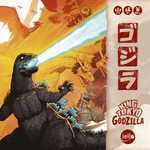

by Roger IELLO
/pic9390673.png)
As a Godzilla fan, I had always hoped to work on a project like this. Around the release of the first U.S. Godzilla movie in 2014, I created a series of personal chibi kaiju illustrations inspired by the Monsterverse.
Florent Baudry, the project manager of the game at IELLO, came across these illustrations during last SPIEL Essen fair and asked me if I would be interested in working on the, still secret at the time, King of Tokyo: Godzilla game. It was an incredible opportunity: working with both IELLO and Toho.
/pic9680174.jpg)
One of the biggest challenges was defining the visual style. At first, the direction was still quite open, so we explored many different approaches before narrowing it down to the final look. We experimented with ideas ranging from retro Japanese ink drawings to a style that mixed old comic book influences with the nostalgic feel of 1960s and 1970s wallpaper patterns.
The illustrations I created in 2014 were digital watercolor illustrations, and we knew early on that we wanted to use chibi kaiju in some way for this project. Moving toward a digital watercolor style therefore felt like a natural way to bring the old and new ideas together.
/pic9680175.jpg)
About the Chibi Monsters
From the beginning, it was planned to use this exact chibi watercolor style for at least a few illustrations of the power cards, so finding the right direction here was easy.
Through several thumbnails and idea sketches, we refined the concept for each card before finalizing it in the watercolor style.
/pic9680178.jpg)
Here is one example. I already showed you Mecha Godzilla from the old illustrations I created in 2014. Since this was already a very stylized version of Mecha Godzilla, we did not have to change much from the original design, apart from the red eyes.
During the process, we also changed the Japanese sun on the airplanes to avoid any potential cultural issues, and added another finger. Checking the correct number of fingers happened surprisingly often, especially because some costumes had more fingers than others.
/pic9680200.png)
The First Standee
After the chibi, which I was used too, we had to start with the monsters standees. I did a lot of reference gathering and style research before starting a series of trials with the first real test illustration. The original Godzilla standee, later used for as an alternative board offered at events, went through several scenes and iterations before we reached the final version. In the final version, you can see the amount of work that went into the brushwork and line art as a reference to traditional Japanese watercolor.
Why? Another version was an alternative style test, closer to traditional Japanese watercolor art. In the end, it felt a little too old-fashioned for a modern game, but we still wanted to keep some of its retro charm without pushing it too far.
/pic9680201.jpg)
/pic9680220.png)
Another example with the Mecha Godzilla Standee
This is a good example of how the detailed process worked later on, once the style had been clearly established. We started with thumbnails to explore the overall direction of the composition.
/pic9680224.png)
The Design of the Cover
Naturally, we also put a lot of work into the cover. After exploring several thumbnails, we created a selection of color sketches, each taking a different approach.
Some concepts referenced classic movie posters, while others stayed closer to the visual identity of the existing King of Tokyo games. In the end, we decided to explore a stronger shape-based composition and moved forward with a mix between versions A and E.
The following steps allowed us to develop those ideas further in different directions.
/pic9680225.jpg)
/pic9680241.png)
Overall, this was a fantastic project to work on, and I really hope there will be some kind of expansion in the future. I would love to design the full roster of kaiju, prepare 3D prints, or even work with TOHO on new ideas.
So far, the feedback has been great, and I am now looking forward to the official release of the game in the USA for Gen Con as well as my next project with IELLO.
Markus Erdt
(editor’s note – diary transcribed from an interview with Markus and uploaded by an employee of IELLO)
Tell us how can we improve this post?