
A standard contact form tells you almost nothing about the person who just filled it out. You get a name and an email address, but no idea whether that person is ready to buy, still exploring options, or not a real fit at all.
At WPBeginner, we run a hosting quiz that works differently. Before we ask anyone for their email, the quiz asks a few short questions about their goals and current situation. Those answers sort each visitor into a group, so our follow-up emails match where they are in their decision.
This guide shows you how to build the same kind of qualification filter using WPForms. This post focuses on the qualification logic: how to define your lead criteria, score answers, and route each lead automatically.
TL;DR: I’ll show you how to build a quiz that automatically filters your leads into hot, warm, and cold groups using WPForms and the Quiz Addon. You’ll define your qualification criteria, write readiness-focused questions, score the answers on a 0–100 scale, and connect the results to your email marketing tool so each lead gets the right follow-up automatically.
Before diving in, there are a few quick things to note.
First, this guide assumes you already have an email marketing tool. If you don’t, check out our roundup of the best email marketing services to get started.
Second, you’ll be building your lead filter using WPForms. Because WPForms is built by Awesome Motive, the same company behind WPBeginner, we trust the plugin and use it on our own site every day.
Finally, this post focuses specifically on the logic of scoring and routing your leads. If you need a more general walkthrough of the form builder itself, see our guide on how to create a quiz in WordPress.
Here are the topics I’ll cover in this guide:
- Why a Quiz Beats a Contact Form for Finding Real Buyers
- Define What Hot, Warm, and Cold Leads Look Like for Your Business
- What You Need Before Starting
- Step 1: Install WPForms and Activate the Quiz Addon
- Step 2: Build Your Qualification Filter
- Step 3: Analyze Your Results and Tune the Filter
- Frequently Asked Questions
- Additional Resources for WordPress Lead Generation
Why a Quiz Beats a Contact Form for Finding Real Buyers
Most people think lead generation is a numbers game: the more sign-ups, the better. But a smaller list of people who are genuinely interested in what you offer will almost always outperform a huge list of strangers who barely remember signing up.
Consider two scenarios. You could collect 1,000 email addresses with a free wallpaper download, or 200 emails from people who completed a quiz called ‘Is your website ready to grow?’
The wallpaper group signed up for a freebie and told you nothing. The quiz group revealed their goals, readiness, and mindset just by showing up and answering.
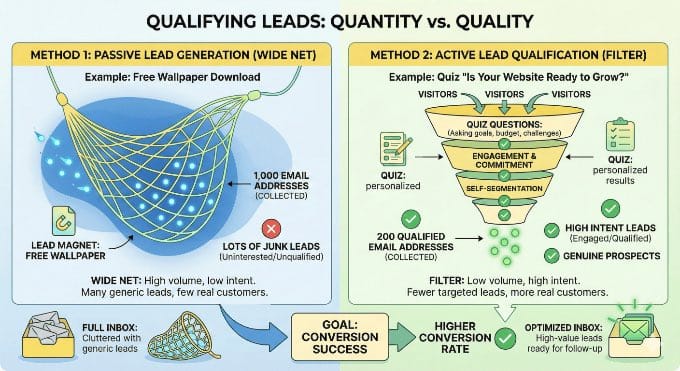
That’s the difference between a wide net and a filter. A net catches everything, including people who will never buy from you. A filter catches fewer people, but the ones it catches are far more likely to become real customers.
Here’s how this plays out across different business types:
| Business Type | Quiz Example | What You Learn |
|---|---|---|
| Web hosting / SaaS | ‘Which plan is right for you?’ | Match visitors to the right tier |
| Coaching / consulting | ‘What is your biggest challenge?’ | Identify client fit before a sales call |
| Blogger building a course | ‘What is your experience level?’ | Route learners to the right content |
| Local service business | ‘What do you need help with?’ | Qualify inquiries before a callback |
| eCommerce store | ‘Find your perfect product’ | Recommend items based on preferences |
A quiz does more than collect emails. It gives visitors a personalized result that feels immediately useful, which builds trust before you ever send a single follow-up message.
Define What Hot, Warm, and Cold Leads Look Like for Your Business
Before you open the form builder, you need to decide what a ‘hot’ lead actually means for your specific business. This is the step most people skip, and it’s why their quiz ends up sorting leads in ways that don’t match reality.
Which Signals Actually Matter
Not all signals are equally useful. Four types of information tend to reveal the most about lead quality: timeline urgency, budget range, problem complexity, and decision-making authority.
Of these, readiness signals matter most. Someone who says ‘I need this launched in two weeks’ is a completely different lead than someone who says ‘I’m just exploring options.’ Timeline and urgency tell you whether a person is ready to act, not just interested in the topic.
Budget matters, but weight it lower. A lead with a clear, urgent problem and no stated budget is often closer to a sale than a lead with a large budget and no urgency at all.
Before building anything, complete this template for your own business:
- A hot lead for my business is someone who ___.
- A warm lead is someone who ___.
- A cold lead is someone who ___.
Write your criteria down before you design a single question. Your answers will directly shape which quiz responses get the highest point values.
How the WPBeginner Hosting Quiz Defines Leads
Here’s how we apply this at WPBeginner. Our hosting quiz asks visitors about their experience level, monthly traffic, and hosting priorities. Those three signals tell us whether someone is ready to switch hosts or is still figuring out the basics.
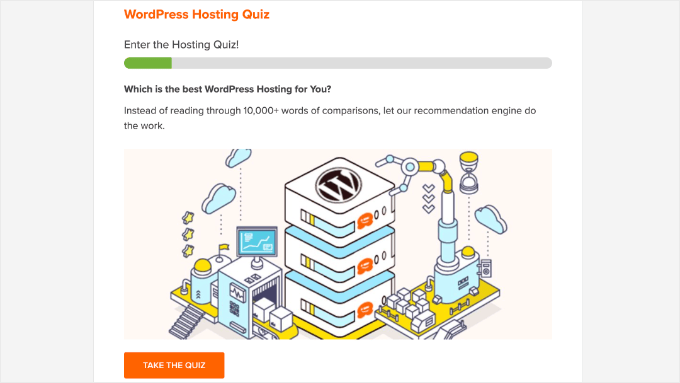
A hot lead for our quiz is someone with an existing WordPress site, over 10,000 monthly visitors, and ‘performance and uptime’ as their top hosting priority. That person is shopping seriously.
A warm lead is someone building their first site who wants affordable, reliable hosting. A cold lead is someone who is not yet sure they need WordPress at all.
Notice that budget doesn’t appear in that definition. We found that readiness signals like existing site and current traffic predict sales-ready conversations far better than budget answers alone.
Three Reader Scenarios
Your criteria will look different depending on what you’re selling. Here are three examples to help you think through your own:
Blogger building a course audience. Hot lead: someone who already has a blog with an engaged audience and wants to monetize it in the next 30 days. Warm lead: someone building content but without an email list yet. Cold lead: someone who is curious about online courses but doesn’t have a site or audience.
Local service business. Hot lead: a visitor with a specific problem, a clear timeline, and readiness to book. Warm lead: someone researching options across multiple providers. Cold lead: someone browsing for general pricing with no specific need or date in mind.
eCommerce store recommending product tiers. Hot lead: a returning customer who knows what they want and is ready to upgrade. Warm lead: a first-time buyer with a specific use case. Cold lead: a window shopper with no clear purchase intent.
Once you have your own version of these three definitions written out, you’re ready to build the quiz that enforces them.
What You Need Before Starting
Before building your quiz, make sure you have these four things in place:
- A working WordPress site. If you’re starting from scratch, see our guide on how to make a WordPress website.
- WPForms Pro. The Quiz Addon and the conditional lead routing features used in this guide both require the Pro license. You can get it from the WPForms website.
- An email marketing tool already configured. This guide assumes you have one set up. If you don’t, start with our best email marketing services comparison first.
- Your hot, warm, and cold criteria. The definitions you wrote out in the previous section. These drive every decision you’ll make in the build.
Once those four things are in place, you’re ready to install WPForms and start building.
Step 1: Install WPForms and Activate the Quiz Addon
WPForms is a drag-and-drop WordPress form builder used by over 6 million websites. Its Quiz Addon extends the plugin with everything you need to create scored quizzes, display personalized results, and route leads to your email tool automatically. This setup only needs to be done once.
I use WPForms for this specifically because its Quiz Addon is built for scoring-based lead qualification, and the conditional logic runs entirely inside the form builder, with no separate automation tool required.
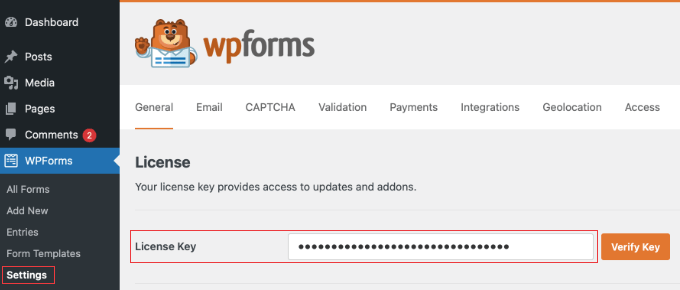
First, install and activate WPForms Pro on your WordPress site. If you need help, see our guide on how to install a WordPress plugin. Once active, go to WPForms » Settings and paste your license key from the purchase confirmation email, then click ‘Verify Key’.
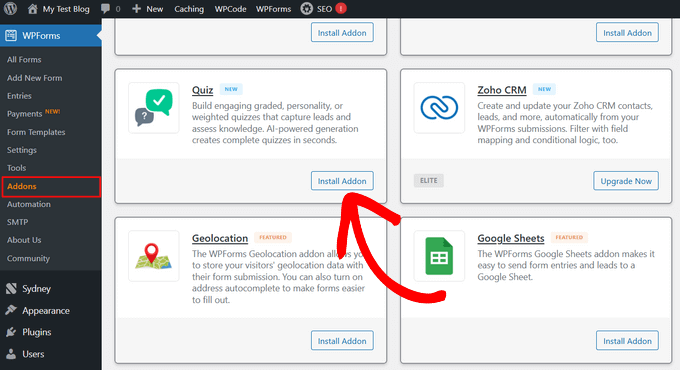
Next, you need to go to WPForms » Addons and use the search bar to find the ‘Quiz’ addon.
Once you find it, simply click the ‘Install Addon’ button.
Once installed, the addon status updates to ‘Active’ in green. You’re now ready to build your qualification filter.
Step 2: Build Your Qualification Filter
With WPForms installed and your lead criteria defined, you’re ready to build the quiz that enforces them.
This section walks through every decision in order, from choosing your quiz type to routing each lead to the right list.
Pick Your Quiz Type
Go to WPForms » Add New Form in your WordPress dashboard. Give your form a descriptive name, like ‘Lead Qualification Quiz’ or ‘Find the Right Plan for You’.
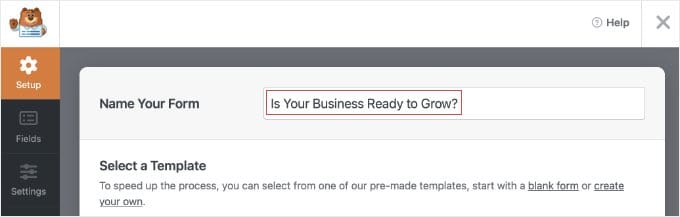
You can start with the AI generator, a blank form, or a pre-built template. The AI option is the fastest way to get a working draft. See my guide on how to create a quiz in WordPress for a full walkthrough of each starting method.
Once you’re inside the builder, select your quiz type. WPForms offers three options:
| Quiz Type | How It Works | Best For |
|---|---|---|
| Graded | Scores based on correct answers | Knowledge tests, assessments |
| Personality | Maps answers to preset outcomes | Product recommendations, style quizzes |
| Weighted | Assigns point values to each answer | Lead scoring, urgency and readiness quizzes |
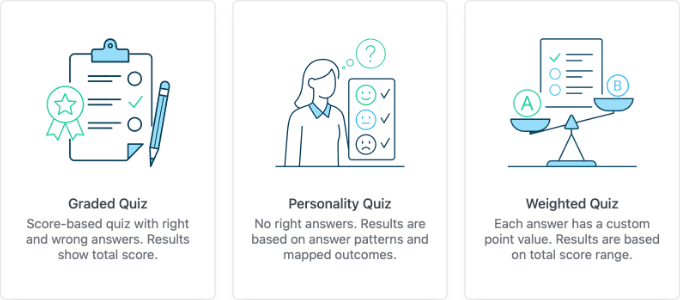
For most lead-qualification use cases, choose Weighted. It assigns numeric point values to each answer, making it straightforward to score readiness and urgency on a consistent scale.
Choose Personality instead when you want to route visitors to distinct product tiers like ‘Beginner’, ‘Growing Business’, or ‘Enterprise’ rather than a numeric score.
Write 4 to 6 Readiness Questions
Under the ‘Questions’ tab, drag and drop fields onto your form.
Multiple Choice, Dropdown, and Checkbox fields work best for lead generation because they support scoring and conditional logic.
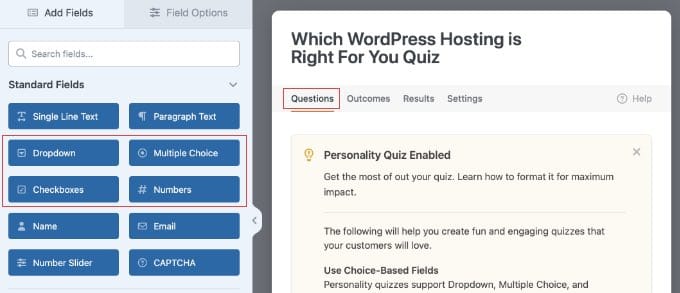
Keep your quiz to 4–6 questions total. That’s enough to learn something meaningful about each visitor without causing drop-off before the optin step.
Remember the rule from earlier: focus on readiness rather than just budget. Try to frame your questions around the user’s current struggles or how quickly they want to solve their problem. This is the secret to separating serious buyers from casual window shoppers.
Here are some example questions for a hosting quiz:
- ‘What best describes your WordPress experience?’ This tells you how much support a visitor is likely to need. Someone who has run WordPress sites for years has very different needs than someone setting up their first one.
- ‘How many visitors does your site get each month?’ Traffic level is a strong readiness signal for hosting. Someone with 50,000 monthly visitors is actively feeling the pain of a resource-limited plan. Someone with 500 visitors is not.
- ‘What is your top priority in a hosting plan?’ This reveals purchase intent. ‘Performance and uptime’ signals someone shopping seriously. ‘Lowest possible price’ signals someone still early in the decision.
Notice that none of these questions ask for a budget range. The answers still tell you exactly how to follow up with each person.
Assign Point Values to Your Quiz Answers
Now assign point values to each answer. Use a 0–100 total scale so the conditional logic you’ll set up in the routing step is unambiguous.
Click on any question field in the builder, then toggle on ‘Include in Quiz Scoring’ in the left-hand ‘Field Options’ panel. A numeric input box appears next to each answer choice where you can enter a point value between 0 and 99.
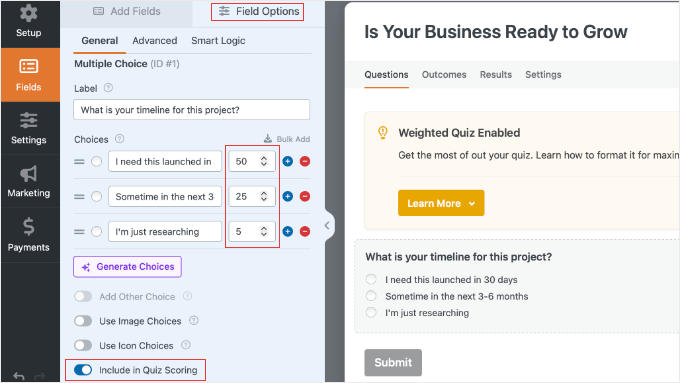
Assign higher point values to answers that signal readiness. For example, you might use this:
- ‘Experienced WordPress user’ = 25 points; ‘Brand new to WordPress’ = 5 points
- ‘More than 10,000 visitors/month’ = 25 points; ‘Under 1,000 visitors/month’ = 5 points
- ‘Performance and uptime’ = 25 points; ‘Lowest possible price’ = 8 points
With three questions like these, a perfect score adds up to 75 points.
Adding a fourth readiness question lets you reach 100. Set your hot-lead threshold at 75 and your warm-lead threshold at 40. You’ll have a clean scale to reference when setting up the conditional connections in the next step.
Build Outcome Screens by Lead Temperature
Now you need to click the ‘Outcomes’ tab at the top of the builder. This is where you write the result screen each visitor sees after submitting.
The outcome screen is your single best conversion moment in the entire quiz.
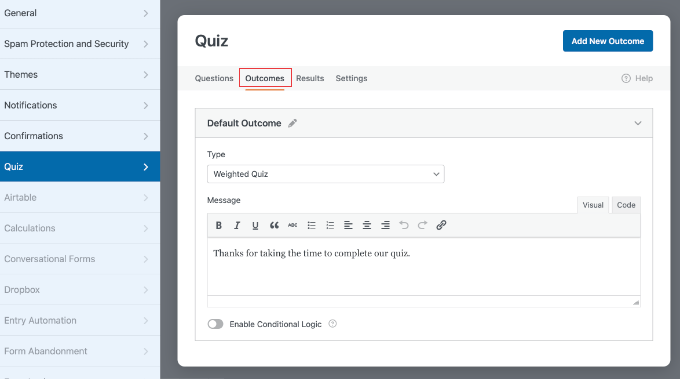
Click ‘Add New Outcome’ to create separate screens for each lead temperature. Open each outcome and toggle on ‘Enable conditional logic‘ so the right screen shows for the right score range.
The key principle: give visitors something genuinely useful before you make any ask.
A personalized result they can act on immediately builds the trust that makes a follow-up email feel helpful rather than intrusive.
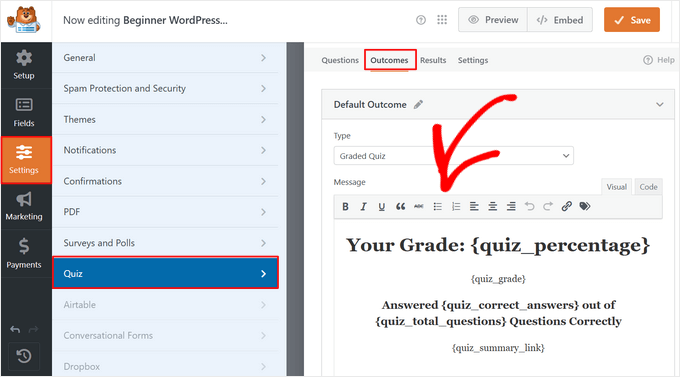
Here are some examples from our own quiz:
- Hot lead (score 75–100): Lead with the personalized result, then make a specific ask. Our screen says something like: ‘Based on your answers, you’re ready for a managed WordPress host. Here’s our top pick for your traffic level and goals.’ The CTA links directly to our hosting comparison page.
- Warm lead (score 40–74): Offer something useful but lower-commitment. A relevant guide, a comparison article, or a free trial option works well here. No direct sales ask. The CTA might say ‘Compare your top options’ and link to a review roundup.
- Cold lead (score below 40): Point them to an educational starting point with no product pitch. A ‘beginner’s guide to WordPress hosting’ is a far better fit than a ‘Book a call’ button for someone who scored this low.
For a deeper look at configuring personality types and letter grades, see our guide on how to create a personality quiz with WordPress.
Add the Optin Gate
To turn the quiz into a lead generator, add an optin step between the last question and the result screen. Because visitors have already invested time in answering your questions, they are far more likely to share their email to see their personalized outcome.
First, you should drag the ‘Page Break’ field to the very end of your question section. Then, place ‘Name’ and ‘Email’ fields on this final page, right before the submit button.
Make the email field required so visitors must enter it before seeing their result.
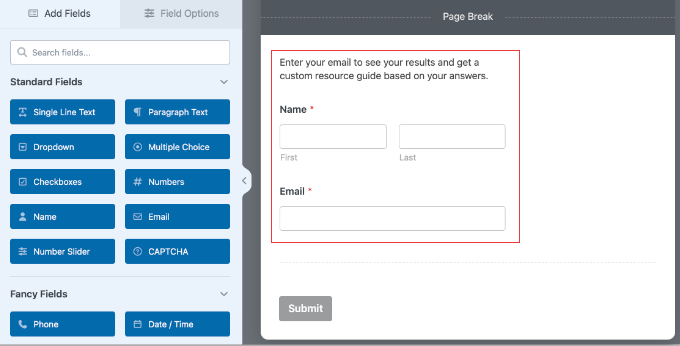
After that you need to click on your Page Break field and change the ‘Next’ button text to something benefit-driven, like ‘See My Results’.
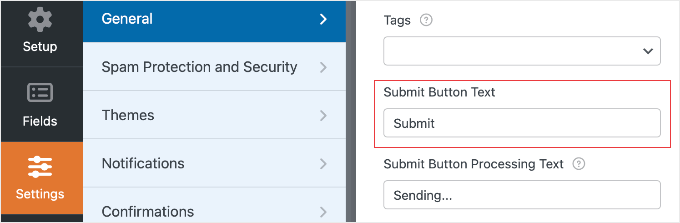
Then, go to Settings » General in the builder to update the final ‘Submit Button Text’ field the same way.
If your quiz audience is in the EU, add WPForms’ built-in ‘GDPR Agreement’ field to this page. It gives visitors a consent checkbox and links to your privacy policy before they submit. See our guide on how to create GDPR compliant forms in WordPress for full details.
Note: Test your completed quiz on a smartphone before publishing. The page-break layout behaves slightly differently on small screens, and a button that’s easy to click on desktop can be hard to tap on mobile.
Once your optin gate is configured, you’re ready to connect the quiz to your email marketing tool.
Route Leads to Your Email Tool With Conditional Connections
This is where the qualification work pays off. After someone submits the quiz, WPForms fires a connection to your email marketing tool and applies the tag that matches their score. This happens automatically, every time, with no manual review required.
Click the ‘Marketing’ tab in the left-hand menu of the builder. Select your email provider. WPForms connects natively to popular email tools including Brevo, Constant Contact, Mailchimp, AWeber, and ActiveCampaign. If your platform is not listed, see the FAQ section below for how to connect through Zapier or Make.
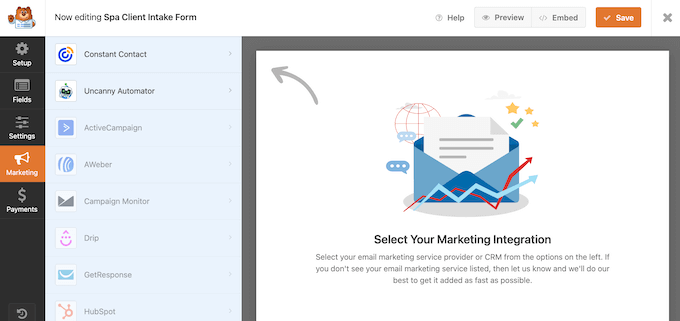
Once your account is linked, you can click the ‘Add New Connection’ button to create different routing rules. You will need to create a separate connection for each of your lead tiers.
Here’s how to set up all three:
Connection 1: Hot leads. Map the email field to your list. Scroll down and enable ‘Conditional Logic’ for this connection. Set the rule: ‘Quiz Score’ is ‘greater than or equal to’ 75. Apply the tag quiz-hot to the contact record. This connection fires only when someone scores 75 or above.
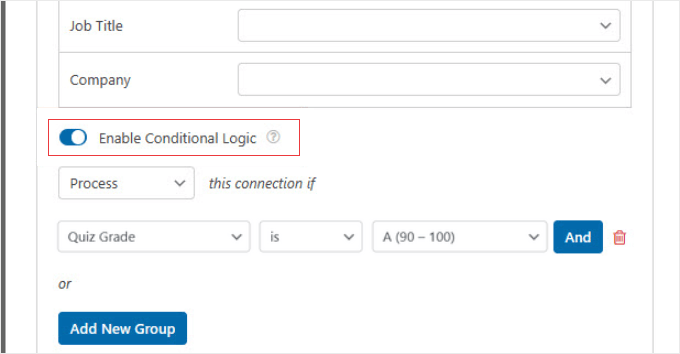
Connection 2: Warm leads. Create a second connection. Set two rules: ‘Quiz Score’ is ‘less than’ 75 AND ‘Quiz Score’ is ‘greater than or equal to’ 40. Apply the tag quiz-warm. This fires for scores between 40 and 74.
Connection 3: Cold leads. Create a third connection. Set the rule: ‘Quiz Score’ is ‘less than’ 40. Apply the tag quiz-cold. This fires for any score below 40.
Note: Use ‘greater than or equal to 75’ for the hot-lead threshold, not ‘greater than 75’. Using ‘greater than 75’ means a score of exactly 75 falls into a gap and gets assigned no tag at all.
Inside your email tool, each new subscriber now arrives already sorted into one of three tagged groups. Here’s what to do with each:
quiz-hot. Route to a personal follow-up sequence. A direct email from you, a booking link, or a special offer works well here.quiz-warm. Route to a nurture sequence. A helpful guide series or a regular email newsletter builds trust over time without pushing for a sale.quiz-cold. Route to an educational sequence. Low-pressure content helps these leads get to a point where they’re ready to move forward later.
The quiz is just the entry point to your funnel. Each tagged group flows into a different email sequence that continues the conversation over time. Hot leads get a shorter, high-intent track. Warm leads get a longer nurture series. Cold leads get educational content that builds toward readiness at their own pace.
When you’re done, click the orange ‘Save’ button at the top of the builder.
Your quiz is also a shareable asset. Once it is live, embed it on a dedicated landing page and promote it through social media or your newsletter. People share personalized results, and a quiz that produces a clear outcome gives visitors something worth passing along.
Every share brings in new visitors who have already seen what the result looks like, a warm audience before they’ve answered a single question.
Step 3: Analyze Your Results and Tune the Filter
You did the hard part and your lead filter is built. Now, don’t worry if your scoring system isn’t 100% perfect on day one. Once you get your first 50 to 100 entries, you’ll start to see clear patterns in how people are answering.
Here is how to easily read those early numbers and make simple tweaks to improve your quiz over time.
Reading Score Distributions
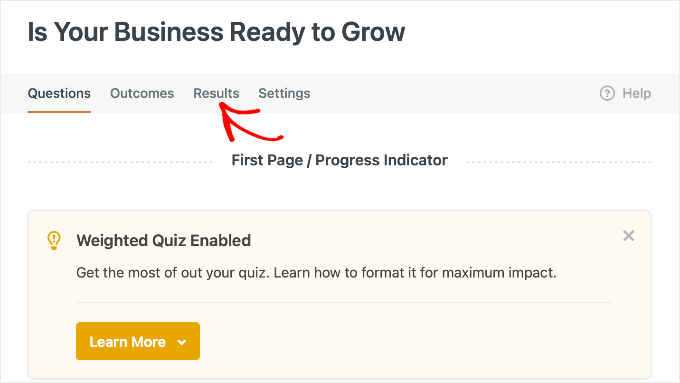
Start by opening your quiz in WPForms and then click the ‘Results’ tab at the top of the screen.
This opens your reporting dashboard, where each question gets its own chart showing how visitors answered.
Unlike standard form entries, the quiz dashboard turns your completion data into interactive charts and graphs.
You can hover over any bar or slice to see the exact percentage of visitors who chose each answer.
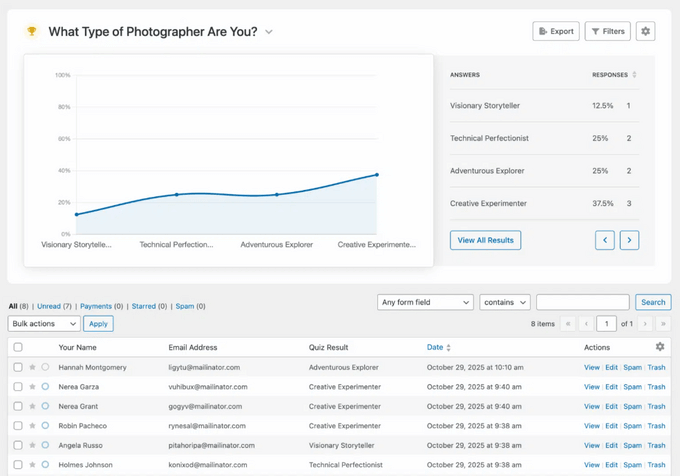
Now, look at how your completions are distributed across the three tiers. A reasonable starting target is roughly 20–30% hot, 40–50% warm, and 20–30% cold.
If your distribution looks very different from that, here’s what it usually means:
- Everyone scores hot: Your hot-lead threshold is too low, or your questions tend to produce high answers regardless of actual readiness. Raise the threshold by 10 points and recheck after another 50 submissions.
- No one scores hot: Your threshold is too high, the traffic source is sending a cold audience, or your questions don’t discriminate well enough between ready and not-ready visitors. Check where the traffic is coming from before assuming the questions are the problem.
- Almost everyone scores cold: This often means the quiz is being completed by people who found it through a very top-of-funnel entry point, like a broad social post or an unrelated article. Try placing the quiz on a more targeted page first.
You can also use the answer data to improve your follow-up emails. When you see that a specific answer is chosen by 70% of visitors, use that exact phrasing in your email subject lines and sales pages.
Spotting ‘Leaky’ Questions
A ‘leaky’ question is one where visitors stop completing the quiz.
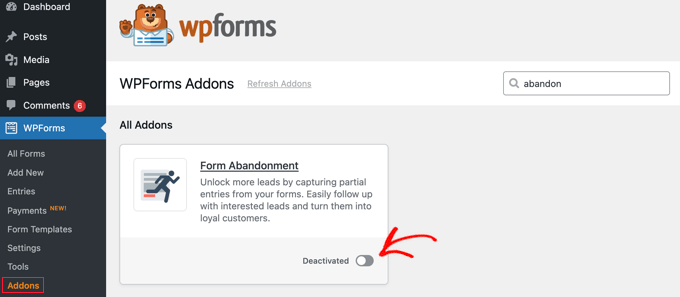
Because standard reporting only shows completed entries, I recommend adding the WPForms Form Abandonment Addon to capture partial submissions as well.
Next, you should go to WPForms » Entries in your dashboard. Incomplete submissions are marked with an ‘Abandoned’ status.
You can click any abandoned entry to see exactly which question the visitor answered last.
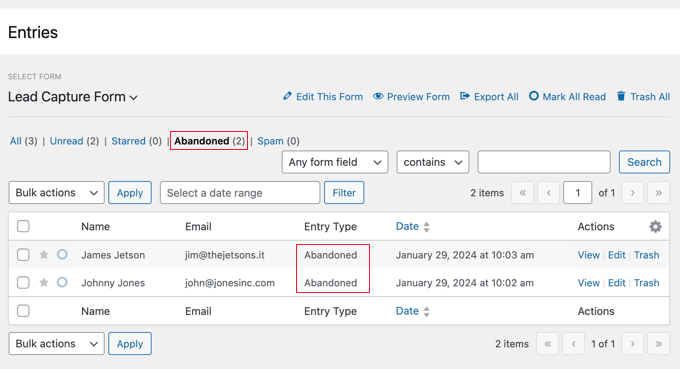
If many visitors stop at the same question, that question is causing friction. It’s often too personal, too confusing, or asking for information visitors aren’t ready to share at that stage of the quiz.
In my experience, questions about phone numbers or exact revenue figures cause the most drop-off.
Moving those to the very end, or making them optional, usually brings completion rates back up. For a full setup guide, see our article on how to track and reduce form abandonment in WordPress.
One A/B Test Worth Running First
If you want to improve completion rates quickly, start by testing your first question. It’s the highest drop-off point in any quiz, and a single change here can lift the number of people who reach the optin step.
Try running two versions: one that opens with a readiness question (‘How urgent is your need right now?’) and one that opens with a goal question (‘What are you trying to accomplish?’). After 100 submissions per variant, you can compare completion rates and score distributions.
The version with the higher completion rate and a more spread-out score distribution is the stronger opener.
A great first question hooks visitors immediately and sets the tone for what follows.
When to Update Your Quiz Scores
As your business grows and your audience changes, your definition of a perfect lead will probably change, too. The point values you set today don’t have to be the same forever.
In fact, checking in on your point system occasionally is the best way to make sure your email list stays filled with high-quality contacts.
I recommend revisiting your scoring rules whenever you notice one of these three things happening:
- Your business model changes. New product tiers, a pricing restructure, or a new service line may mean your old definition of ‘hot’ no longer fits.
- Your hot, warm, and cold numbers change a lot. Check where your traffic is coming from first. A new campaign or busy season can change who’s taking your quiz, even if nothing about your scoring has changed. If your traffic looks the same as before, your point values probably need adjusting.
- Your sales results don’t match your tags. If the people tagged
quiz-hotaren’t converting at the rate you’d expect, your threshold may be set too low. If sales conversations are rare, it may be set too high.
Re-scoring takes less time than the initial setup. Treat it like a quarterly review rather than a one-time configuration.
Frequently Asked Questions
Here are answers to some common questions about using quizzes to qualify leads in WordPress.
Can I build a lead qualification quiz without paying for WPForms Pro?
No, building a scored lead qualification quiz requires WPForms Pro. The free version of WPForms doesn’t include the Quiz Addon or the conditional logic needed to route leads to your email tool based on their score.
However, WPForms offers a 14-day money-back guarantee, which gives you enough time to set everything up and test the results before committing.
What if my email marketing tool isn’t on the WPForms integration list?
WPForms connects natively to popular tools like Brevo, Constant Contact, Mailchimp, AWeber, and ActiveCampaign. If your specific email provider isn’t listed, you can route your quiz leads through Zapier or Make instead.
The conditional scoring logic still runs inside WPForms, and you simply pass the tagged contacts through an automation layer to your email platform.
How do I handle people who retake my lead generation quiz?
WPForms doesn’t block retakes by default. If someone retakes your quiz and qualifies for a different lead tier, most email tools will simply update their contact record when the connection re-runs.
To prevent a contact from collecting conflicting tags (like quiz-hot and quiz-warm at the same time), you should set your email marketing tool to replace existing tags on each new submission rather than adding to them.
Can I show my WordPress quiz in a popup instead of a standalone page?
Yes. WPForms can be embedded inside any popup builder that supports WordPress shortcodes, including OptinMonster. You simply paste your quiz shortcode into the popup content exactly the same way you would on a regular post or page.
The lead scoring and conditional email routing will work perfectly regardless of where the form is embedded.
Do quiz leads actually convert better than gated-PDF leads in real data?
In our experience at WPBeginner, yes. Lead qualification quizzes produce a much more engaged audience than standard content downloads. While gated-PDFs typically generate more raw sign-ups, the audience is far less filtered.
With quizzes, your open rates and click rates tend to be higher because the scoring system ensures every follow-up email matches exactly where the reader is in their buying journey.
Additional Resources for WordPress Lead Generation
I hope this article helped you learn how to qualify your leads with a WordPress quiz.
You may also want to check out some other guides about growing your email list and converting more visitors:
- How to Easily Create a Quiz in WordPress. A complete walkthrough of building quizzes with WPForms, including templates, AI generation, and result configuration.
- Best Quiz Plugins for WordPress. A full comparison of quiz builders if you want to explore options beyond WPForms.
- Best Lead Generation WordPress Plugins (Compared). A roundup of the top tools for capturing and converting leads on your WordPress site.
- How to Use Contact Form to Grow Your Email List in WordPress. Tips for optimizing standard forms to capture more subscribers alongside your quiz.
- How to Track and Reduce Form Abandonment in WordPress. Everything you need to know about catching leads who leave before submitting.
If you liked this article, then please subscribe to our YouTube Channel for WordPress video tutorials. You can also find us on Twitter and Facebook.
The post How I Use a WordPress Quiz to Automatically Qualify Leads first appeared on WPBeginner.
Tell us how can we improve this post?