
/pic8967258.jpg)
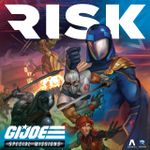
Welcome to the RISK G.I. JOE: Special Missions design diary! I am Marcus E. Burchers, and I was the developer on Special Missions. Most of the design work was done by Dan Blanchett. When we set out to make a G.I. JOE-themed RISK, we wanted it to be more than just another version of RISK. We wanted it to be something special that introduced something new, while also being uniquely G.I. JOE. Starting with that theme element, it was important to look at the aspects of the IP and make sure they were core to the game. While, yes, COBRA’s goal of world domination fits nicely into the mold of a RISK game, the heroic G.I. JOE side required a bit more nuance.
The important areas of the IP to cover were:
1) The heroes. The villains. The big personalities. Roadblock, Scarlett, Zartan, Destro. G.I. JOE and COBRA both have a gallery of recognizable characters at the fore of the battle. Including them in some way was going to be a core mechanic.
2) Vehicles. G.I. JOE was a toy line in the 80s built around the unique (and often ridiculous – see: Pogo Ballistic Battle Ball) vehicles. Any game that did not include them in some way wouldn’t be representing the franchise properly.
3) The two factions working against each other over the course of various missions/episodes.
These pieces of the IP gave some good building blocks to differentiate the game from standard RISK. Looking at point two first, early on we knew the minis would be vehicles, and we wanted them to be more than just force multipliers. In the earliest versions of the game this broke down into four types of units on both sides: Infantry, “vehicles,” aircraft, and tanks. For G.I. JOE, this meant the VAMP Mark II, Skystriker, and Wolverine; while for COBRA, we went with the Stinger, Rattler, and H.I.S.S. Tank. Each category of vehicle was unique (though the sides were equal – Rattlers and Skystrikers were the same, for example), with different move and/or abilities in battle, while the overall concept of battles was similar to traditional RISK.
/pic9460177.jpg)
Through the course of testing, having three separate phases of battle and unique combat abilities of each type ended up being complicated and a little hard to remember. For example, the tanks always rolled three dice, even if there was only a single tank present, while aircraft rolled two, also regardless of number. We attempted to slim it down by making the VAMP and Stinger just a bonus to the Infantry, but found that still wasn’t sufficient. They got changed to being simple force multipliers (1 VAMP or Stinger was 5 JOE Infantry or COBRA Trooper), before eventually being cut due to the armies on the board rarely requiring force multipliers. This allowed the overall battle structure to be simplified into just Air and Ground attacks, with rolls of 1-3 dice based on your present units, a bit closer to traditional RISK, but retaining bonuses for the aircraft and tanks to keep them feeling special. The tank’s special ability to deal additional hits was the last thing to get dialed in.
/pic9003833.jpg)
Equally important to the vehicles was the “why” of this conflict, or rather the win conditions. As I mentioned, a goal of world domination was all well and good for COBRA, but it didn’t make sense for G.I. JOE. The earliest concepts introduced objective points as the solution to this problem. This ended up taking the form of Missions (JOE) and Plots (COBRA). These could be many different things from winning battles, to controlling certain territories. Originally, there was the thought it could be a race to a certain number of objective points, but we quickly decided on just “get the most” by the end of the game (which let us set a number of rounds to limit the game length from dragging). More than just running missions or plotting against one another, G.I. JOE has big, grandiose storylines. In addition to small objectives, the Master Plot/Scenario was something we added that can contribute a lot of objective points to your score. It also gave a story-driven reason for the globe-spanning nature of the game. Originally, we started out with Spread of Terror, and added more throughout testing. Each one added during testing created unique experiences and decisions, building in a degree of replayability.
/pic9003826.jpg)
The vehicles and missions (in particular the Master Scenarios) made the game feel very much like G.I. JOE, but I felt that the most important element would be the first: the characters. One bit of feedback I’d heard after working on Battle for the Arctic Circle was, while it was nice that the leaders were present, fans would have liked to see them on the field of battle. I knew that’s something I wanted to make sure we did here with RISK, and Dan was on the same page. As much as the original toy line was about the vehicles, the characters were just as important, leading their troops from the frontline against (or for) COBRA. Since we were using tokens instead of minis, we were able to include a wide assortment of them. Most of the heavy hitters: Duke, Scarlett, Cobra Commander, Destro, Cover Girl, etc.
/pic9003822.jpg)
Though abilities did change, for the most part, the format of the leaders stayed the same from start-to-finish. They had a static or triggered ability that you could just use whenever applicable, a bonus to a certain type of unit in battle, and an activated ability using the resource we called Command Tokens. Those first two (the static/triggered ability and the battle bonus) were going to be used the most so they needed to sell the theme of the characters. For example, Destro as a weapons profiteer lets you build and deploy your aircraft and tanks faster. Cobra Commander can retreat outside the normal timing and throw some of his units under the bus in his place. Snake Eyes improves the JOE’s Recon action, and so on. The Command Token actions are more impactful (often involving a Sneak Attack) because the Command Tokens were designed as a limited resource. If you’re using them on a leader’s ability, you aren’t using them on something else. They were also tied to each characters’ theme, such as Cover Girl allowing you to bring out or move around additional Wolverines.
/pic9469904.jpg)
When the game ended up going to Kickstarter, I had the opportunity to go back and add some additional leaders that we had not originally included in the game, since we were adding a promo pack (Jinx, Shipwreck, Crimson Twins, and Zarana). This ended up bringing the total count of leaders to 16, plus Serpentor (who is only used in two of the Master Scenarios). I’m pretty happy with how they all came out, both in their gameplay and thematically as the characters they represent.
All of these aspects helped sell it as a G.I. JOE game, but we also wanted to bring something unique to RISK. The primary innovation in that regard was called the Redeployment Track (renamed during testing to the Faction Track). Instead of units being defeated and needing to be repurchased, a period of repairing and refueling felt more thematic to G.I. JOE. It also opened up action possibilities, allowing you to devote precious actions (or Command Tokens) on your turn to get things out more quickly. Some details of the Faction Track did change from the earliest versions, such as which spaces units started on, but the original version largely remained intact in the finished product. It is an integral part of the gameplay that needs to be managed, and so far as we were aware was a brand new concept for a RISK game.
/pic9469903.jpg)
Those precious actions were the crux of the gameplay, and while they weren’t brand new for RISK (some variants have used action cards before), they felt like a good way to differentiate it from most entries in the series. The need to plan out your turns in advance by placing the cards allows for a bit of strategic planning (or plotting!) that felt very appropriate to the franchise. Having two options and a potential bonus action still left enough flexibility for pivoting when the unexpected happened. The biggest change overall to the action cards in the course of testing was their interaction with Command Tokens. Giving Command Tokens plenty of desirable uses was important. They were used on the action cards’ bonus actions more frequently in early iterations before important bonus actions like Recon became free. To give them additional utility (particularly once there were more free bonus actions), we added the ability to spend a Command Token to perform both of your primary actions on the chosen card. This was a popular change in testing as it opened up a lot of potential big plays. Recruiting new units and immediately advancing them (which, if you recruited a new Leader, sets them up to Deploy) was a popular one, but other choices like Maneuver+Reinforce can’t be understated either.
/pic9469905.jpg)
The last major unique gameplay feature I’d like to highlight was another one of the early concepts that remained largely intact throughout testing: hidden units. COBRA isn’t always open and brazen with its schemes. It is often hiding in the shadows and pulling the strings (as depicted in the Infiltrate World Governments Master plot!). To represent this, COBRA can put some of their units secretly into their territories, hiding them behind their screen. This took a lot of tweaking to get right, but the result led to a distinct difference between the factions, beyond just the verbiage (plots vs. missions). Playing as COBRA feels quite different from playing as G.I. JOE. We had to make a number of different changes to the concept. The biggest one was originally, all of COBRA’s units could be hidden. As you can imagine, this became frustrating to play against as G.I. JOE, and was changed to something close to the current set-up where only a certain number of territories can start hidden.
There were also a number of rule issues that had to be ironed out. Hidden units and visible units in the same territory? No. Visible units passing through a hidden territory? Turned out the easiest answer here was it was ok, if they aren’t stopping. The one that’s stuck with me though was that COBRA’s base had to be deployed secretly. This created a lot of rules questions, till we decided that bases couldn’t be deployed secretly. Ultimately, this also led to COBRA getting COBRA Island as a territory they could place for their base at the start of the game as a counterpart to the U.S.S. Flagg (which had been around since the earliest iterations of the game).
I think this all adds up to a unique RISK game, but one that is also distinctly G.I. JOE. I hope you enjoy it as much as we enjoyed making it. It is a game that plays well no matter how many friends you have, as we designed it to work with 2-, 3-, or 4-players. Fittingly for the G.I. JOE vs. COBRA theme of the IP, unlike many RISK versions, the 2-player game is where it really shines. Happy gaming!
Tell us how can we improve this post?