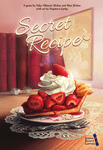
Designer Diary: Secret Recipe, or A Deduction Game Born from Husky Racing, 8000m Mountains, and Grandma’s Recipe Book

/pic8823949.png)
Our journey into board game development started during Covid. Before that, we had game ideas and early-stage prototypes, but we never found the time to develop them. We were either out climbing or playing board games with our friends. With the lockdown, we suddenly had the time freed up, and we got an idea for a husky sled-racing game after watching a movie.
Coincidentally, Kickstarter had just become available for Slovenian creators. I’ve been following the site for a long time and always knew I wanted to try it at some point. Being a physicist, I thought it would be for a tech project, but with the husky game idea and games being strong on Kickstarter, we decided to go for it.
That game, Hike!, was supported by 3,451 backers, and raised almost €120,000 – enough that we decided to stay in our science and engineering jobs four days a week and commit Fridays to board game development, with a vision of becoming a board game publisher. The big question then was: What should our second game be?
We were thinking about this from both the game designers’ and the publisher’s perspective, and it turned out Secret Recipe would prove to be quite a challenge for both.
From the game designers’ side, we had game ideas at different stages of development, with different mechanisms, themes, and complexities, and the task was to find one we thought had potential, was doable in the set amount of time, and excited us.
From the publisher’s side, we were looking at the product. We had a box size and complexity in mind (although we overshot both in the end), and we were thinking about what theme would be a good follow-up to Hike! We want to publish a broad range of themes, so we didn’t want the theme to be too similar, or else we’d be labelled as a publisher who does only outdoor games, for example. Looking back, we may have gone with a theme that was too different as there’s not a huge overlap between people who like huskies and people who like baking.
We tinkered with the design for a few months, and the idea started to come together when we were trekking in Nepal. We started with a grid and clues, and the original theme was prayer flags, with airy art, 8000-meter peaks, and Buddhist temples.
/pic9158743.jpg)
It started with a different theme, inspired by our trek in Nepal and the breathtaking Himalayas. (That’s Mount Everest in the background!) We had paper and pencils in the backpacks and tested ideas in the evenings in the lodge.
After playtesting, the mechanisms changed quite a bit, and we felt that the design didn’t fit well with the theme anymore, so we had a short stage in which we were tinkering with the mechanisms and contemplating different themes.
We settled on desserts during more travel, a climbing trip in the Balkans we took with friends. We had quite a culinary experience, and food and family relations felt a good match for the direction the mechanisms were going, so the game became about a family that competes for grandma’s recipe book. The one who impresses grandma the most wins. Desserts felt a natural sub-category of food, especially as we remembered the cookies and tarts our grandmas baked when we were little.
Now the game had the raw mechanisms and the theme, so we dug in and started mixing them together into a cohesive recipe — balancing ingredients, tweaking ratios, and letting the concept bake.
Balancing the Core Mechanisms
The basic idea is that each player receives a part of the recipe from grandma. In practice, it’s four ingredients, drawn randomly. On their turn, the players give clues about their ingredients using the central grid on the game board and clue tokens. On other players’ turns, they decipher clues from the other players.
The first step in marrying the theme with the mechanisms was to reduce the grid to 3×3 and decide on the number of different ingredients (that is, the objects to discover), as well as the number of ingredients of each type. They now vary from 2 to 4, which makes it more interesting than having the same amounts as it increases the asymmetry in the player information.
I think our tech background showed here as we were able to get a balanced set-up pretty quickly. The final version has nine ingredients, and they’re stuff you’d find in your grandma’s recipes in Slovenia: flour, cream, eggs, apples, honey, walnuts, strawberries, grapes, and mint.
/pic9281183.png)
Overview of the components. Each player receives a recipe board with four hidden ingredients, a player board on a stand to track the clues, and a discussion card used to make guesses. The central board features the score track and the pantry grid where players give clues.
How Can Players Give and Decipher Clues at the Same Time?
With this framework laid out, the next design point was figuring out the clue system. This was a major thing for us as we didn’t want to have asymmetric player roles with, say, the game master having all the info vs. everybody else deciphering clues. We also didn’t want to hard-code the information beforehand and have a book with all of the game variants. We wanted the players to have the same roles, and the game to have endless possibilities. With nine ingredients (25 total) in 25 locations, the placement itself offers a great variety, but what really makes each game different is the player interaction – each group of players can make the game their own.
In order for this to work, we had to incentivize players to give good clues – meaning that giving clues should either bring them points or give other bonuses.
Looking at it from the other side, deciphering clues brought points (or took them away if the answer was incorrect), with you earning more points as the sole person who figured it out and fewer points if multiple players did. (A third option earns few points for a correct answer, but does not penalize wrong answers.) The penalty ensured that players didn’t just make blind guesses all over, and the three options allow for interesting tactics.
We later added a bonus point for guesses that include an ingredient from the grid. This addition to the tactics is minor, but it ensures the grid keeps changing during the game without it being a burden, which was an element that saw a lot of iterations during playtesting.
/pic9158745.png)
Players use discussion cards to make guesses at the same time. These are responsible for a few of my favorite moments in the game, with the suspense building, and players looking at each other’s guesses and debating.
If giving clues brought only a set amount of points, there was no real incentive to give good clues early on, and the gameplay stalled with some player groups.
We needed to introduce a sense of urgency, and we did so by introducing a set of point tokens. The player who gave a good clue would take three, choose one, and discard the other two; when the token pile ran out, you’d restock with the discards, so fewer points were left as the game progressed. We also added an option to forgo points, but gain additional info about the ingredients. It’s a bit of a gamble, but if you do it early in the game, it can really pay off.
With this scoring system, players generally rush to score at least some of the high points from the point tokens with good clues. In some cases, experienced players will still want to give bad clues, score fewer points, and keep the information to themselves longer, but this path to victory is much riskier.
We feel the game has a good tension between giving and deciphering clues, and Mark from The Dice Tower noted, “I just love this theme and how it works together, and how clue-giving works!”
Designing a Clear Information-Tracking System
In parallel with developing the clue system, we were also developing a means to track information. There is a lot of it during the game, and we didn’t want players to drown in their first play. We wanted to provide an intuitive tool that would allow players to track all of the “hard” information, i.e., the clues and the info they get about the ingredients.
We decided on player boards and erasable markers early on. These markers aren’t a personal favorite, so we wanted to find something else, but with the complexity at hand, we couldn’t find another system that would be flexible enough. This decision meant that the manufacturing would be more expensive due to the foil and gloss finish on the components, so it wasn’t made lightly. We also wanted to provide a printed version for anyone who prefers pen and paper, but after crowdfunding polls, we decided to make it an add-on, instead of including them in the game.
/pic9158746.png)
Almost final version of the player board. The top row shows all the ingredients to be discovered, ordered by weight, then we have four recipe rows, one for each player’s recipe (including your own, so you know what clues you’ve already given). Each square corresponds to one hidden ingredient that is being discovered.
The player boards were hands down the component that had the most iterations. From the beginning, we had four recipes with four squares each – to track clues for each of the ingredients being discovered – and the line with all of the ingredients at the top.
Initially, we also had a grid with recipe ingredients (nine hidden ingredients on the side shelves), but it was hard to track who knew what and where what was. Since all players track a lot of the same things, we decided to move this from the player boards and invented a fingerprints system on the main board. Each player gets nine fingerprint tokens in their color, and each time they peek at one of the hidden recipe ingredients, they place their fingerprint on it.
This system allows everybody to easily see which player knows which ingredients (a piece of information that can be valuable), plus it’s aesthetically pleasing and fun thematically – you better hope grandma doesn’t see you forgot to wash your hands! This system also helps eliminate player errors as each player needs to track only one bit of information, not the whole system.
The main challenge of the player boards was how to orient everything. Each player has a recipe board with hidden ingredients in front of them, and as the players sit around the table, they see it oriented differently, and the player boards need to work with all orientations, as well as for players who have different preferences and different levels of spatial awareness. Once we had the final version, it seemed so logical that we couldn’t believe we hadn’t thought of it before.
It’s worth mentioning that we omitted one clue type, leaving only two: clues based on ingredient weights and ingredient types. It was impossible to have a good visual representation of the third type on the player board, and we thought having one additional clue type didn’t bring enough to the gameplay to be worth it.
/pic9158747.jpg)
The players’ fingerprints on the recipe shelves mark the ingredients the players know. This system is intuitive, looks good, and eliminates player errors when marking information.
Apart from this “hard” information from clues, “soft” information comes from the other players. Why are they giving me this particular clue when they could have done it better? I know that they know this or that. And so on.
This is where the game shines in my opinion – when players discover layers, so it’s not only a deduction game, but also a social deduction game. The player board has enough empty space for dots, arrows, question marks, or any other system each player develops to track that.
What about the Two-Player Version?
One thing we didn’t consider was that with all the clues and player interaction, Secret Recipe was essentially for three and four players first — and we are a two-person team. This meant we were constantly looking for a third playtester, and a lot of the things we could quickly playtest and iterate between the two of us during the Hike! development now required more logistics and therefore took longer.
Apart from that, we always knew we wanted to have a two-player version of the design that has the same mental puzzle as the three- and four-player game. We struggled a long time because using the same rules meant the game was too symmetrical, so in the end we took the same clue-giving system and adapted the incentives, changing the point token system to push players and create tension. We’re happy with how it worked out, and the puzzle aspect feels similar to the multiplayer game. The social aspect, however, is completely different, so if you enjoy player interaction, I suggest playing with three or four people.
Fighting in the Kitchen
When we present this idea to others, everyone thinks the game is co-operative, probably because of the incentive to give good clues. In fact, Secret Recipe is highly competitive, and players give good clues because it benefits them.
I’d love to hear what you think in the comments. Did you get a co-op impression, too? Is there something in my wording that hints at it?
/pic9158748.png)
The art on the back of the player board by the awesome Dagmara Gąska. We wanted each player to have a unique feel, with a dedicated dessert and trinkets you would find at grandma’s.
Challenges from the Publisher’s Perspective
Aside from the game design challenges highlighted above, Secret Recipe brought a bunch of publishing-related challenges, too. The first was that while we had a clear idea of art when the theme was about the Himalayas, we struggled when we switched to deserts.
Consequently, it took us a long time to find an illustrator, and we actually started with graphic design before we had a clear art direction, hoping it would inspire us. Everything came together when we started working with Dagmara Gąska and saw the first finished illustration, the one for the red player board. We liked it so much that we decided to put it on the cover, too, and it pretty much set the tone for the whole game.
The most notable challenge, however, was that we wanted to keep the same box size that we had with Hike!, which is the same size as Codenames. This would greatly simplify the logistics, especially since we planned to run a Kickstarter and handle the fulfillment to backers ourselves.
However, it became clear that the player boards need to be bigger than the box allowed, not to mention that the components just wouldn’t fit, so we needed either a major redesign, which would result in a completely different game, or a bigger box. In the end, we went with the latter. It’s now the same size as Carcassonne, and it’s packed.
Kickstarter and Beyond
We launched Secret Recipe on Kickstarter in September 2024, with the fulfillment planned to begin in August 2025. I’m happy to say that thanks to the experience from publishing our first game, the manufacturing went even more smoothly this time, and the fulfillment began in May, three months ahead of schedule.
/pic7740587.jpg)
That’s us, Blaž and me (Nika), the SnowBoardGames team, with the prototype copy of our first game
Secret Recipe is now available from our web page and from some awesome retailers who choose to support small indie publishers. If we sparked your interest, I warmly invite you to check it out, or come meet us and try the demo at a future event.
Tell us how can we improve this post?